
Blog
Where to Buy Grains for Home Milling in South Africa

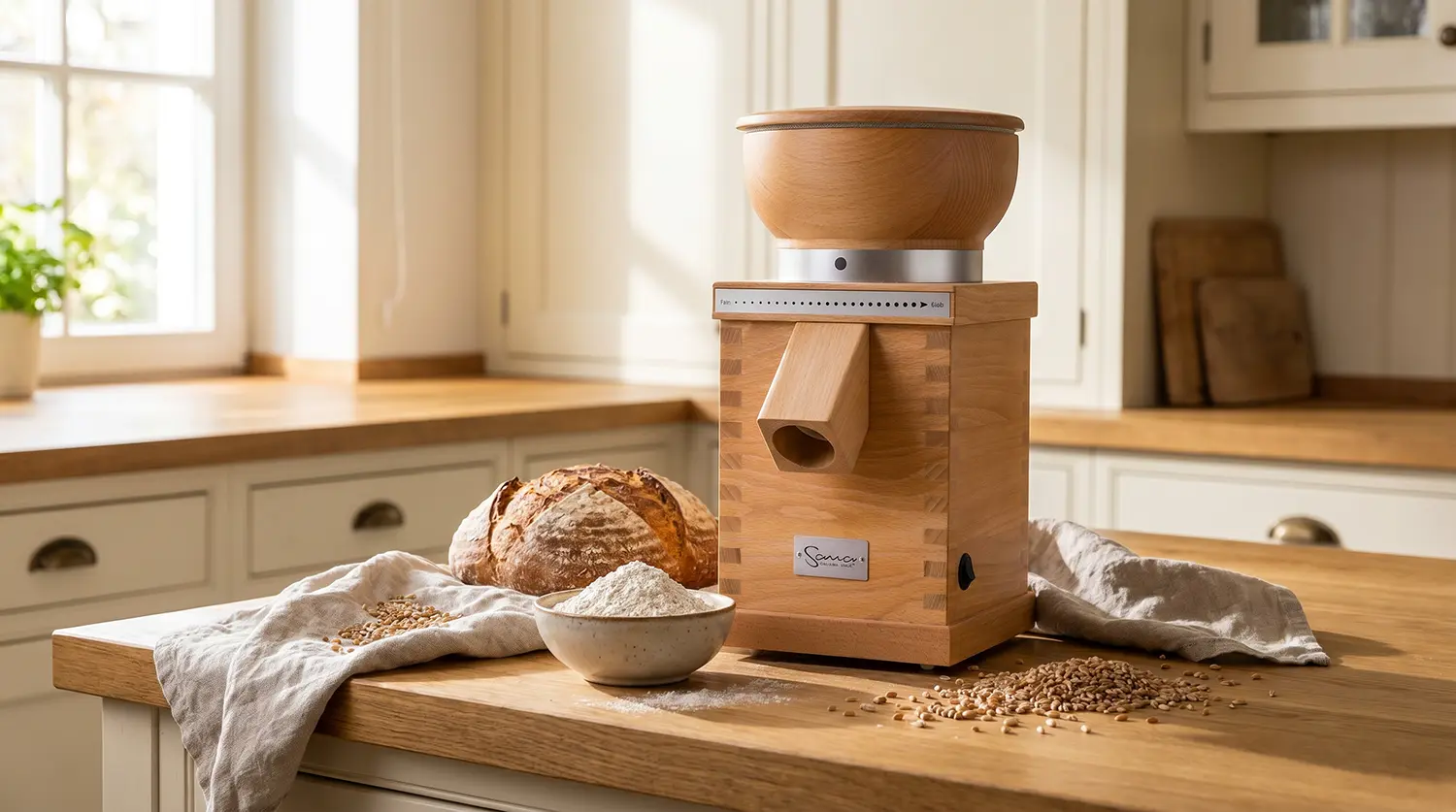
Fresh flour starts with good grain. Once you’ve invested in a Sana grain mill, the next practical question is usually: where do you buy the grain to mill — in quantities that actually make sense? Below are South African suppliers who sell whole grain in bulk and courier it countrywide, sorted by what you want to make.
What to look for
- Buy whole grain, not flour. You want intact kernels — often sold as “berries” or “kernels,” like wheat berries, spelt kernels or rye kernels. That’s what your mill turns into fresh flour.
- Buy in bulk. Whole grain stores for years, so it pays to order 5–10kg or more at a time. You mill fresh as you go, and one bulk order spreads the courier cost far further than small packets do.
- Match the grain to what you bake. Hard wheat (higher protein) is best for bread; soft wheat suits cakes, biscuits and pastry. Rye and spelt add flavour and character to loaves.
- Choose non-GMO, glyphosate-free grain — and look for suppliers who sieve out stones and grit, which a stone mill won’t thank you for.
Where to buy your grain
Most of these deliver nationwide. Those based in the Cape are best ordered in bulk — one larger order keeps the per-kilogram courier cost low — while inland customers have a farm-direct option closer to home.
For bread & everyday flour — wheat, spelt & ryePure and Whole
The widest wheat-berry range — hard red wheat, heirloom wheat, spelt and rye — with automatic bulk discounts kicking in at 5kg and 10kg, and they’ll handle special milling requests.
Shop their grains →Lowerland
Certified-organic wheat berries and rye, delivered on main routes countrywide. Built around bulk orders, so it’s ideal when you’re stocking the pantry for the season.
Visit Lowerland →Easy Organic
Certified-organic wholewheat, spelt and rye kernels by the kilogram, with larger quantities on request. Popular lines move quickly, so check stock before you plan a bake.
Browse the range →H2 Agri
Regenerative, non-GMO whole yellow and white maize in proper bulk sacks from 5kg to 50kg — ideal for milling your own mielie meal, and the closest bulk option for inland customers. Chemical-free whole wheat joins the range from December. Order direct via their Facebook page.
Contact H2 Agri →The Health Food Emporium
The go-to for gluten-free and ancient grains — sorghum, teff, millet, buckwheat, quinoa and amaranth — with bulk-pantry sizes. Being Johannesburg-based, it’s the quickest, most affordable courier for inland customers.
Shop their grains →Bread Emporium
Whole spelt berries and other specialty grains, with simple flat-rate shipping — handy if spelt is your thing.
Browse grains →What you can mill in a Sana grain mill
Dry grains and pulses mill beautifully: wheat, spelt, rye, oats, barley, dried maize, rice, buckwheat, millet, sorghum, teff, amaranth, quinoa, and dried legumes like chickpeas and lentils.
Keep these out of a stone mill: oily seeds (flax, sesame, sunflower), soya beans, oily nuts, coffee beans, and anything damp or sticky — they clog and foul the grinding stones.
Storing your grain
Whole grain keeps far longer than flour, which is exactly why buying in bulk works. Stored cool, dry and airtight, wheat berries last for years, while fresh flour is best milled as you need it. To keep weevils out, use sealed containers — and a few bay leaves, or a short spell in the freezer when grain first arrives, both help.
Frequently asked questions
Where can I buy wheat for a grain mill in South Africa?
Whole wheat berries are sold by wholefoods suppliers who courier nationwide, so you can order from anywhere in the country. Because whole grain stores for years, the most economical approach is to order 5–10kg or more at a time rather than small packets.
Where can I buy whole maize to mill my own mielie meal?
Whole dried maize kernels mill into fresh mielie meal on your stone mill. Regenerative, non-GMO whole yellow and white maize is available in bulk sacks farm-direct, which is often the most convenient route for inland customers.
Should I buy whole grain or flour?
For a mill, buy whole grain — berries or kernels. The whole point of milling at home is fresh flour from intact grain; pre-milled flour skips the step your mill is built for.
Can I mill any grain in a Sana grain mill?
It mills dry grains and dried pulses — wheat, spelt, rye, oats, maize, rice, buckwheat, millet, sorghum, lentils and more. Avoid oily seeds and beans (including soya), oily nuts, coffee and anything damp, which clog the stones.
What’s the difference between hard and soft wheat?
Hard wheat is higher in protein and gluten, making it better for bread. Soft wheat is lower in protein, making it better for cakes, biscuits and pastry.
How much flour does 1kg of grain make?
Roughly 1kg of wheat gives about 1kg of wholemeal flour, since you’re milling the whole grain with nothing removed.
How long do whole grains last?
Stored cool, dry and sealed, whole grains keep for a year or more — one reason buying in bulk and milling as you go makes good sense.
Ready to mill your own?
The Sana grain mill range — the 360W and the MAX 600W — turns any of these grains into fresh flour at home. Buy on SanaStore and spread the cost over 3 zero-interest instalments with PayJustNow.
Shop Sana Grain Mills