
Blog
How to Start a Sourdough Starter With Fresh-Milled Flour

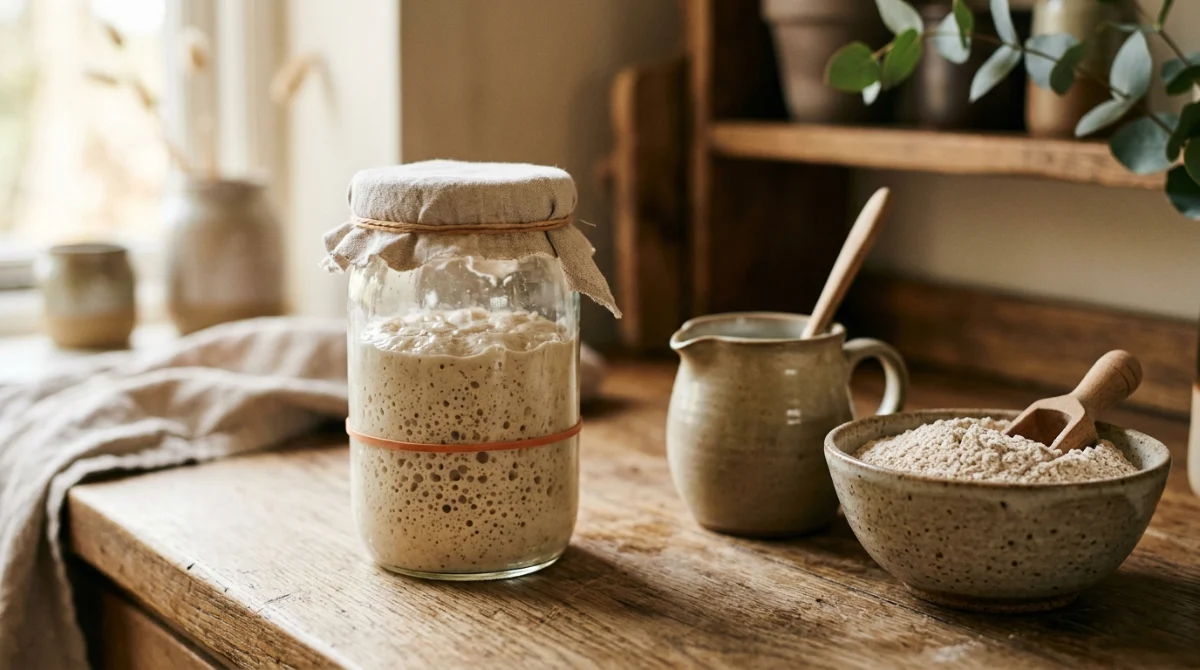
Mix 50 g of freshly milled rye or wholewheat flour with 50 g of lukewarm, unchlorinated water in a clean jar, keep it at 24–26 °C, and from day 3 discard all but 50 g and feed it 50 g flour and 50 g water once a day. A sourdough starter with fresh-milled flour usually doubles reliably within 5 to 10 days, often at the quick end with rye. Expect a burst of bubbles on day 2 or 3, followed by a quiet spell. That lull is normal, not a failure, and it’s where most people give up too early.
Below: why fresh flour gives you a head start, the day-by-day method, how to tell when it’s ready, and what to do when it isn’t.
On this page
- Why does a sourdough starter with fresh-milled flour work better?
- What do you need?
- The day-by-day method
- Why did my starter rise on day 3 and then die?
- What temperature does a starter need in a South African kitchen?
- How do I know my starter is ready to bake with?
- What goes wrong, and how do you fix it?
- How do I look after it once it’s going?
- Which Sana mill suits a sourdough kitchen?
- Frequently asked questions
- Source
Why does a sourdough starter with fresh-milled flour work better?
A starter is a culture of wild yeast and lactic acid bacteria. Both arrive on the grain itself, and both need food. Whole grain has more of both.
- The microbes live on the outside of the grain. Bran is where most of them sit. White flour has the bran removed. A lot of South African “brown” flour is white flour with some bran added back, and the germ is usually missing. When you mill the whole berry yourself, all of it goes in the jar.
- More food. Bran and germ carry minerals, sugars and enzymes that break starch down into sugars the yeast can eat. Starters fed on whole grain rise faster and smell stronger.
- Rye is the easiest start of all. It’s naturally high in the enzymes and the kind of sugars that yeast like, and it ferments hard. If you’ve had a starter fail on bought flour before, start with fresh rye.
Once your starter is going, you can switch it to whatever you bake with. Plenty of people start on rye and maintain on wheat.
What do you need?
| Item | Notes |
|---|---|
| Whole grain: rye or wheat berries | About 1 kg covers the first two weeks with room to spare. Our grain sourcing guide lists South African suppliers. |
| A mill set to fine | Fine flour hydrates evenly and gives the microbes more surface to work on. Mill 300–500 g at a time and keep it in a sealed jar. |
| A glass jar, about 500 ml to 1 L | Straight sides make it easy to see the rise. A clip-top jar with the rubber seal removed, or a jar with the lid resting loosely on top, works well. |
| Kitchen scale | Cups are useless with whole-grain flour — its weight per cup changes with the grind. |
| Water | If your tap water smells of chlorine, leave a jug standing overnight or use filtered or bottled still water. |
| A rubber band or marker | To mark the level after every feed. |
The day-by-day method
Weights are for a 1:1:1 feed: equal parts starter, flour and water. That’s 100% hydration, which suits whole-grain flour well. If the mix is stiffer than thick porridge, add 5–10 g more water.
| Day | What to do | What you’ll probably see |
|---|---|---|
| 1 | Mix 50 g fresh-milled flour with 50 g water at about 30 °C (warm to the touch, not hot). Cover loosely. | Nothing. It looks like wet sand. |
| 2 | Stir it well. Don’t feed. | A few bubbles, maybe a faint sweet or beery smell. |
| 3 | Stir. If it has risen noticeably, discard all but 50 g, then add 50 g flour and 50 g water. If it’s done nothing, stir and wait another day. | Often a big rise and lots of bubbles, sometimes smelling like cheese or old socks. This is the early bloom. |
| 4–5 | Once a day: discard to 50 g, feed 50 g flour + 50 g water. | Frequently goes quiet — little or no rise. Keep feeding. |
| 6–7 | Same daily feed. Start watching how long it takes to peak. | Smell turns tangy and yoghurt-like. Rise comes back and gets more predictable. |
| 8–10 | When it’s rising well, move to two feeds a day, about 12 hours apart. | Doubles within 4–8 hours of a feed. |
| Ready | It has doubled within 4–8 hours of feeding, three days in a row, and smells pleasantly sour. | Domed top, bubbles all the way through, a web-like texture when you pull a spoon out. |
Stir it once or twice between feeds in the first week if you’re around. It spreads the microbes through fresh food and seems to speed things along.
Why did my starter rise on day 3 and then die?
It didn’t die. That first big rise is mostly Leuconostoc and other bacteria that live on grain. They make plenty of gas but they stop growing once the mix gets acidic, below about pH 4.5. Your starter goes quiet while the acid-loving lactic bacteria take over, and the yeast wakes up after that. American baker and microbiologist Debra Wink documented this on The Fresh Loaf, and it’s why so many starters “fail” on day 4.
Keep feeding once a day through the quiet spell. Don’t switch to twice-daily feeds yet, because you’d only dilute the acidity the good microbes need.
Want to skip the lull? Replace the water on day 1 and day 2 with unsweetened pineapple juice (plain orange juice or a teaspoon of apple cider vinegar in the water also works). The acid stops the early bacteria from taking hold. Go back to plain water from day 3.
What temperature does a starter need in a South African kitchen?
Temperature changes everything. 24–26 °C is the target. At 18 °C, every stage takes roughly twice as long.
| Your kitchen | What to expect | What to do |
|---|---|---|
| Highveld winter nights (14–17 °C) | Slow. May take two weeks to get going. | Put the jar in the oven with only the light on, door cracked (check with a thermometer — some ovens reach 35 °C with the light on). The top of the fridge or next to the geyser cupboard also works. |
| Coastal winter (16–20 °C) | A bit slow, steady. | Warm water (30 °C) at every feed helps. |
| Spring/autumn (20–25 °C) | Ideal. | Follow the table as written. |
| KZN or Lowveld summer (28 °C+) | Fast — may peak and collapse in 3–4 hours. Can smell like nail polish remover if it’s hungry. | Feed 1:2:2 or 1:5:5 (e.g. 20 g starter, 100 g flour, 100 g water) to slow it down. Use cool water. |
How do I know my starter is ready to bake with?
Three checks, in order of reliability:
- Predictable rise. It doubles within 4–8 hours of a feed, three days running. This is the one that matters.
- Smell. Tangy and pleasant, like yoghurt, green apples or mild vinegar. Not cheesy, not rotten.
- Float test (optional). Drop a teaspoon of starter at its peak into water. If it floats, it’s full of gas. Whole-grain rye starters often sink even when strong, so don’t rely on this with rye.
Your first bake should use the starter at or just before its peak. For a gentle first loaf, try our 70/30 fresh-milled recipe, which is built to forgive a young starter.
What goes wrong, and how do you fix it?
| Problem | Likely cause | Fix |
|---|---|---|
| No activity at all after 3 days | Too cold, or chlorinated water | Move it somewhere warmer (24–26 °C). Switch to standing or filtered water. |
| Rose on day 2–3, now nothing | Normal lull | Keep feeding once a day. Try the pineapple juice trick next time. |
| Grey or dark liquid on top (“hooch”) | Hungry — it’s used up its food | Stir it in (sourer) or pour it off (milder), then feed. Feed more often or at a higher ratio. |
| Smells of acetone / nail polish | Very hungry, usually in heat | Feed at 1:5:5 for a day or two. |
| Pink, orange or fuzzy mould | Contamination | Throw it out, wash the jar in hot water and start again. White film on its own is usually harmless yeast — scrape it off. |
| Rises but collapses fast, slightly runny | Too warm or too wet | Cooler spot, higher feed ratio, or cut the water to 40 g. |
| Rye starter looks like paste and barely domes | That’s rye | Rye starters rise less visibly and crack on top rather than dome. Look for bubbles through the whole jar. |
How do I look after it once it’s going?
Whole-grain starters are livelier than white ones, and that carries on in the fridge. Refrigeration slows fresh-milled whole grain less than you’d expect.
- Baking every day or two: keep it on the counter and feed once or twice a day.
- Baking once a week: keep it in the fridge. Take it out the day before you bake, feed it twice, and bake when it peaks. Feed it at least once a week in the fridge.
- Going away for a fortnight: make a stiff starter (50 g starter, 100 g flour and 50–60 g water, kneaded into a dough ball) and refrigerate it. Stiff starters ferment far more slowly. To revive it, feed it at normal hydration twice before baking.
- Keeping your flour fresh: a starter only eats 50–100 g a day, so mill a jar at a time. Whole-grain flour tastes best within a week at room temperature; freeze anything beyond that. There’s no need to “age” it first. EcoHub explains why in should you rest fresh-milled flour before baking?
Converting an existing starter from bought flour to fresh-milled takes two or three feeds. Expect it to rise faster and smell stronger. Watch the first few feeds so you catch the new peak time.
Which Sana mill suits a sourdough kitchen?
For a starter and a few loaves a week, the Sana Grain Mill is plenty. It mills a starter’s worth of flour in well under a minute and a loaf’s worth in a few minutes, on ceramic-corundum stones in a solid beechwood housing. If you bake for a big household, or often mill maize, chickpeas and other harder grains, the Sana Grain Mill MAX gives you the 600 W motor for it.
Both are made in Austria, carry a 12-year warranty, and are imported and supported locally, so spares and service are handled here rather than overseas. For a full walk-through of the models, see Sana stone grain mills: fresh flour at home on EcoHub.
Frequently asked questions
How long does a sourdough starter take with fresh-milled flour?
Usually 5 to 10 days at 24–26 °C before it doubles reliably within 4–8 hours of a feed. Fresh rye is often the fastest. In a cold Highveld winter kitchen it can take two weeks.
Is rye or wholewheat better for starting a starter?
Rye is the more forgiving choice. It’s high in enzymes and fermentable sugars and gets going quickly. You can switch to wheat once the starter is established; it takes two or three feeds to adjust.
Why is my starter not rising after day 3?
Almost always it’s the normal quiet phase. The bacteria behind the early rise stop growing as the starter turns acidic, and the yeast takes a few more days to build up. Keep feeding once a day at 24–26 °C.
What feeding ratio should I use?
Start with 1:1:1 by weight, for example 50 g starter, 50 g flour and 50 g water. Once it’s strong, or in hot weather, move to 1:2:2 or 1:5:5 so it peaks later and doesn’t run out of food.
Can I use South African tap water for a sourdough starter?
Usually yes. If it smells of chlorine, leave it standing in an open jug overnight or use filtered or bottled still water, especially in the first week.
Do I need to use fresh-milled flour for every feed?
No, but it helps to use whole-grain flour. Mill 300–500 g at a time, keep it in a sealed jar, and freeze any you won’t use within a week.
What is the liquid on top of my starter?
It’s called hooch: alcohol and water that collect when the starter is hungry. Stir it back in for a sourer flavour or pour it off for a milder one, then feed. It’s a sign to feed more often.
