Blog
Almond Milk with a Sana Juicer


Short answer. To make almond milk with a Sana juicer, soak raw almonds overnight, then use 1 part almonds to 2 parts water by volume. Sana’s method runs the almonds through the homogenising (blank) screen first to make a paste, then sends the paste, stirred into the water, through the fine juicing screen. Strain it through a nut milk bag if you want it extra smooth, keep it cold and use it within about 48 hours. The Sana 707, 727 and 929 all do this, and the 878 makes nut milk from soaked nuts too.
On this page
Which Sana juicers make almond milk?
Nut milk is one of the jobs the horizontal Sanas were designed for, and the hands-free 878 makes it as well.
| Sana model | Almond milk | How |
|---|---|---|
| Sana 707 | Yes | Homogenising screen, then the fine screen. The manual also gives a quicker fine-screen-only method |
| Sana 727 Supreme | Yes | Homogenising screen, then the fine screen. Almonds for milk are on the manual’s settings chart |
| Sana 929 Ultimate | Yes | Same method as the 727 |
| Sana 878 | Yes, from soaked nuts | Soak the nuts as the manual asks, then follow the 878 manual’s nut milk steps |
| Sana 818 | Not listed | A juice-only machine |
If the homogenising screen for your 707 or 727 has gone missing, replacements are sold separately.
Soaking the almonds
Every Sana method starts with soaked almonds. Dry almonds are hard work for any juicer, and soaked ones break down into a soft paste. The Sana 878 manual asks for at least four hours in water, and preferably overnight. The 707 manual gives six hours, and Sana’s own recipe soaks them overnight.
Cover the almonds with plenty of cold water, because they swell. On a hot summer night, soak them in the fridge. In the morning, drain them, rinse well and throw away the soaking water.
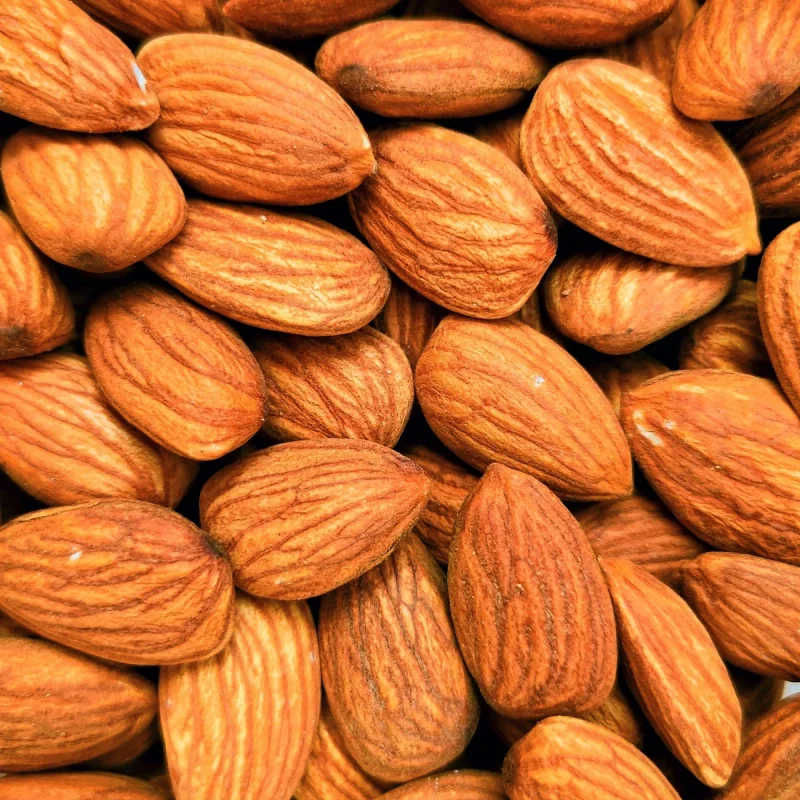
Use raw, unsalted almonds. Skin-on almonds give a slightly creamy-tan milk with more almond flavour. Blanched (skinned) almonds give a whiter, milder milk.
How to make almond milk with a Sana juicer
This is Sana’s own two-screen method, written in our words.
- Make a paste. Fit the homogenising screen and feed the soaked almonds in a small handful at a time. They come out of the front as a damp, coarse paste. Keep a container under the juice outlet too, as a little liquid can come out there.
- Mix and rest. Tip the paste into a jug, pour in the cold water and stir well. Leave it for 5 minutes, then stir again.
- Change screens. Swap the homogenising screen for the fine juicing screen.
- Press the milk. Ladle the almond mixture slowly into the hopper. The milk runs from the juice outlet and the pressed pulp comes out of the end.
- Strain if you like. For a silky finish, pour the milk through a Sana nut milk bag and squeeze gently. Many people do this every time; it is optional.
- Chill. Bottle it, refrigerate it and use it within about 48 hours.
EU Juicers’ video shows almond milk made on the 707.
The 707 manual also gives a one-screen version. Fit the fine screen, feed the soaked almonds through, pour water over the pulp that comes out, stir, and ladle it back into the feed tube. It uses 100 g of almonds to 300 ml of water, which works out at about 150 g to 450 ml, close to the ratio in Sana’s recipe.
On the 878, soak the nuts as its manual asks and follow the manual’s nut milk steps, then strain through a nut milk bag for a smoother milk.
Here is the same idea on the Sana 929.
Almond Milk with a Sana Juicer
Ingredients
Equipment
Method
- Cover the almonds with plenty of cold water and soak for at least 4 hours, preferably overnight (in the fridge on hot nights).
- Drain, rinse well and discard the soaking water.
- Fit the homogenising screen and feed the almonds in a small handful at a time, with the date if using. Keep a container under the juice outlet as well as the front.
- Tip the almond paste into a jug, add the 500 ml of cold water, stir well and leave for 5 minutes. Stir again.
- Swap the homogenising screen for the fine juicing screen.
- Ladle the almond mixture slowly into the hopper and collect the milk from the juice outlet.
- For a smoother milk, strain it through a nut milk bag and squeeze gently.
- Stir in the vanilla and salt if using.
- Pour into a sealed glass bottle, refrigerate and use within about 48 hours. Shake before pouring.
Notes
Creamier or lighter milk
Sana’s ratio of one cup of almonds to two cups of water is a good everyday milk. A 250 ml cup holds about 150 g of whole almonds, so that is roughly 150 g of almonds to 500 ml of water. Change the water to suit how you use it.
| Style | Almonds (before soaking) | Water | Good for |
|---|---|---|---|
| Rich | 150 g | 375 ml (1½ cups) | A splash in coffee or tea |
| Everyday | 150 g | 500 ml (2 cups) | Muesli, porridge, smoothies |
| Light | 150 g | 750 ml (3 cups) | Drinking by the glass |
You can also press a rich batch and stir in more water afterwards, so one batch covers both coffee and the breakfast table.
Sweetening and flavour
Plain, unsweetened almond milk is lovely on its own, so start there. If you want it sweeter or more rounded:
- A date. Feed one or two soft, pitted dates through the homogenising screen with the almonds. Always take the pip out first.
- Vanilla. Stir in ½ teaspoon of vanilla extract after pressing.
- A pinch of salt. It brings out the almond flavour without tasting salty.
- Honey or maple syrup. Stir in a little at the end. Sana’s own recipe uses maple syrup.
- Cinnamon. Stir ground cinnamon into the finished milk. Hard spices aren’t for the juicer: the 727 manual lists spices such as cinnamon among the things not to process.
What to do with the almond pulp
A batch leaves you with a good handful of damp almond pulp. It still has plenty of flavour, so it is worth keeping.
- Dry it into almond meal. Spread it thinly on a baking tray and dry it in the oven on its lowest setting, stirring now and then, until it is completely dry and crumbly. Blitz it fine and store it airtight in the fridge or freezer.
- Bake with it. Fold the damp pulp into muffins, banana bread or pancake batter, in place of a little of the flour.
- Make crackers. Mix the pulp with seeds such as linseed and sunflower, a pinch of salt and some herbs, spread it thinly and bake low and slow until crisp.
- Stir it into breakfast. A spoonful in porridge or overnight oats adds texture.
Damp pulp keeps for a day or two in the fridge, or freeze it in portions.
Cashew and other nut milks
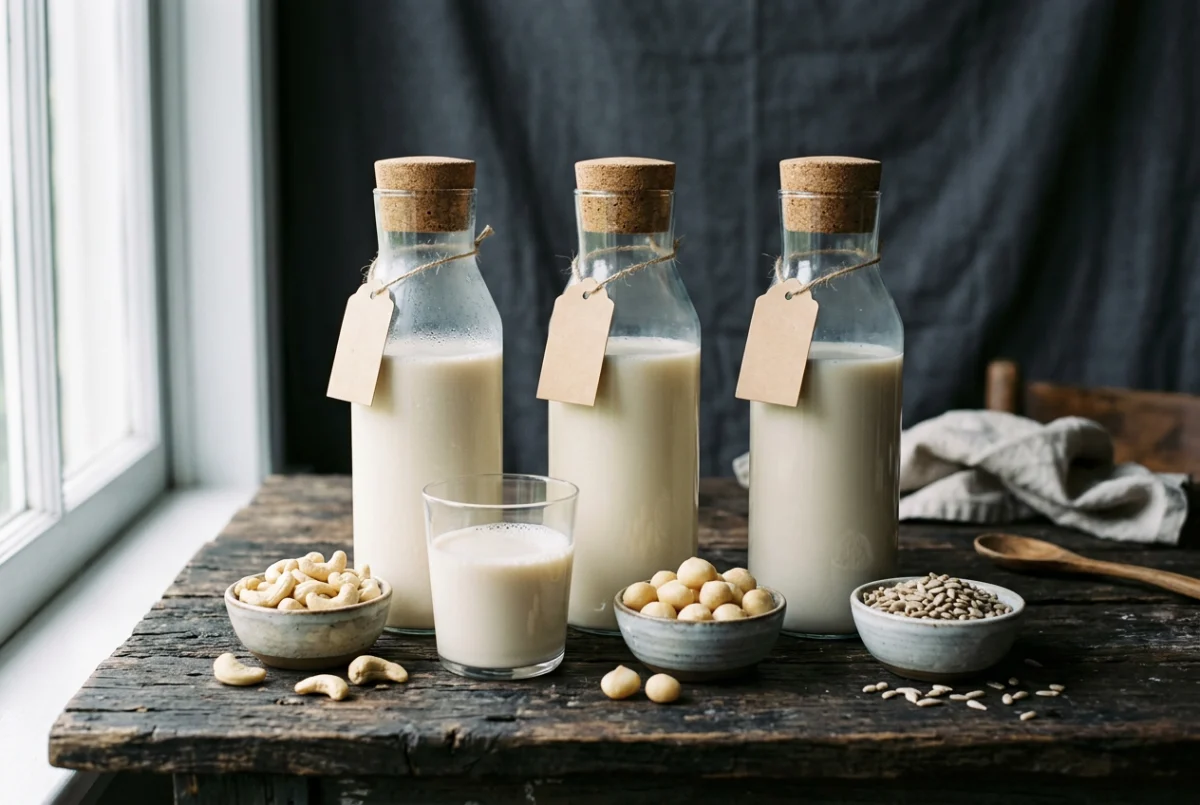
The 707 manual says milk can be made the same way from other kinds of nuts. Cashews are the easiest: they are softer than almonds and tend to leave less pulp behind, so you may find you can skip the nut milk bag. Strain it if you want it completely smooth. Hazelnuts give a toasty, sweeter milk. Macadamias, which South Africa grows plenty of, make a rich, buttery milk, though they cost more, so try them in a small batch first. Soak all of them the same way as almonds.
Keeping homemade almond milk fresh
- Use it within about 48 hours. That is Sana’s guidance. Keep it in a sealed glass bottle at the back of the fridge, where it is coldest, rather than in the door.
- Shake before pouring. Homemade almond milk separates as it stands. That is normal: there are no emulsifiers or stabilisers holding it together.
- Trust your nose. If it smells sour or tastes off, throw it out.
- Mind allergies. Almonds are tree nuts. The 878 manual reminds you to be aware of any food allergies of the people you are serving.
- It isn’t fortified. Some cartons on the shelf have added calcium and vitamins; homemade almond milk contains only what you put in. It isn’t a like-for-like swap for cow’s milk or formula for babies and young children, so check with your doctor or clinic first.
As for cost, bought almond milk is convenient and lasts for weeks unopened. Homemade uses about 300 g of almonds for every litre of water at Sana’s ratio, with nothing else added unless you choose to. Check the almond percentage and ingredient list on a carton to see the difference for yourself. Buying almonds in bulk and using the pulp makes homemade go further.
Made with a Sana juicer


Sana 707 Juicer
R9899,00

Sana 727 Supreme Juicer
Price range: R12999,00 through R14999,00
Frequently asked questions
Do I have to soak the almonds?
Yes. All of Sana’s methods start with soaked almonds. The Sana 878 manual asks for at least four hours in water, preferably overnight, and the 707 manual gives six hours. Drain and rinse them before you start.
Can I make almond milk in the Sana 818?
Nut milk isn’t on the Sana 818’s list of uses; it is a juice-only machine. The 707, 727 and 929 make almond milk with their homogenising and fine screens, and the 878 makes nut milk from soaked nuts.
Do I need a nut milk bag?
No. The fine juicing screen separates the milk from the pulp on its own. Straining through a nut milk bag afterwards gives a smoother, silkier milk, which is why many people do it.
How long does homemade almond milk keep?
Sana’s guidance is to keep it in the fridge and use it within about 48 hours. Store it in a sealed glass bottle, shake it before pouring, and throw it out if it smells or tastes sour.
Why does my almond milk separate?
Separation is normal. Homemade almond milk has no emulsifiers or stabilisers, so the almond solids settle as it stands. Give the bottle a good shake before you pour.
Can I make other nut milks the same way?
Yes. The Sana 707 manual says milk can be prepared the same way from other kinds of nuts. Soak them first, as you would almonds. Cashews tend to leave less pulp, while hazelnuts and macadamias give a richer flavour.
Sources
- Almond milk recipe, Sana Products: soaking, 1:2 ratio, homogenising then fine screen, 48-hour storage. sanaproducts.com
- Sana 707 user manual (English), Sana Products: almond milk method and quantities, soaking time, other nuts. sanaproducts.com
- Sana 727 Supreme user manual (English), Sana Products: settings chart, homogenising screen, items not to process. sanaproducts.com
- Sana 878 user manual, Sana Products: soaking nuts, allergy reminder. sanaproducts.com