Blog
Plant Milks Beyond Almond: Cashew, Sunflower Seed, Macadamia and Peanut-Banana

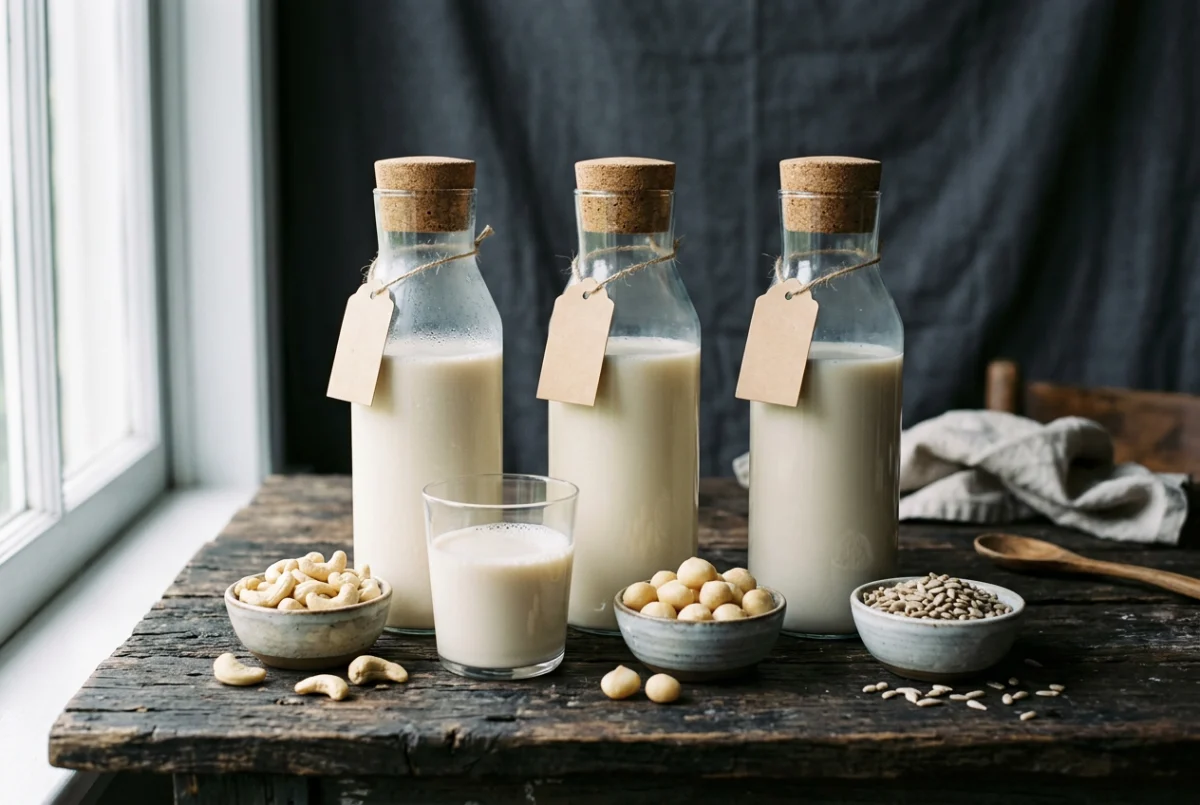
Short answer. Making plant milk with a Sana juicer works the same way for most nuts and seeds as it does for almonds: soak them, press them on the homogenising screen, stir in cold water, then press again through the fine screen. Cashews give the creamiest milk with the least pulp, sunflower seeds are the most affordable, macadamias are the richest, and peanut with banana makes a filling breakfast milk. The Sana 707, 727 and 929 make all of these, and the 878 makes milk from soaked nuts and seeds. Keep it cold and use it within about two days.
On this page
How to make plant milk with a Sana juicer
Our almond milk guide walks through Sana’s method step by step, with ratios and Sana’s videos. In short:
- Soak, drain and rinse.
- Press the soaked nuts or seeds through the homogenising (blank) screen into a paste.
- Stir the paste into cold water and leave it for 5 minutes.
- Swap to the fine juicing screen and ladle the mixture back through.
- Strain through a Sana nut milk bag if you want it silky.
The 707 manual says milk can be made the same way from other kinds of nuts, and that is all this post does: changes what goes in. On the Sana 878, the manual asks for nuts or seeds to be soaked for at least four hours, preferably overnight, and the almond milk guide shows how we press them on that machine.
Which milk for which job?
| Milk | Soak | Texture and flavour | Good for |
|---|---|---|---|
| Cashew | At least 4 hours | Creamy, mild, very little pulp | Coffee, tea, sauces |
| Sunflower seed | At least 4 hours, preferably overnight | Light, nutty, slightly earthy | Muesli, smoothies, everyday use |
| Macadamia | At least 4 hours, preferably overnight | Rich and buttery | A treat, coffee, desserts |
| Peanut and banana | Peanuts overnight | Thick, sweet, filling | Breakfast on the go |
Cashew milk
Cashews are the easiest nut to turn into milk. They are soft once soaked, they break down almost completely, and the pulp left behind is a small, damp handful. Many people skip the nut milk bag altogether. Use raw, unsalted cashews.
Because so little is lost to pulp, cashew milk is also the one to make thicker for coffee. Halve the water for a rich, almost cream-like milk.
Cashew Milk with a Sana Juicer
Ingredients
Equipment
Method
- Cover the cashews with plenty of cold water and soak for at least 4 hours.
- Drain, rinse well and discard the soaking water.
- Fit the homogenising screen and feed the cashews (and the date, if using) through a small handful at a time.
- Stir the paste into the cold water in a jug and leave for 5 minutes. Stir again.
- Swap to the fine juicing screen and ladle the mixture slowly into the hopper. Collect the milk from the juice outlet.
- Strain through a nut milk bag if you want it completely smooth.
- Add a pinch of salt, bottle, refrigerate and use within about 48 hours. Shake before pouring.
Notes
Macadamia milk
Macadamias are grown here in South Africa and make a wonderfully rich, buttery milk. They cost more than cashews, so we often make a half-and-half batch: 75 g macadamias and 75 g cashews to the same water. Soak macadamias overnight. They leave a little more pulp than cashews, so the nut milk bag is worth using.
Sunflower seed milk
If nut prices put you off, sunflower seeds are the affordable answer. Buy raw, hulled seeds (not the roasted, salted snack kind). The milk is lighter than cashew, with a nutty, slightly earthy flavour that a date and a little vanilla round out nicely. Sunflower seeds also stand in for pine nuts in our budget basil pesto.
Rinse the seeds well after soaking, and throw the soaking water away. Strain the finished milk through a nut milk bag, because sunflower seeds leave more fine pulp than cashews do.
Sunflower Seed Milk
Ingredients
Equipment
Method
- Cover the sunflower seeds with plenty of cold water and soak for at least 4 hours, preferably overnight in the fridge.
- Drain and rinse very well. Discard the soaking water.
- Fit the homogenising screen and feed the seeds and dates through a small handful at a time.
- Stir the paste into the cold water and leave for 5 minutes. Stir again.
- Swap to the fine juicing screen and ladle the mixture slowly into the hopper.
- Strain through a nut milk bag and squeeze gently.
- Stir in the vanilla and salt. Bottle, refrigerate and use within about 48 hours. Shake before pouring.
Notes
One thing to know if you bake with the leftover pulp: sunflower seeds can turn baked goods green. They are rich in chlorogenic acid, which reacts under alkaline conditions, and baking soda makes a dough alkaline. Food scientists have studied this colour change in sunflower cookies. It is about colour, not a sign that anything has gone off, but if you want golden muffins, keep baking soda out of the recipe. Our juice pulp recipes have more ideas for leftovers.
Peanut and banana breakfast milk
This one is closer to a drinkable breakfast than a milk for your tea. Raw peanuts, soaked overnight, give a mild nutty milk, and a banana puréed on the homogenising screen makes it thick and sweet without any added sugar. Sana’s own “breakfast in a glass” recipe uses the same trick, puréeing a banana on the homogenising screen before switching screens.
The order matters. Press the peanuts and the banana on the homogenising screen first, set the banana aside, then press the peanut milk on the fine screen and whisk the banana in at the end. If the banana went through the fine screen, most of it would end up with the pulp. Because the banana needs the homogenising screen, this recipe is for the 707, 727 and 929.
Peanut and Banana Breakfast Milk
Ingredients
Equipment
Method
- Soak the peanuts overnight in plenty of cold water. Drain, rinse and discard the soaking water.
- Fit the homogenising screen. Feed the peanuts through a small handful at a time and tip the paste into a jug.
- Feed the banana through and set the purée aside in a separate bowl.
- Stir the cold water into the peanut paste and leave for 5 minutes. Stir again.
- Swap to the fine juicing screen and ladle the peanut mixture slowly into the hopper. Strain through a nut milk bag if you like.
- Whisk the banana purée into the peanut milk, add the cinnamon if using, and drink the same day.
Notes
Drink it the same day. Banana darkens as it stands, and the milk thickens in the fridge.
Why we don’t make oat milk in a juicer
Oat milk isn’t in any of Sana’s guidance, and the 727 and 878 manuals both rule out dry grains. A slimy texture is a common complaint with homemade oat milk, and we haven’t found a juicer method that avoids it. We buy oat milk or make it with a quick blend and a sieve instead.
Allergies, nutrition and keeping it fresh
- Allergies. Cashews and macadamias are tree nuts, and peanuts are a common allergen. The 878 manual reminds you to be aware of any food allergies of the people you are serving. Wash the juicer thoroughly before making juice for someone with an allergy.
- It isn’t fortified. Many cartons on the shelf have added calcium and vitamins. Homemade plant milk contains only what you put in. It isn’t a like-for-like swap for cow’s milk or formula for babies and young children, so check with your doctor or clinic first.
- Keep it cold and use it within about 48 hours. That is Sana’s guidance for almond milk, and we use the same rule for these. Peanut-banana milk is best on the day.
- Shake before pouring. Separation is normal; there are no emulsifiers holding it together.
- Trust your nose. If it smells sour or tastes off, throw it out.
Made with a Sana juicer


Sana 707 Juicer
R9899,00

Sana 727 Supreme Juicer
Price range: R12999,00 through R14999,00
Frequently asked questions
Do I need to soak cashews and sunflower seeds?
Yes. The Sana 878 manual asks for nuts or seeds to be soaked for at least four hours, preferably overnight, and rinsed before processing. Soaked nuts and seeds break down into a soft paste, which is easier on the juicer and gives a creamier milk.
Which plant milk leaves the least pulp?
Cashew. Soaked cashews break down almost completely, so you are left with very little pulp and many people don’t bother straining it. Sunflower seeds and macadamias leave more, so a nut milk bag helps.
Can I make oat milk in a Sana juicer?
We don’t recommend it. Oat milk isn’t in Sana’s guidance, the 727 and 878 manuals rule out dry grains, and sliminess is a common complaint with homemade oat milk. A blender and a fine sieve, or a carton, are better options.
Can the Sana 878 make cashew or sunflower seed milk?
Yes. The 878 makes milk from nuts or seeds, and its manual asks for them to be soaked for at least four hours, preferably overnight, first. The peanut-banana milk needs the homogenising screen for the banana, so that one is for the 707, 727 or 929.
How long does homemade cashew or sunflower milk keep?
Keep it in a sealed glass bottle in the coldest part of the fridge and use it within about 48 hours, which is Sana’s guidance for almond milk. Shake it before pouring and throw it out if it smells sour.
Is homemade plant milk a replacement for cow’s milk?
Not like for like. Homemade plant milk isn’t fortified with calcium or vitamins the way many cartons are, so check with your doctor or clinic before using it in place of milk for babies and young children.
Sources
- Almond milk recipe, Sana Products: two-screen method, 48-hour storage. sanaproducts.com
- Breakfast in a glass, Sana Products recipes: banana puréed on the homogenising screen. sanaproducts.com
- Sana 707 juicer user manual (English), Sana Products: milk from other kinds of nuts, nuts that process best. sanaproducts.com
- Sana 727 Supreme user manual (English), Sana Products: items not to process, including dried grains. sanaproducts.com
- Sana 878 user manual, Sana Products: soaking nuts and seeds, grains not to be processed, allergy reminder. sanaproducts.com
- Pepra-Ameyaw et al., “Preventing chlorogenic acid quinone-induced greening in sunflower cookies”, LWT, 2023. Chapman University Digital Commons