Blog
How to clean a Sana juicer quickly

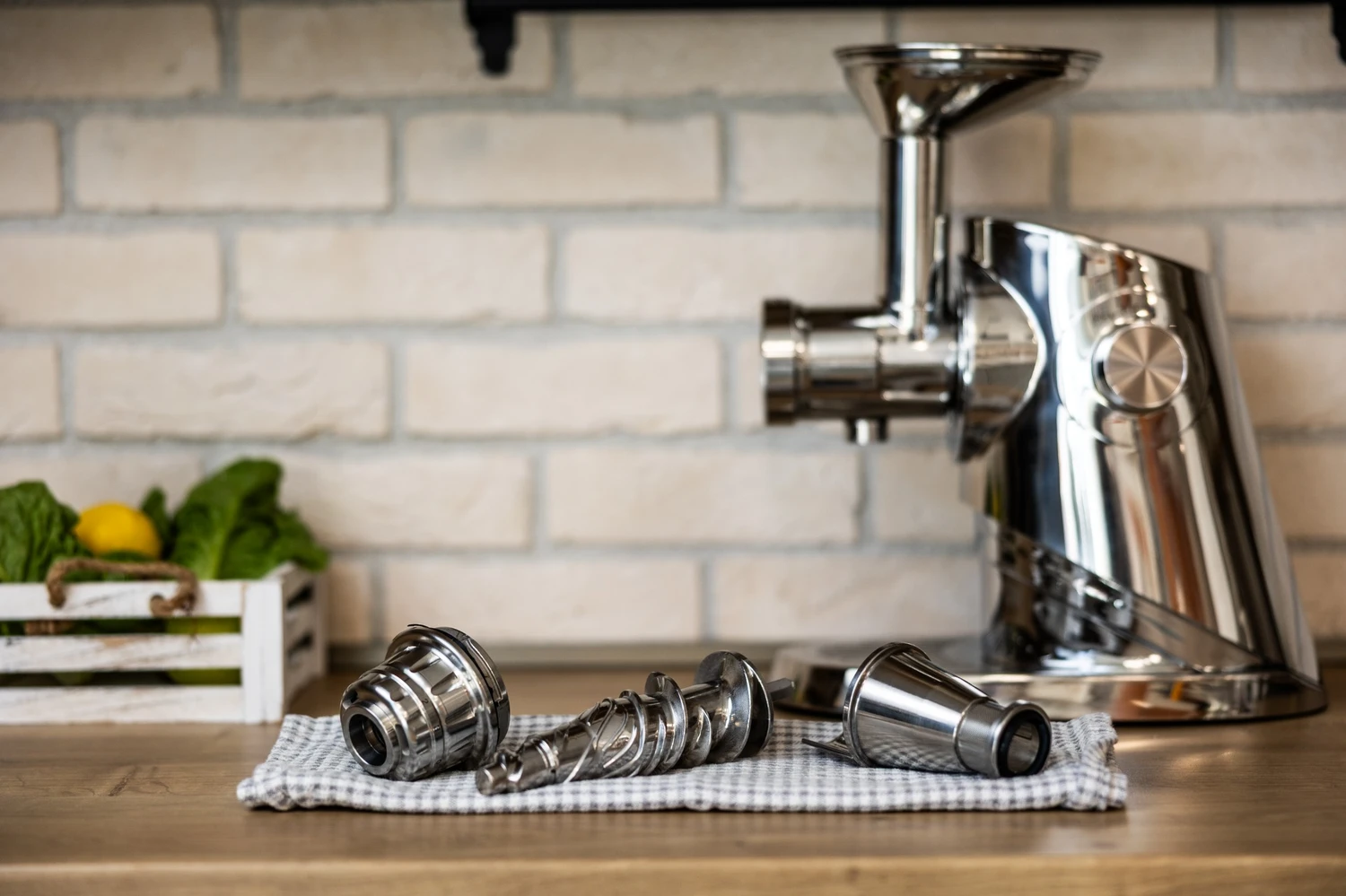
Short answer. The quickest way to clean a Sana juicer is to do it straight away, before the pulp dries. Take it apart, rinse each part under running water, run the cleaning brush over the screen, then dry everything and put it back together. In our kitchen, a horizontal Sana takes about a minute. The 707, 727, 878 and 818 manuals all keep the juicing parts out of the dishwasher, and none of them want hot water, scourers or abrasive cleaners. The 929 is the exception: its stainless juicing parts can go on the dishwasher’s top rack.
On this page
- Why cleaning straight away matters
- How to clean a Sana juicer in five steps
- What each Sana manual says
- Why horizontal juicers are so quick to clean
- Dry the screen properly
- Deep cleaning and build-up
- Stains from carrot, turmeric and beetroot
- Squeaks and noises
- Putting it back together
- Frequently asked questions
Why cleaning straight away matters
Cleaning is one of the main reasons people give up juicing, and most of the effort comes from waiting. Fresh pulp rinses off in seconds. Dried pulp sets in the fine holes of the screen, makes the parts stick together and takes far longer to shift. The 727 manual warns that dried juice can make the parts difficult to take apart, and the 878 manual adds that pulp left to dry can clog the screen and discolour the parts.
So rinse up while the juice settles in the jug, and it is done before you sit down.
How to clean a Sana juicer in five steps
- Switch off and unplug. On the 878, wait a few seconds after turning it off for the motor to stop completely.
- Take it apart. Remove the juicing parts from the motor base. On a horizontal Sana that means the drum, auger, screen and cap. On the 878 and 818, lift off the juicing chamber, remove the hopper, then take out the auger, screen and rotating brush.
- Rinse each part under running water. Lukewarm tap water is enough. Open the juice cap and the pulp outlet on the 878 and 818 so water can run through the chamber.
- Brush the screen. Use the cleaning brush (the 707, 727, 878 and 818 all come with one) and work it over the screen inside and out until you can see light through the holes.
- Dry and reassemble. Wipe the motor base with a damp, well-wrung cloth, never under the tap. Dry the parts on a clean towel and put the juicer back together once they are dry.
The video above shows the routine on the 727.
What each Sana manual says
The routine is the same for every model, but the details differ.
| Model | How to wash | Dishwasher | Good to know |
|---|---|---|---|
| Sana 707 | Warm, soapy water in the sink, then rinse well | No | Clean the drum set after every use; wipe the motor base with a damp cloth |
| Sana 727 | Running water and the cleaning brush on the screen | No | No hot water, abrasive cleaners, scrubby sponges, sharp tools or dishwashing liquid; take care with the blade in the drum cap |
| Sana 929 | Rinse under running water and brush the screen | Yes, on the top rack with a mild detergent: drum, auger, screens, cap and containers. Not the pusher | Solid stainless steel drum, auger, screens and cap; dry them well |
| Sana 878 | Running water and the cleaning brush on the screen | No | Nothing at 80 °C or hotter; no steel wool; clean after more than 1 kg of produce |
| Sana 818 | All parts with the cleaning brush under running water | No | Nothing at 80 °C or hotter; remove and wash the silicone gaskets |
Two points are worth noticing. The 707 manual asks for warm, soapy water, while the 727 manual specifically says not to use dishwashing liquid. And the 878 manual suggests running the juicer for at least ten seconds after the last piece goes in, so the remaining pulp clears before you take it apart.
Why horizontal juicers are so quick to clean
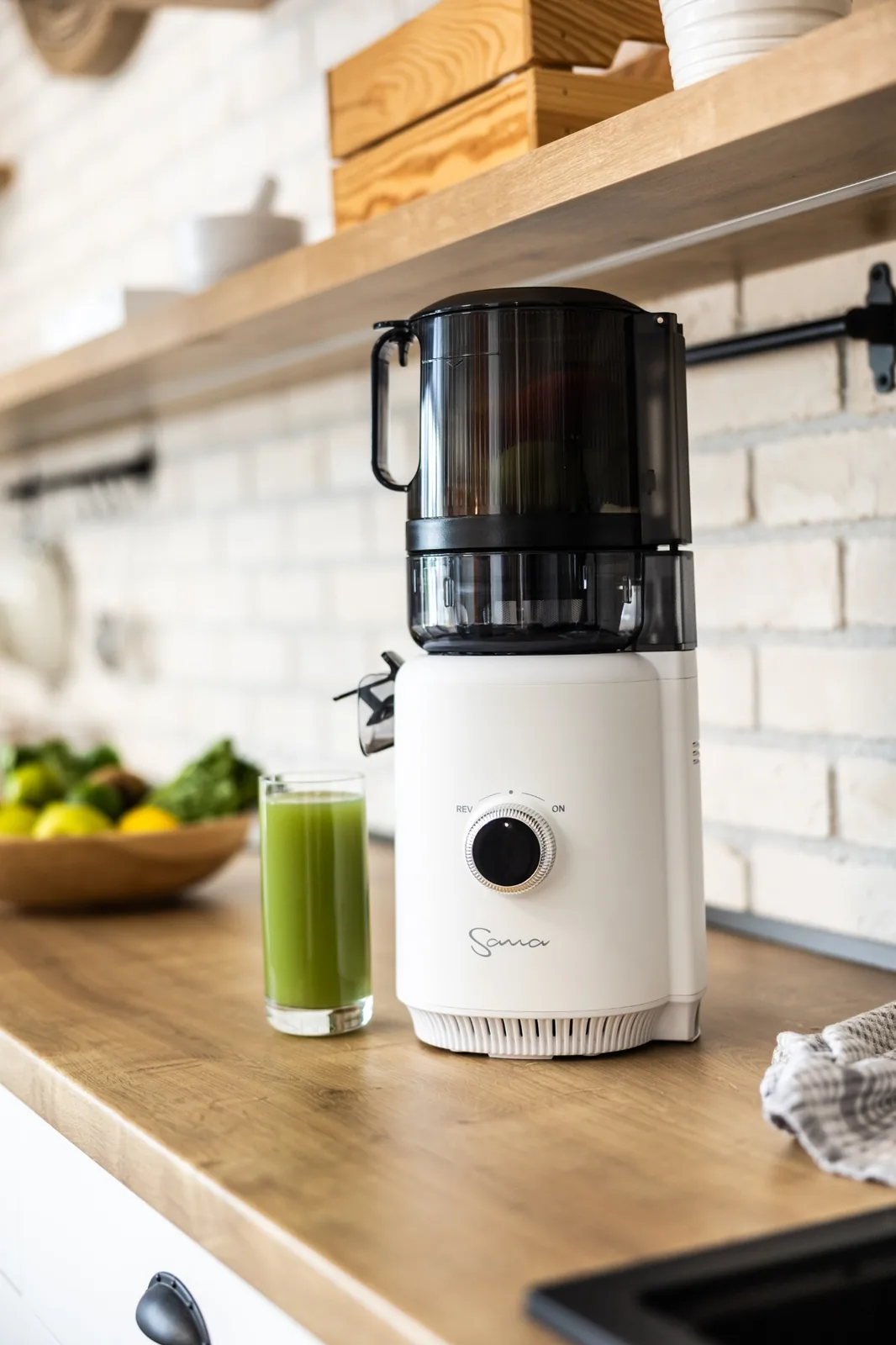
A horizontal Sana has very few parts that touch the produce: the drum, the auger, the screen and the end cap. Nothing is hidden and everything fits under the tap at once, which is why we reach for one for a single glass in the morning.
The 727 adds one extra piece: a rotating stainless steel blade in the drum cap that cuts the pulp as it leaves. It rinses with the rest, but the manual asks you to take care not to cut yourself, and you can take the drum cap apart for a deeper clean when it needs it.
The hands-free 878 and 818 have a few more parts, because the hopper, rotating brush and silicone gaskets do the feeding for you. The parts are bigger but rinse quickly, a fair trade if you juice large batches of fruit. Our batch juicing guide shows how to make that work.
Dry the screen properly
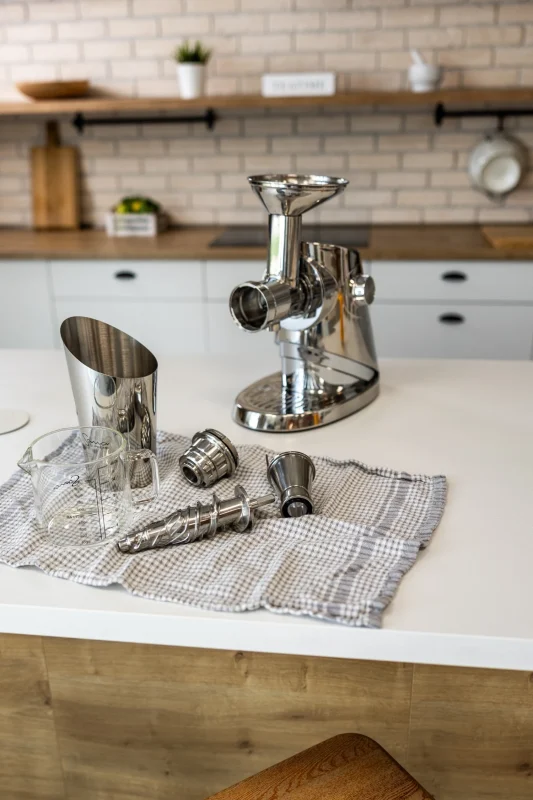
Don’t skip drying. The 727 manual asks you to dry the juicer and its parts completely after use, and warns that salts and other minerals can corrode stainless steel screens. The 878 manual says to let all parts dry on a clean towel, and the 818 manual asks you to air-dry everything completely before you put it away.
Deep cleaning and build-up
Every so often, especially if you juice daily, the screen can build up a film that the brush doesn’t fully remove. Use only the methods your manual gives:
- Sana 878. Soak the juicing parts in warm water with a little baking soda or vinegar, or in a dedicated juicer cleaning solution. The silicone parts can also be removed for a deep clean.
- Sana 818. Soak the parts in warm water with baking soda, citric acid or vinegar.
- Sana 707. From time to time, soak the parts for 30 minutes in a cleaning product made for juicers, then rinse under running water and wipe away what is left with a sponge.
- Sana 727 and 929. A soft brush under running water does the job. On the 727, take the drum cap apart for a more thorough clean.
Whatever you use, never put the motor base in water, and avoid steel wool, scourers, sharp tools and boiling water; the 878 manual warns that high temperatures can deform the parts. If a screen still looks blocked against the light, soak and brush it again.
Stains from carrot, turmeric and beetroot
Carrot, turmeric and beetroot can leave an orange or pink tint on the auger and the clear parts. In our kitchen, that tint is cosmetic and fades over the next few uses. Rinsing straight after juicing stops most of it from setting in the first place. Our ginger and turmeric shots and carrot and beetroot juice posts have more on keeping stains under control in the rest of the kitchen.
Squeaks and noises
Some produce is simply noisy. The 878 manual says beetroot and firm apples, especially Granny Smith, can make the juicer squeak, and that this is normal. The 818 manual says firm apples and beetroot can make a loud, high-pitched sound, and the 727 manual says it is normal for the juicer to be loud with solid ingredients like carrots and beetroot.
What isn’t normal is a sound you don’t recognise, or heat, a smell or smoke. If that happens, the manuals ask you to stop using the juicer straight away and contact your retailer.
Putting it back together
Most assembly problems come from one part sitting slightly wrong.
- Sana 707. Lock the drum onto the motor base, then fit the auger, the screen and the drum cap.
- Sana 727. Fit the drum, then the auger and screen with the groove on the screen facing upwards, then turn the drum cap to lock it. If you took the drum cap apart, the blade spindle goes in first and the wider side of the cap gasket faces outwards.
- Sana 878. Slide the screen fully into the rotating brush, line up the tabs in the chamber, push the auger all the way in, and turn the hopper until its mark lines up with the lock symbol. The hopper won’t lock if something is out of place, which is a useful check. Make sure the pulp outlet gasket is in and the outlet is closed, or it can leak.
- Sana 818. Check the gaskets are seated properly, line up the marks on the chamber and hopper, turn to lock, and close the hopper cover until it clicks.
On both hands-free models, the manuals link leaks to gaskets that aren’t seated properly, so check those first.
The Sana juicers in this guide


Sana 707 Juicer
R9899,00

Sana 727 Supreme Juicer
Price range: R12999,00 through R14999,00

Sana 878 Juicer
Original price was: R11999,00.R10399,00Current price is: R10399,00.Frequently asked questions
Can Sana juicer parts go in the dishwasher?
Not on most models. The 707, 727, 878 and 818 manuals all say to keep the parts out of the dishwasher, and the 878 and 818 manuals warn against cleaning at 80 °C or hotter. The 929 is the exception: its manual says the drum, auger, screens, cap and containers can go in the dishwasher on the top rack with a mild detergent. Keep the pusher out, and never put the motor base in water.
Can I use dishwashing liquid?
It depends on the model. The 707 manual asks for warm, soapy water, while the 727 manual says not to use dishwashing liquid. The 878 and 818 manuals describe cleaning with running water and the cleaning brush. Follow the manual for your juicer.
How do I clean a clogged juicer screen?
Brush it under running water with the cleaning brush straight after juicing. For build-up, soak the parts using the method in your manual: warm water with baking soda or vinegar for the 878, baking soda, citric acid or vinegar for the 818, or a juicer cleaning product for the 707. Then brush again.
How do I get carrot or turmeric stains off my juicer?
Rinse the parts as soon as you finish, before the juice dries. A light orange tint that remains is cosmetic, and in our kitchen it fades over the next few uses. Avoid scourers and abrasive cleaners, which can scratch the parts.
Why does my juicer squeak?
Firm produce such as beetroot and hard apples can make a Sana squeak or sound loud while it juices. The manuals for the 878, 818 and 727 describe this as normal. If the juicer makes an unusual sound, gets hot, smells or smokes, stop using it and contact your retailer.
Sources
- Sana 929 Ultimate instruction manual (English), Sana Products: dishwasher use, pusher, motor base, heat. sanaproducts.com
- Sana 707 user manual (English), Sana Products: washing, dishwasher, deposits and assembly. sanaproducts.com
- Sana 727 Supreme user manual (English), Sana Products: cleaning, drying, corrosion, noise and drum cap assembly. sanaproducts.com
- Sana 878 user manual, Sana Products: cleaning, deep cleaning, discolouration, squeaking and assembly. sanaproducts.com
- Sana 818 user manual, Sana Products: cleaning, sterilising, gaskets and sounds. sanaproducts.com
- Sana 929 Ultimate product page, Sana online store: stainless steel parts and cleaning. sana-store.com