Blog
Roosterkoek With Fresh-Milled Flour: Braai Bread on the Grid

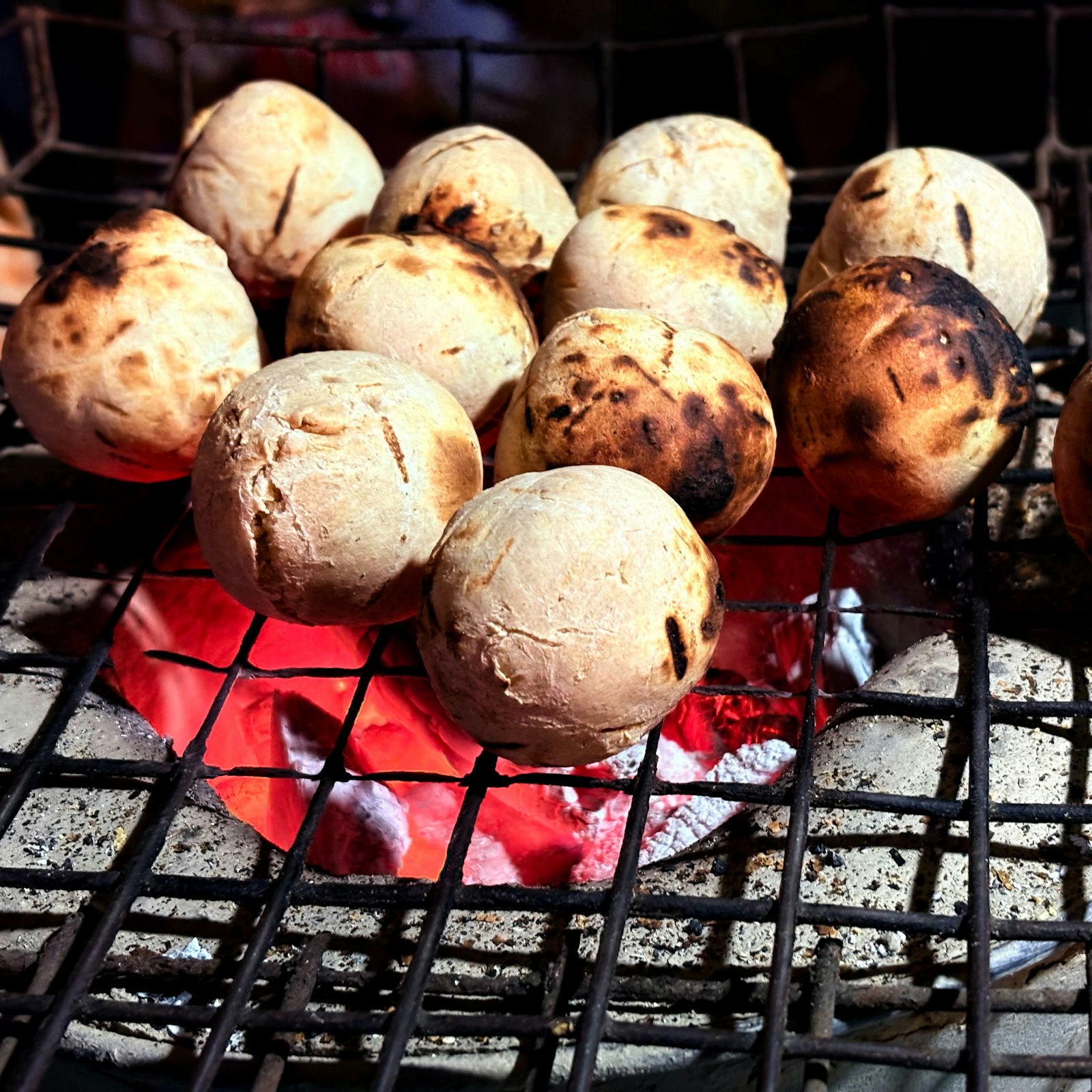
Short answer. For roosterkoek with fresh-milled flour, make a soft yeast dough from 250 g of fresh-milled wholewheat flour and 250 g of white bread flour, let it double, cut it into 12 squares and cook them on a floured grid over gentle coals for 15 to 20 minutes, turning every few minutes. The coals are right when you can hold your hand about 12 cm above the grid for 6 to 8 seconds. They are done when they sound hollow underneath and spring back when pressed.
Roosterkoek, bread cooked on the grid over the coals, is as much part of a South African braai as boerewors. Most recipes use white bread flour only. Half fresh-milled wholewheat gives you a roosterkoek with a nuttier, toastier flavour that still has the soft, steamy middle everyone tears open for butter and jam. This post covers the dough, the shaping, the fire, and what to do if the weather turns and you need the oven.
On this page
Why 50/50 for roosterkoek?
Roosterkoek cooks slowly over moderate heat, so it needs a dough that rises well and stays soft inside while the outside toasts. A 50/50 mix of fresh-milled and white bread flour does that. Going fully wholewheat works too, but the rolls come out denser and heavier.
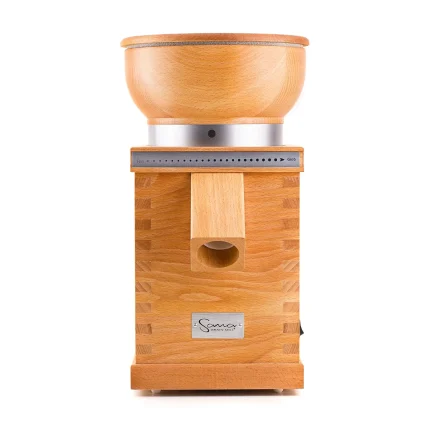
Mill the wheat on a fine setting. 250 g takes about two and a half minutes on the Sana Grain Mill, and you should let the flour cool for ten minutes before you use it. Fresh-milled flour absorbs more water than shop flour, which is why this dough has a little more water than a white roosterkoek dough. Our guide to converting recipes to fresh-milled flour explains the reasons in more detail.
Making the roosterkoek dough
Here are the numbers as baker’s percentages of the 500 g of flour:
| Ingredient | Weight | Baker’s % |
|---|---|---|
| Fresh-milled wholewheat flour | 250 g | 50% |
| White bread flour | 250 g | 50% |
| Lukewarm water | 360 g | 72% |
| Instant dry yeast | 10 g (one sachet) | 2% |
| Salt | 10 g | 2% |
| Sugar | 10 g | 2% |
| Sunflower oil | 15 g | 3% |
That gives 905 g of dough, or 12 roosterkoek of about 75 g each.
Mix and rest. Stir the flours, yeast, sugar and salt together, then add the oil and all but 20 g of the water. Mix until there is no dry flour, cover the bowl and leave it for 15 minutes so the bran can soak up the water. Add the last 20 g of water if the dough still feels stiff after the rest.
Knead. Knead for 8 to 10 minutes until the dough is smooth, soft and slightly tacky. It should stretch a fair way before it tears. A soft dough makes a lighter roosterkoek, so don’t add more flour than you need to stop it sticking.
Let it rise. Cover the bowl and leave it somewhere warm until the dough has roughly doubled and a floured finger pressed into it leaves a dent that fills back slowly. On a warm November afternoon that takes 45 minutes to an hour. In a cold kitchen it can take longer. This is a good time to light the fire.
Shaping roosterkoek
Tip the risen dough onto a floured surface and press it out into a rectangle about 2 cm thick, roughly 30 by 22 cm. Cut it into 12 squares, three by four, with a sharp knife or a dough scraper. Squares and rectangles are the classic roosterkoek shape, and cutting saves you rolling 12 balls next to a fire.
Lay the squares on a floured tray, cover them with a clean cloth and leave them for 15 to 20 minutes. They should puff slightly. If they over-rise and go soft and floppy, they are hard to get onto the grid and can collapse.
Getting the coals right
This is where most roosterkoek goes wrong. Bread needs gentler heat than chops. Too hot, and the outside blackens while the middle stays doughy. Flames are the worst of all: they burn the outside long before the inside is cooked.
- Burn the wood down to coals. You want glowing coals with a coat of grey ash and no flames. If you are braaiing meat too, bake the bread on the edge of the fire, or after the meat comes off and the coals have calmed down.
- Use the hand test. Hold your palm about 12 cm above the grid, not above the coals. Weber’s guide counts 5 to 7 seconds as medium heat and 8 to 10 seconds as low. For roosterkoek, aim for about 6 to 8 seconds, between the two.
- Flour the grid. Dust the inside of a hinged braai grid with flour so the dough doesn’t stick, then close it over the squares. A hinged grid makes turning 12 rolls much easier.
Cooking roosterkoek over the coals
Place the grid over the coals and turn it every three to four minutes. The first side should be pale gold with a few darker grid marks when you turn it. If it is already black, lift the grid higher or move it to cooler coals. Once both flat sides have colour, the rolls will have puffed up. Stand them on their edges against each other to toast the sides as well.
Roosterkoek usually takes 15 to 20 minutes in total, but the coals decide, not the clock. They are done when:
- they sound hollow when you tap the bottom,
- the sides spring back when you press them,
- a thermometer pushed into the middle reads about 88 °C or a little more.
When you cook your first batch, break one open. The inside should be soft and steamy, with no wet, shiny dough in the middle. If it is still raw but the outside is dark, your coals were too hot. Next time, wait longer before the bread goes on.
Roosterkoek with fresh-milled flour
Ingredients
Equipment
Method
- Mill. Mill 250 g wheat on a fine setting and let the flour cool for 10 minutes.
- Mix and rest. Stir the flours, yeast, sugar and salt together. Add the oil and 340 g of the water and mix until no dry flour is left. Cover and rest for 15 minutes, then add the last 20 g of water if the dough feels stiff.
- Knead. Knead for 8 to 10 minutes until smooth, soft and slightly tacky.
- Rise. Cover and leave somewhere warm until roughly doubled, 45 to 60 minutes. A floured finger pressed in should leave a dent that fills back slowly. Light the fire now.
- Shape. Press the dough into a rectangle about 2 cm thick and roughly 30 by 22 cm. Cut it into 12 squares. Rest them on a floured tray under a cloth for 15 to 20 minutes.
- Check the coals. Burn the wood down to glowing coals with grey ash and no flames. Hold your palm about 12 cm above the grid: 6 to 8 seconds is right.
- Cook. Flour a hinged grid, close it over the squares and cook over the coals for 15 to 20 minutes, turning every 3 to 4 minutes. Once both flat sides have colour, stand the rolls on their edges to toast the sides.
- Check. They are done when they sound hollow underneath, the sides spring back and the middle reads about 88 °C or a little more. Serve hot.
Notes
If the weather turns: the oven fallback
Rain on braai day happens. Bake the shaped squares on a floured tray at 200 °C (180 °C fan) for 15 to 18 minutes until golden and hollow-sounding underneath. They won’t have the smoky char, but they will be soft and good. For something closer to the real thing, cook them in a dry cast-iron pan over medium-low heat on the stove, turning them every few minutes the same way you would on the grid.
What to serve with roosterkoek
Roosterkoek is best eaten within minutes of coming off the coals, torn open while the steam is still rising. Our favourites:
- Butter and apricot jam. Add grated Cheddar if you want the full braai-day version.
- Butter and biltong. Thin slices of biltong over melting butter.
- With the meat. A roosterkoek split and filled with boerewors and chakalaka is a meal on its own.
- Leftovers. Split and toast them the next morning. They don’t keep their softness much past the day they are made.
For more bread from your mill, browse our bread recipes, or start with our first loaf with fresh-milled flour.
Made with a Sana grain mill
Every recipe in our grain mill recipe collection starts with flour milled at home on a Sana stone mill. Both models use 85 mm ceramic-corundum stones in a solid beechwood housing, are made in Austria and carry a 12-year warranty, with spares and support here in South Africa.

Sana Grain Mill
Original price was: R14800,00.R9999,00Current price is: R9999,00.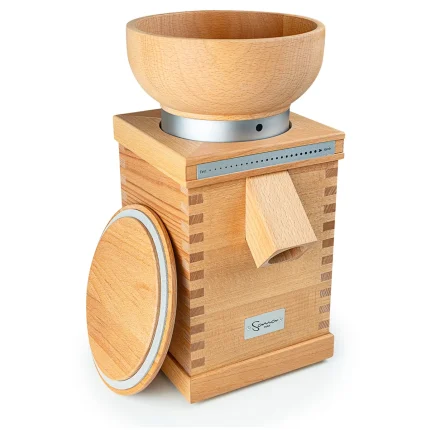

Sana Grain Mill MAX – 600W
Original price was: R18999,00.R14999,00Current price is: R14999,00.Frequently asked questions
Can I make roosterkoek with fresh-milled flour?
Yes. A 50/50 mix of fresh-milled wholewheat flour and white bread flour gives soft roosterkoek with a nuttier flavour. Use a little more water than a white-flour dough, about 72% of the flour weight, because fresh-milled flour absorbs more, and let the flour and water rest for 15 minutes before kneading.
How hot should the coals be for roosterkoek?
Gentle. Burn the wood down to glowing coals with grey ash and no flames, then hold your palm about 12 cm above the grid. If you can keep it there for about 6 to 8 seconds, the heat is right for roosterkoek.
How long does roosterkoek take on the braai?
Usually 15 to 20 minutes, turning every three to four minutes. The coals decide the time, so go by the signs: hollow-sounding bottoms, sides that spring back and no raw dough in the middle.
Why is my roosterkoek raw inside but burnt outside?
The coals were too hot. The outside sets and chars before the heat reaches the middle. Let the fire burn down further, cook on the edge of the coals, or raise the grid. Hold your hand 12 cm above the grid for 6 to 8 seconds as a check.
Can I bake roosterkoek in the oven?
Yes. Bake the shaped squares at 200 °C (180 °C fan) for 15 to 18 minutes until golden and hollow-sounding underneath. You can also cook them in a dry cast-iron pan on the stove over medium-low heat, turning them every few minutes.
Can I make roosterkoek dough ahead of time?
Yes. Mix and knead the dough in the morning with half the yeast, cover it and keep it in the fridge. If it has doubled before you need it, knock it back once and let it rise again. Take it out about an hour before you shape it so it can warm up and finish rising. Shape and cook it once the coals are ready.
Mill it on a Sana
Sana grain mills are made in Austria, with solid beechwood housings and 85 mm ceramic-corundum stones. EcoHub imports them directly, so the 12-year warranty, spares and support are all handled here in South Africa, and we have been trading since 2012.
- Sana Grain Mill (360 W): about 100 g of flour a minute, with an 850 g hopper. R10,999.
- Sana Grain Mill MAX (600 W): about 200 g a minute, with a 1,200 g hopper. R15,999 (was R18,999).
Prices incl VAT, correct at November 2026. If you are still choosing a mill, EcoHub explains the difference between stone, impact and steel-burr mills.