Blog
Pizza Dough With Fresh-Milled Flour: Overnight and Same-Day

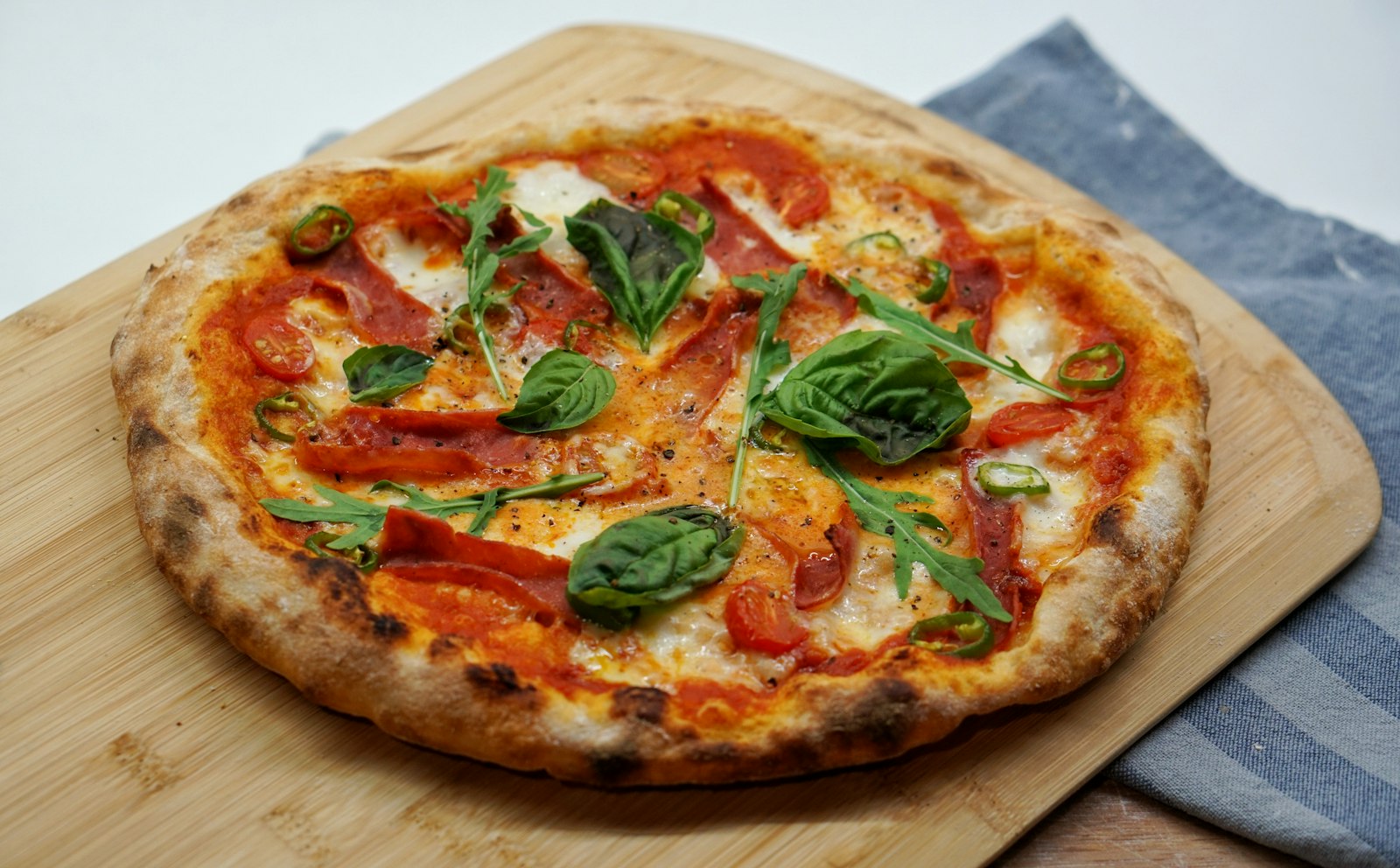
Short answer. For pizza dough with fresh-milled flour, mix 350 g of fresh-milled wholewheat flour with 150 g of white bread flour, 350 g of water, 10 g of salt, 15 g of olive oil and 2 g of instant yeast. Rest it, knead it, then give it a night in the fridge as four balls. Bake on a tray or steel preheated for 45 minutes at your oven’s highest setting. For a same-day dough, use 5 g of yeast and skip the fridge. A 100% fresh-milled dough also works, but expect a smaller, thicker, nuttier pizza.
Friday pizza is one of the easiest ways to get fresh-milled flour onto the table without anyone noticing. A thin base, a good tomato sauce and plenty of cheese carry the flavour of wholewheat well, and the long cold rise in this recipe makes the dough far easier to stretch than a quick wholewheat dough. This is the method we use in a normal South African home oven, no pizza oven needed.
On this page
Why 70/30 for pizza dough with fresh-milled flour?
Pizza dough has to stretch thin without tearing, then puff at the edge in a few minutes of fierce heat. Gluten does that work. Fresh-milled wholewheat flour has plenty of protein, but the bran in it competes with the gluten for water and gets in the way of a strong gluten network, so the dough tears more easily. Using 30% white bread flour gives you enough stretch for a thin base while 70% of the flour is still whole grain from your mill.
It is the same ratio as our first loaf with fresh-milled flour, and for the same reason: it is forgiving while you learn how your flour behaves. Once you have a feel for it, the 100% version further down is worth a try.
Mill the wheat on a fine setting. A fine grind gives a smoother dough that is easier to stretch thin. On the Sana Grain Mill, 350 g takes about three and a half minutes. Let the flour cool for ten minutes before you mix.
The dough, step by step
The numbers, as baker’s percentages of the 500 g of flour:
| Ingredient | Weight | Baker’s % |
|---|---|---|
| Fresh-milled wholewheat flour | 350 g | 70% |
| White bread flour | 150 g | 30% |
| Water | 350 g | 70% |
| Salt | 10 g | 2% |
| Olive oil | 15 g | 3% |
| Instant dry yeast (overnight) | 2 g | 0.4% |
That totals 877 g of dough, or four balls of about 219 g each. Each ball makes a thin pizza of roughly 28 to 30 cm.
Rest the flour and water first. Mix the flours with all but 30 g of the water until there is no dry flour left, cover the bowl and leave it for 20 to 30 minutes. Fresh-milled flour absorbs more water than shop flour, and the bran needs time to soak it up. After the rest, the dough will feel noticeably firmer than it did when you mixed it. Add the rest of the water only if it still feels stiff.
Add salt, yeast and oil, then knead. Sprinkle them over, squeeze them through the dough and knead for 8 to 10 minutes, by hand or with a dough hook on low. The dough is ready when it is smooth and slightly tacky, and a small piece stretches thin enough to let light through before it tears. With wholewheat it will tear sooner than white dough does. That is normal.
Divide and chill. Leave the dough covered for an hour at room temperature, then divide it into four pieces and shape each into a tight ball. Put the balls into lightly oiled containers, or onto an oiled tray covered with cling film, and refrigerate them for 12 to 24 hours. They will keep for up to 48 hours, and the flavour gets deeper the longer they sit.
Warm up before shaping. Take the dough out of the fridge 2 to 3 hours before you bake. It is ready when the balls have relaxed and spread a little and feel soft and puffy when you press them. Cold dough fights you and tears.
The same-day option
When there is no time for the fridge, use 5 g of instant yeast instead of 2 g, and use lukewarm water rather than cool. After kneading, leave the dough covered at room temperature until it has roughly doubled, which takes 1 to 2 hours depending on the weather. Divide it into balls and rest them for 45 to 60 minutes before shaping. It works well. It is just a bit less flavourful and a little less stretchy than the overnight dough.
Baking pizza in a home oven
A home oven on its highest setting, usually somewhere around 250 to 280 °C, is far cooler than a pizza oven. The trick is to store heat in something heavy and put the pizza straight onto it.
- Use a steel, a stone or a heavy tray. A baking steel works best. A heavy baking tray turned upside down also works. Put it on a rack in the upper third of the oven.
- Preheat for at least 45 minutes at the oven’s highest setting. The oven light going off doesn’t mean the steel is hot.
- Use the grill element if you have one. Switch to the grill for the last five minutes of preheating to heat the top of the oven, then back to bake when the pizza goes in.
- Build the pizza on baking paper. Stretch the dough on a floured surface, lay it on a sheet of baking paper on an upturned tray and top it there. Slide the paper and pizza onto the hot steel. After two or three minutes, pull the paper out.
- Keep toppings light. Use a thin layer of sauce, and tear and pat dry fresh mozzarella. A soggy middle is nearly always too much wet topping.
A pizza usually takes somewhere between 6 and 10 minutes on a steel, a little longer on a tray, so watch it rather than the timer. It is done when the rim has puffed and browned in spots, the cheese is bubbling and the base is crisp and brown underneath when you lift it with a spatula. Let the steel heat up again for five minutes between pizzas.
Fresh-milled pizza dough (70/30, overnight)
Ingredients
Equipment
Method
- Mill. Mill 350 g wheat on a fine setting and let the flour cool for 10 minutes.
- Rest the flour. Mix both flours with 320 g of the water until no dry flour is left. Cover and rest for 20 to 30 minutes. Add the last 30 g of water only if the dough still feels stiff.
- Knead. Add the salt, yeast and olive oil and knead for 8 to 10 minutes until smooth and slightly tacky, and a small piece stretches thin before tearing.
- First rise. Cover and leave at room temperature for 1 hour.
- Ball and chill. Divide into 4 pieces of about 219 g, shape into tight balls and refrigerate in oiled, covered containers for 12 to 24 hours (up to 48).
- Warm up. Take the dough out 2 to 3 hours before baking. It is ready when the balls have relaxed and feel soft and puffy.
- Preheat. Put a steel, stone or upturned heavy tray in the upper third of the oven and heat at the highest setting for at least 45 minutes, switching to the grill for the last 5 minutes if you have one.
- Shape and top. Stretch one ball to about 28 to 30 cm on a floured surface, lay it on baking paper and top it lightly.
- Bake. Slide the pizza on its paper onto the steel, back on bake. Pull the paper out after 2 to 3 minutes. Bake until the rim is puffed and spotted brown and the base is crisp, usually 6 to 10 minutes on a steel. Reheat the steel for 5 minutes between pizzas.
Notes
Going 100% fresh-milled
You can make this dough with 500 g of fresh-milled flour and no white flour. Raise the water to about 375 g (75%), rest the flour and water for 30 to 45 minutes before adding the rest, and give it the full overnight rest. The long cold rise matters more here than with the 70/30 dough.
Be realistic about the result. A 100% fresh-milled pizza is nuttier and more filling, and we like it a lot, but the dough tears sooner, the rim puffs less and the bases come out smaller and a touch thicker, nearer 25 cm than 30 cm. Press it out with your fingertips on the baking paper instead of stretching it in the air. If you want something in between, sift out some of the bran with a flour sifter. Our guide to converting recipes to fresh-milled flour explains how sifting and extra water change a dough.
Troubleshooting
- The dough tears when I stretch it. It is too cold or too tight. Cover it and wait 15 minutes, then try again. If it tears every time, it may need a little more water next time.
- It keeps springing back. The gluten is tense. Leave it to relax for 10 minutes and come back to it.
- The base is pale and soft. The steel or tray wasn’t hot enough. Preheat for longer, and check the rack is in the upper third.
- The base burns before the top is done. Move the steel one rack higher, nearer the top element, or switch to the grill for the last minute.
- The crust is dense and bready. The dough was under-risen or too dry. Make sure the balls are soft and puffy before shaping, and try a little more water.
Made with a Sana grain mill
Every recipe in our grain mill recipe collection starts with flour milled at home on a Sana stone mill. Both models use 85 mm ceramic-corundum stones in a solid beechwood housing, are made in Austria and carry a 12-year warranty, with spares and support here in South Africa.

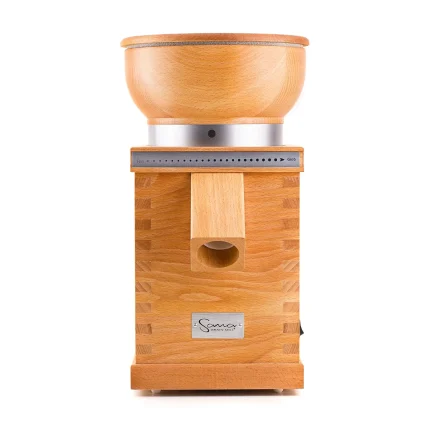
Sana Grain Mill
Original price was: R14800,00.R9999,00Current price is: R9999,00.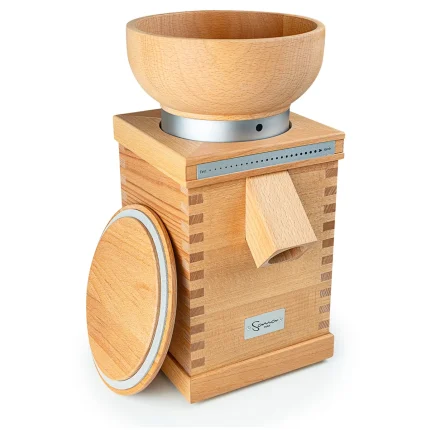

Sana Grain Mill MAX – 600W
Original price was: R18999,00.R14999,00Current price is: R14999,00.Frequently asked questions
Can I make pizza dough with only fresh-milled flour?
Yes. Use 500 g of fresh-milled flour and about 375 g of water, rest the mixture for 30 to 45 minutes before kneading, and give it a night in the fridge. Expect a nuttier, slightly thicker pizza that tears more easily, so press it out on baking paper rather than stretching it in the air.
How much water does fresh-milled pizza dough need?
For the 70/30 dough, 350 g of water to 500 g of flour (70%) is a good start. Fresh-milled flour absorbs more water than shop flour, so hold back 30 g and add it after the first rest if the dough still feels stiff. For 100% fresh-milled flour, use about 375 g.
How long can pizza dough stay in the fridge?
Between 12 and 48 hours. A night of 12 to 24 hours is the sweet spot for most home bakers. Take the dough out 2 to 3 hours before baking, until it feels soft and puffy.
What oven temperature should I use for pizza at home?
The highest your oven goes, usually somewhere around 250 to 280 °C, with a steel, stone or heavy tray preheated for at least 45 minutes in the upper third of the oven. A pizza usually takes 6 to 10 minutes on a steel; watch for a puffed, spotty brown rim and bubbling cheese.
What setting should I mill the flour on for pizza?
Use a fine setting. A fine grind gives a smoother dough that stretches thin more easily, while coarser flour with bigger flakes of bran makes a dough that tears sooner.
Why is my pizza soggy in the middle?
Usually too much wet topping, or a steel or tray that wasn’t hot enough. Use a thin layer of sauce, pat fresh mozzarella dry, and preheat for at least 45 minutes.
Mill it on a Sana
Sana grain mills are made in Austria, with solid beechwood housings and 85 mm ceramic-corundum stones that mill wheat as fine as you need for pizza. EcoHub imports them directly, so the 12-year warranty, spares and support are all handled here in South Africa, and we have been trading since 2012.
- Sana Grain Mill (360 W): about 100 g of flour a minute, with an 850 g hopper. R10,999.
- Sana Grain Mill MAX (600 W): about 200 g a minute, with a 1,200 g hopper. R15,999 (was R18,999).
Prices incl VAT, correct at November 2026. To plan how much grain to buy for weekly pizza and bread, see EcoHub’s guide to how much grain you need for home milling.