Blog
Mabele Porridge With Home-Milled Sorghum: Soft and Soured (Ting)


Short answer. For mabele porridge from home-milled sorghum, mill whole sorghum on a coarse-to-medium setting, whisk 160 g of the meal into 200 ml of cold water, stir that into 700 ml of salted boiling water and simmer it gently, lid on, for 20 to 25 minutes. For the soured, ting-style version, mix the same meal with lukewarm water first and leave it covered for a day or two until it smells pleasantly sour, then cook it the same way. Sorghum is naturally gluten-free, but a mill that also grinds wheat is not.
Mabele, as sorghum is widely called here, is still sold as meal in most South African supermarkets, but milling it yourself gives you something the bag can’t: whole grain, ground the morning you cook it, at exactly the texture you like. This post gives you two cards. The first is a plain soft porridge for weekday breakfasts. The second is the soured version, which takes no more work, only time.
On this page
Why mill sorghum at home?
When you mill whole sorghum yourself, all of the bran and germ stay in the meal, and it goes into the pot within minutes of milling. To our taste the porridge comes out nuttier and a little sweeter than one made from a bag. You also choose the grind. Coarse meal cooks into a porridge with some bite, close to the mabele many of us grew up with. Medium gives a smoother bowl that children tend to prefer.
One thing changes when you leave the shop bag behind. South African maize meal and wheat flour are fortified by law with iron, zinc, folic acid and several B vitamins. Sorghum meal is not covered by those regulations at all, and grain you mill at home has nothing added either. If your household relies on fortified staples for folic acid or iron, for example during pregnancy, keep eating them alongside your sorghum and ask your clinic or dietitian about the rest. If you want to read more about what home milling does and doesn’t change, EcoHub has a careful piece on whether fresh-milled flour is healthier.
How to mill sorghum on a stone mill
Sorghum is a small, hard, dry grain, and it goes through ceramic-corundum stones without fuss. A few points make it easier:
- Grain must be bone dry. Sorghum from a farm stall or bulk bin can be dusty. If you rinse it, spread it out and let it dry completely, for a day or more, before it goes near the stones. Damp grain clogs a stone mill.
- Start coarse. Set the mill a few clicks back from the finest setting for porridge. You want meal with visible grit, not powder. Fine sorghum flour cooks into a paste that can turn gluey.
- Mill what you need. 160 g of sorghum is under two minutes on the Sana Grain Mill. Let the meal cool for about ten minutes before you cook with it, and store any extra in the fridge. Our guide to storing fresh-milled flour and whole grain covers how long it keeps.
- Taste your sorghum. Some sorghum is noticeably more bitter than others. That bitterness comes from tannins in the grain. If a batch tastes harsh, try a different supplier or a white sorghum next time.
Whole sorghum isn’t always on supermarket shelves. Our guide to where to buy grains for home milling in South Africa lists a supplier that stocks it.
The plain soft mabele porridge
The trick with any sorghum porridge is the cold-water start. Dry meal tipped straight into boiling water forms lumps: the outside of each clump cooks into a skin before water can get to the middle. Whisking the meal into cold water first means every particle is wet before the heat arrives.
Bring 700 ml of water to the boil with a little salt. Whisk the 160 g of meal into 200 ml of cold water until it looks like thin cream, then pour it into the boiling water while you stir. It thickens within a minute or two. Turn the heat right down, put the lid on and let it cook gently for 20 to 25 minutes, stirring every five minutes or so and scraping the bottom of the pot.
It is ready when it no longer tastes raw or chalky, the grit has softened, and it drops from the spoon in soft folds rather than running off. Sorghum porridge keeps thickening as it cooks and as it cools. If it gets too stiff, stir in a splash of boiling water. If you want it thicker, cook it a few minutes longer with the lid off.
Soft mabele porridge with home-milled sorghum
Ingredients
Equipment
Method
- Mill. Mill 160 g whole sorghum on a coarse-to-medium setting, a few clicks back from the finest. Let the meal cool for 10 minutes.
- Make a paste. Whisk the meal into 200 ml cold water until smooth, like thin cream.
- Boil. Bring 700 ml water and the salt to the boil in a heavy-based pot.
- Thicken. Pour in the sorghum paste while stirring. Keep stirring for 1 to 2 minutes until it thickens and starts to bubble.
- Simmer. Turn the heat to low, cover and cook for 20 to 25 minutes, stirring every 5 minutes and scraping the bottom. It is ready when it no longer tastes raw, the grit has softened and it drops from the spoon in soft folds.
- Adjust and serve. Stir in a splash of boiling water if it is too stiff. Serve hot with milk, amasi, honey, sliced banana or peanut butter.
Notes
The soured version: ting-style mabele
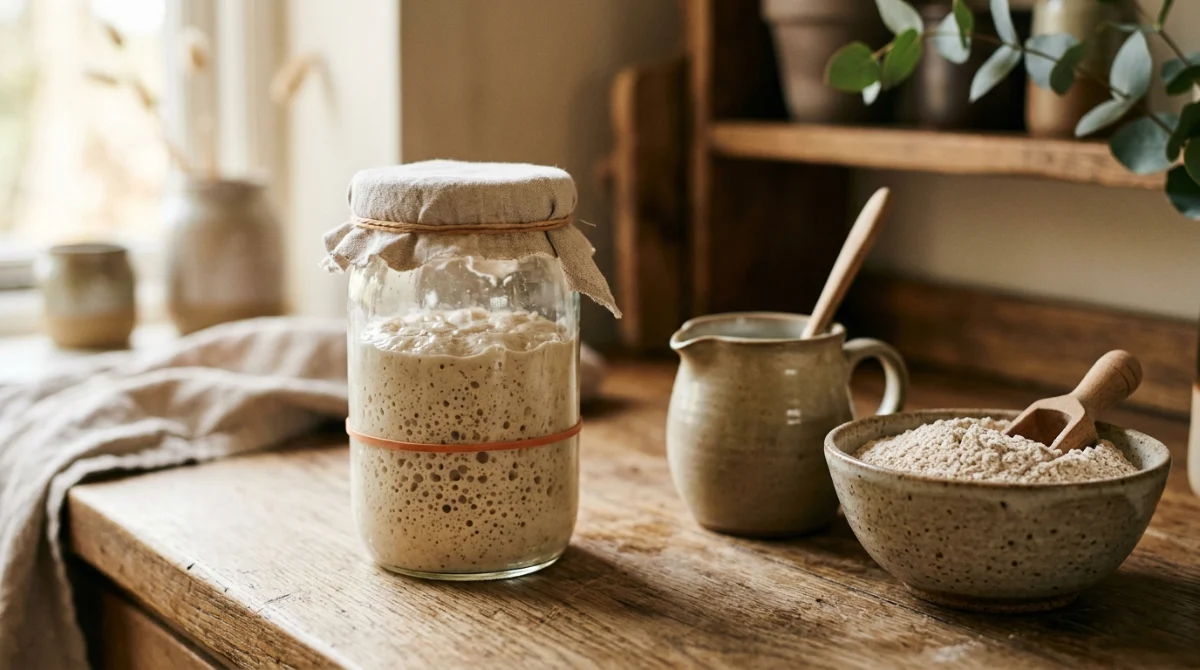
Ting is the soured sorghum porridge eaten across South Africa and Botswana, made by leaving sorghum meal and water to ferment for a day or more before cooking. Nothing is added to start it. Lactic acid bacteria that are naturally present do the work, and the mixture gets more acidic as it stands. In one University of Pretoria study of ting made this way, the pH dropped from about 6.6 to about 3.8 over 54 hours.
Home-milled whole sorghum works for this just as shop meal does. Mix the meal with lukewarm water to a thick batter, cover it loosely and leave it on the counter. Here is what to watch for:
- After about 12 hours: not much. Maybe a few small bubbles.
- At 24 hours: a gentle sour smell, like plain yoghurt, and small bubbles through the batter. This is a mild ting.
- At 36 to 48 hours: clearly sour and a little tangy, with liquid sometimes separating on top. Stir it back in.
A warm December kitchen gets there faster than a cold July one. Taste and smell are your guide, not the clock. It should smell clean and sour. If you see fuzzy mould, pink or black patches, or it smells rotten rather than sour, throw it out and start again with a clean bowl.
Cook it just like the soft porridge: stir the soured batter into salted boiling water, then simmer gently with the lid on. Soured porridge sets a little firmer than the plain one, so add boiling water if it gets too stiff.
Soured mabele porridge (ting-style)
Ingredients
Equipment
Method
- Mill. Mill 160 g whole sorghum on a coarse-to-medium setting. Let the meal cool for 10 minutes.
- Mix. In a clean glass or ceramic bowl, stir the meal and 200 ml lukewarm water into a thick batter.
- Sour. Cover loosely and leave at room temperature for 24 to 48 hours. At about 24 hours it smells gently sour, like plain yoghurt, with small bubbles; by 36 to 48 hours it is clearly tangy. Stir back any liquid on top. Throw it out if you see fuzzy mould, pink or black patches, or if it smells rotten rather than sour.
- Boil. Bring 700 ml water and the salt to the boil in a heavy-based pot.
- Thicken. Stir in the soured batter and keep stirring for 1 to 2 minutes until it thickens and bubbles.
- Simmer. Cover and cook on low for 20 to 25 minutes, stirring every 5 minutes. Add a splash of boiling water if it gets too stiff.
- Serve. Serve hot with braaivleis, stew, chakalaka or morogo, or with amasi, milk and sugar.
Notes
What to serve with mabele porridge
The plain soft porridge is a breakfast porridge. Ting is just as happy as a side dish. Some ideas that work well:
- Sweet: a spoon of honey or brown sugar and cold milk, sliced banana, or a spoon of peanut butter stirred through while it is hot.
- Sour on sour: a pour of amasi over ting. It sounds like too much, but the creaminess rounds off the tang.
- Savoury: ting next to braaivleis or a stew, with chakalaka or morogo on the side. In Botswana, ting is eaten with meat, or with milk and sugar.
- Leftovers: cold soft porridge sets firm. Slice it, fry it in a little butter until golden and serve it with an egg.
For more breakfast ideas from the mill, browse our breakfast and porridge recipes.
Is sorghum porridge gluten-free?
Sorghum itself contains no gluten, and coeliac organisations list it as safe for a gluten-free diet. The risk is cross-contact. Wheat, rye, spelt and barley all contain gluten, and so do normal oats. If your mill has ever ground any of them, wheat dust will be sitting in the stones and the housing, and it will come out with your sorghum. Flushing the mill with a handful of rice helps a little, but it doesn’t make a shared mill safe for someone with coeliac disease.
If someone in your home has coeliac disease, the safe options are a mill used only for gluten-free grains, or whole sorghum and other grains that are certified gluten-free. Check with their dietitian if you are unsure. For everyone else, sorghum is simply a good change from wheat at breakfast.
Made with a Sana grain mill
Every recipe in our grain mill recipe collection starts with flour milled at home on a Sana stone mill. Both models use 85 mm ceramic-corundum stones in a solid beechwood housing, are made in Austria and carry a 12-year warranty, with spares and support here in South Africa.

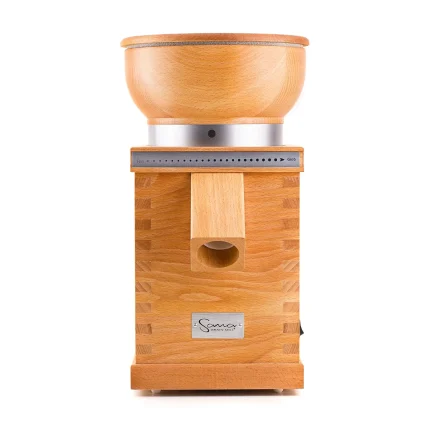
Sana Grain Mill
Original price was: R14800,00.R9999,00Current price is: R9999,00.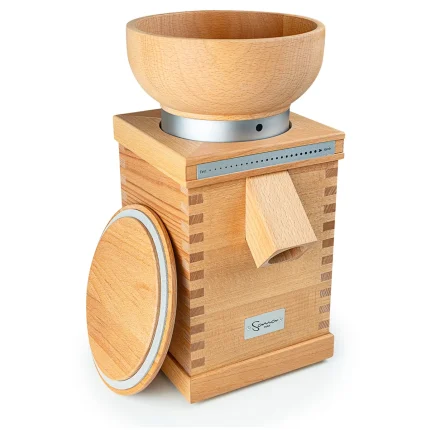

Sana Grain Mill MAX – 600W
Original price was: R18999,00.R14999,00Current price is: R14999,00.Frequently asked questions
What setting should I use to mill sorghum for porridge?
Use a coarse-to-medium setting, a few clicks back from the finest. Coarse meal gives porridge with some bite, like traditional mabele, while medium gives a smoother bowl. Very fine sorghum flour tends to cook into a gluey paste, so keep the finest setting for baking.
How much water do I need for soft mabele porridge?
For four servings, use 160 g of sorghum meal and 900 ml of water in total: 200 ml cold water to make a smooth paste with the meal, and 700 ml boiling water to cook it in. Sorghum keeps thickening as it cooks and cools, so have extra boiling water nearby to loosen it if needed.
How long does ting take to ferment?
Usually 24 to 48 hours at room temperature. At about 24 hours it smells gently sour, like plain yoghurt, with small bubbles. By 36 to 48 hours it is clearly tangy. Warm kitchens get there faster than cold ones, so go by smell and taste rather than the clock.
How do I know if my fermented sorghum has gone off?
A good ferment smells clean and sour. Throw it out if you see fuzzy mould, pink or black patches, or if it smells rotten or unpleasant rather than sour. Start again with a clean bowl.
Is home-milled sorghum safe for coeliacs?
Sorghum contains no gluten, but a mill that has ground wheat, rye, spelt, barley or normal oats will carry gluten into the sorghum. For someone with coeliac disease, use a mill kept only for gluten-free grains, or certified gluten-free grain, and check with their dietitian.
Is home-milled sorghum fortified like maize meal?
No. South African maize meal and wheat flour are fortified by law with iron, zinc, folic acid and B vitamins, but sorghum meal is not covered by the regulations, and grain you mill at home has nothing added. If you rely on fortified staples for folic acid or iron, keep them in your diet too.
Why is my sorghum porridge lumpy?
The meal went into the boiling water dry. Always whisk sorghum meal into cold water first until smooth, then pour that into the boiling water while stirring. If lumps form anyway, take the pot off the heat and whisk hard for a minute.
Mill it on a Sana
Sana grain mills are made in Austria, with solid beechwood housings and 85 mm ceramic-corundum stones that handle hard grains like sorghum and dried maize. EcoHub imports them directly, so the 12-year warranty, spares and support are all handled here in South Africa, and we have been trading since 2012.
- Sana Grain Mill (360 W): about 100 g of flour a minute, with an 850 g hopper. R10,999.
- Sana Grain Mill MAX (600 W): about 200 g a minute, with a 1,200 g hopper. R15,999 (was R18,999).
Prices incl VAT, correct at November 2026.
Sources
- Wikipedia: Botswana cuisine (bogobe and ting)
- University of Pretoria: Madoroba et al. (2011), the microbial community of ting fermentation
- FAO: recipes based on sorghum and millets
- Taste: ground sorghum and ting ya mabele
- Frontiers in Sustainable Food Systems: sorghum, tannins and taste in South Africa
- Beyond Celiac: is sorghum gluten-free?
- Stellenbosch University NICUS: South African food fortification regulations