Blog
Kernel Bread With Fresh-Milled Flour and Cracked Grain

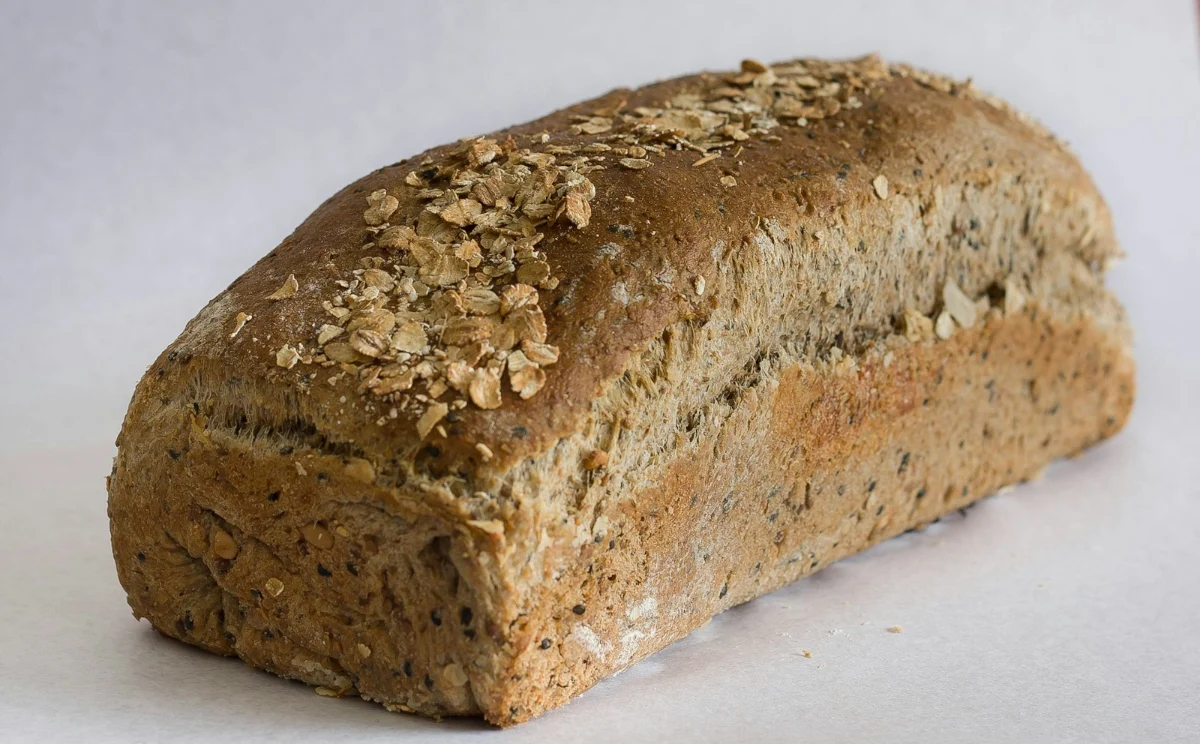
Short answer. Kernel bread is a dense wholegrain loaf where part of the grain goes in cracked and soaked instead of milled to flour. With a Sana mill you crack wheat and rye on the coarsest setting the night before, mill the rest fine in the morning, stir everything into a thick paste and bake it in a tin. Each of 16 slices carries about 4.6 g of fibre and there is no added sugar. Studies suggest that bread with a large share of whole or cracked grain gives a slower blood-sugar rise than bread made from flour alone, but the size of the effect depends on how much of the grain stays whole. This loaf is good food, not medicine.
On this page
What is kernel bread?
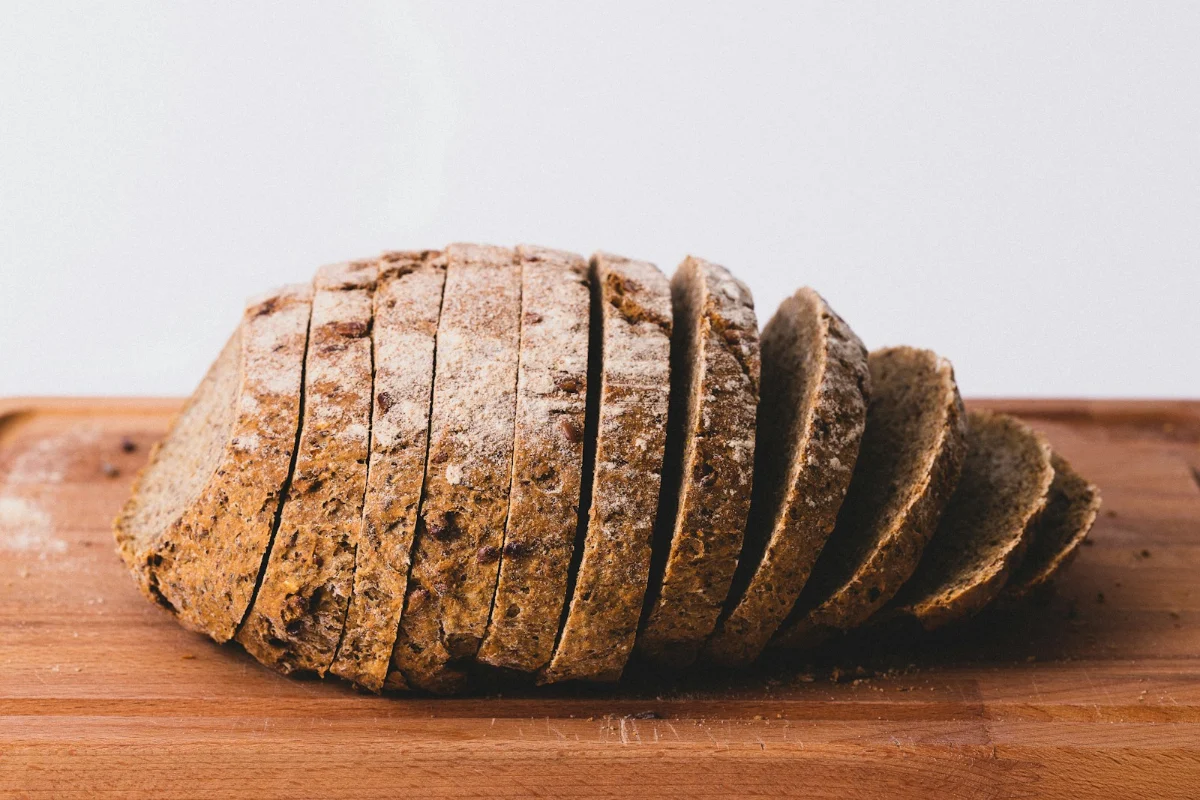
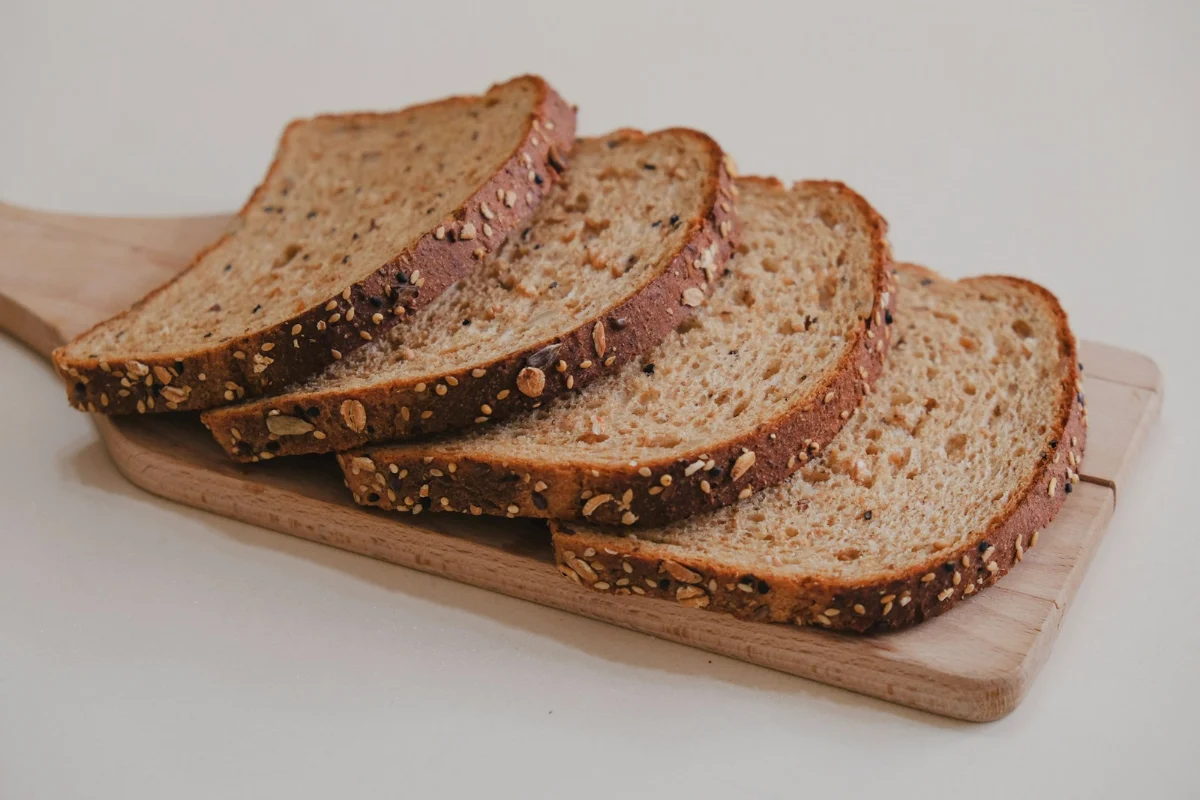
Kernel bread is the plain name for a style northern Europe has baked for centuries: a heavy tin loaf with pieces of grain visible in every slice. Danish rugbrød and German Vollkornbrot are the famous ones. The idea is simple. Some of the grain is milled into flour to hold the loaf together, and the rest goes in as cracked kernels softened in water overnight.
This version is mostly wheat with a good share of rye. Because nearly two thirds of the grain is wheat, ordinary instant yeast raises it well and you don’t need a sour. A loaf that is mostly rye has its own rules, and our dense rye loaf with no added sugar covers them.
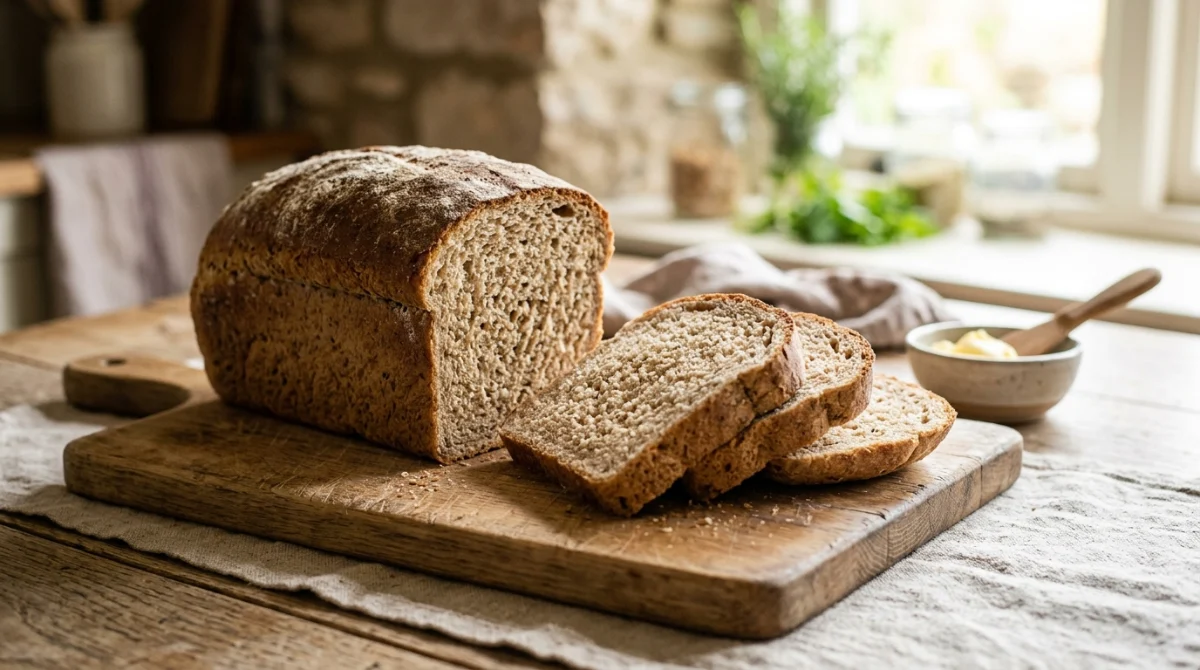
It is closer to a firm, moist health loaf than a sandwich loaf. It slices thinly, keeps for days and tastes nutty and faintly sweet from the grain itself. For something softer, bake the everyday fresh-milled sandwich loaf.
Does the form of the grain change the blood-sugar response?
Here is what the research shows, and where it is thin.
Whole and cracked kernels: fairly consistent. In a 1988 study in the BMJ, Jenkins and colleagues gave people with diabetes breads in which 0%, 50% or 75% of the grain was whole or cracked (barley or cracked wheat) instead of flour. The glycaemic index fell as the share of whole grain rose, and the breads were still pleasant to eat at 75%. A small 1994 study in ten healthy volunteers by Holt and Brand Miller served the same wheat as whole grains, cracked grains, coarse flour and fine flour. The fine-flour meal produced a glucose response nearly three times that of the whole-grain meal, with cracked grain in between.
How much whole grain matters. In a Swedish study of barley breads (Liljeberg and Björck, 1994), a loaf with 80% intact kernels had a glycaemic index of 33 against white bread at 100. With 40% kernels the figure was 66. Breads made from wholemeal barley flour, including a sourdough version, were no different from white bread.
Flour particle size on its own: mixed. A 2021 trial by Mete and colleagues in 23 older adults at risk of type 2 diabetes, most with normal glucose tolerance, found no significant difference between wholegrain breads made from fine roller-milled, fine stone-ground and coarse stone-ground flour. A 2020 study by Reynolds and colleagues in 15 adults with type 2 diabetes did find that wholegrain wheat breads with larger particles gave smaller glucose rises. And a two-week trial by Åberg and colleagues in people with type 2 diabetes found that swapping finely milled whole grains for less-processed ones gave post-meal glucose responses about 6% lower across all meals.
What that means for this loaf. About 36% of the grain here goes in cracked, which is nearer the 40% barley loaf than the 80% one, and soaked cracked grain is softer than intact kernels. So expect a modest difference, not a dramatic one. No study has tested this exact recipe. A slice still holds about 25 g of carbohydrate (about 20 g once you subtract the fibre), and the number of slices and what goes on them matter at least as much as the grain. If you have diabetes or prediabetes, speak to your doctor or a registered dietitian before you change your bread, especially if you take medication that affects your blood sugar. Our longer piece on whether fresh-milled flour is healthier goes through the wider evidence.
What does a slice give you?
These sums use USDA FoodData Central values for hard red wheat and rye grain. Because you mill the whole kernel, the grain figures apply to your flour too.
| Ingredient | Weight | Fibre | Total carbohydrate |
|---|---|---|---|
| Wheat, cracked and milled | 350 g | 42.7 g | 249.2 g |
| Rye, cracked and milled | 200 g | 30.2 g | 151.8 g |
| Whole loaf | 550 g grain | 72.9 g | 401.0 g |
| Per slice (1 of 16) | 4.6 g | 25.1 g |
That works out at about 7.2 g of fibre per 100 g of raw dough, and the baked loaf comes in a little higher once water bakes off. On paper that is above the 6 g per 100 g South Africa’s labelling regulations (R146) require before a packaged food may claim to be high in fibre. A home loaf isn’t lab-tested, so read that as an estimate.
There is no sugar, honey or molasses in the dough. One more difference from shop bread: South African bread flour is fortified by law with iron, folic acid and other vitamins and minerals, and fresh-milled flour isn’t. If that matters to you, during pregnancy for example, mention it to your doctor or dietitian.
How do you crack grain on a Sana mill?
Turn the adjuster to the coarsest setting before you switch on, then pour in the berries. On a stone mill the coarsest setting gives a mix of halves, quarters and some coarse meal, which is what you want: the meal helps bind the loaf and the bigger pieces give the bite.
A few rules from the manual apply. Use dry grain only: a dry kernel cracks loudly when you press it with a spoon on a hard surface. Rye needs to have been stored for at least six months after harvest before milling. And if the mill stops with grain still in the hopper, turn the setting back towards coarse before you restart, never towards fine.
Then the soak. Boiling water poured over the cracked grain softens it overnight and stops the hard pieces from pulling water out of the dough while it bakes. If you forget the night before, simmer the cracked grain in the same water for 10 minutes and let it cool.
Rye and wheat berries come from the same suppliers as your everyday grain, and our guide to where to buy grain for home milling in South Africa lists them.
How do you make kernel bread?
In the morning, mill the rest of the wheat and rye fine and let the flour cool for 10 minutes; it comes off the stones warm.
The dough is not kneaded. With this much bran and cracked grain there is little gluten to develop, so you stir everything into a thick, sticky paste that looks more like stiff porridge than bread dough. Hydration is about 82% of the grain weight, which sounds high until you see how much water fresh-milled flour and soaked kernels take up. If your mix feels like play dough instead of a paste that slumps slowly off the spatula, add up to 30 g more water. Our guide to converting recipes to fresh-milled flour explains why fresh flour drinks more.
Scrape the paste into a lined tin and smooth the top with a wet spatula. It won’t double. Watch for the surface rising by about a quarter, to roughly a centimetre below the rim, with small holes and fine cracks on top. In a warm South African kitchen that is often an hour; in winter allow 90 minutes.
Bake it hot, then take it out of the tin for the last 10 minutes so the sides firm up. The surest check is a probe thermometer reading 96 to 98 °C in the centre. Then the hard part: let it cool for at least four hours, ideally overnight. Cut warm, the crumb smears and looks underbaked even when it isn’t.
Kernel bread with fresh-milled flour and cracked grain
Ingredients
Equipment
Method
- Crack and soak. The evening before, set the mill to its coarsest setting and crack the 100 g wheat and 100 g rye. Pour the 200 g boiling water over, stir, cover and leave at room temperature for 8 to 12 hours, until the water is absorbed and the grain is plump.
- Mill. In the morning, mill the 250 g wheat and 100 g rye on a fine setting. Let the flour cool for 10 minutes.
- Mix. In a large bowl combine the flour, salt and yeast. Add the soaked grain and the 250 g lukewarm water and stir with a stiff spatula for 2 to 3 minutes, until no dry flour remains. It should be a thick, sticky paste that slumps slowly off the spatula; if it feels like play dough, add up to 30 g more water. Rest 10 minutes and stir again for 30 seconds.
- Pan. Grease the tin and line the base and long sides with baking paper. Scrape in the paste, smooth the top with a wet spatula, scatter over the oats and press them in lightly.
- Rise. Cover and leave at warm room temperature for 60 to 90 minutes, until the paste has risen by about a quarter, to roughly 1 cm below the rim, with small holes and fine cracks on top. Heat the oven to 200 °C (180 °C fan) for the last 20 minutes.
- Bake. Bake for 50 minutes, then lift the loaf out of the tin and bake it directly on the oven rack for 10 minutes more. It is done when the centre reads 96 to 98 °C, or the sides are firm and the base sounds hollow.
- Cool and slice. Cool on a rack for at least 4 hours, ideally overnight, covering it with a clean cloth once it is barely warm. Slice about 1 cm thick with a serrated knife to get 16 slices.
Notes
Why is my kernel bread gummy or crumbly?
- Gummy in the middle: usually cut too soon, or underbaked. Check the centre reaches 96 °C and let the loaf cool completely before slicing.
- Hard bits of grain in the crumb: the cracked grain wasn’t soaked long enough or the pieces were very large. Soak overnight, or simmer for 10 minutes.
- Crumbly, falls apart when sliced: the paste was too dry. Add the extra 30 g of water next time, and slice about 1 cm thick with a serrated knife.
- Sunk in the middle: it rose too long. Bake when it has risen by about a quarter, not when it looks puffy.
Variations worth making
- All wheat: crack 200 g of wheat instead of the wheat and rye mix. Fibre drops slightly, to about 4.4 g a slice.
- Sourdough: replace the yeast with 100 g of active starter (equal flour and water) and cut the dough water to 200 g. Expect a rise of three to five hours. Our sourdough starter guide covers getting one going.
- Seeds: stir 50 g of whole sunflower or pumpkin seeds into the soaker. Add them whole: oily seeds never go through the stones. The fibre sums above leave them out. For a loaf built around seeds, try our high-fibre seed loaf.
The loaf keeps four to five days wrapped in a cloth, and slices freeze well. For the grain and flour, see storing fresh-milled flour and grain.
Mill it on a Sana
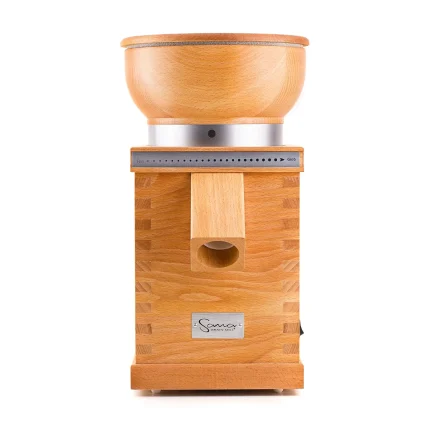
Sana mills are made in Austria. We import them into South Africa directly, so the warranty, the spares and the support all sit here. EcoHub has been trading since 2012. Kernel bread shows why adjustable stones are useful: the 85 mm ceramic-corundum stones adjust continuously from fine flour to coarse cracked grain, so one mill does both jobs in this recipe.
- Sana Grain Mill: 360 W, 100 g a minute, 850 g hopper, solid beechwood, 12-year warranty. R10,999 incl VAT, correct at November 2026.
- Sana Grain Mill MAX: 600 W, 200 g a minute, 1,200 g hopper, same stones and warranty. R15,999 incl VAT (was R18,999), correct at November 2026.
Made with a Sana grain mill
Every recipe in our grain mill recipe collection starts with flour milled at home on a Sana stone mill. Both models use 85 mm ceramic-corundum stones in a solid beechwood housing, are made in Austria and carry a 12-year warranty, with spares and support here in South Africa.

Sana Grain Mill
Original price was: R14800,00.R9999,00Current price is: R9999,00.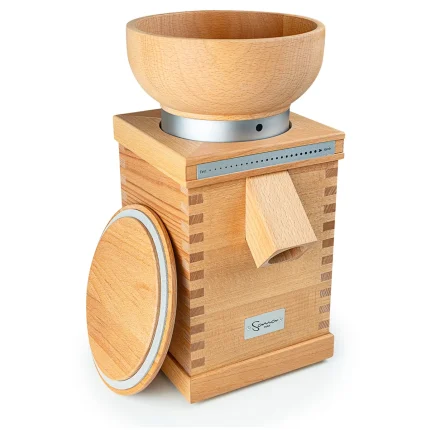

Sana Grain Mill MAX – 600W
Original price was: R18999,00.R14999,00Current price is: R14999,00.Frequently asked questions
What is the difference between kernel bread and wholewheat bread?
Wholewheat bread is made from wholegrain flour. Kernel bread keeps part of the grain as whole or cracked kernels. Both contain the whole grain; the difference is how finely it is broken up, which studies suggest affects how quickly the starch is digested.
Does kernel bread give a slower blood-sugar rise than ordinary bread?
Studies of breads with a high share of whole or cracked grain have found a slower, smaller glucose rise than bread made only from flour, and the effect grew with the share of kernels. This loaf is about 36% cracked grain, so expect a modest difference. If you manage diabetes, speak to your doctor or a registered dietitian.
How much fibre is in a slice of kernel bread?
About 4.6 g per slice when the loaf is cut into 16, calculated from USDA FoodData Central values for whole wheat and rye grain. The whole loaf has about 73 g.
Can I crack grain in a stone mill?
Yes. Set a Sana mill to its coarsest setting before switching on and pour in dry grain. You get a mix of cracked pieces and coarse meal, which suits this bread. Rye should be stored for six months after harvest before milling.
Do I have to soak the cracked grain?
Yes. Unsoaked cracked grain stays hard and pulls water from the dough, giving a dry, crumbly loaf. Soak it overnight in its own weight of boiling water, or simmer it for 10 minutes.
Is kernel bread gluten free?
No. Wheat and rye both contain gluten. Gluten-free baking needs gluten-free grains and, for anyone with coeliac disease, a mill that has never milled wheat, rye or barley.
How long does kernel bread keep?
Four to five days at room temperature wrapped in a cloth or paper bag, and around three months sliced in the freezer.
Sources
- Jenkins et al. (1988), Wholemeal versus wholegrain breads: proportion of whole or cracked grain and the glycaemic response, BMJ 297:958
- Holt and Brand Miller (1994), Particle size, satiety and the glycaemic response, European Journal of Clinical Nutrition 48:496
- Liljeberg and Björck (1994), Bioavailability of starch in bread products, European Journal of Clinical Nutrition 48:151
- Mete et al. (2021), Effect of wholegrain flour particle size in bread on glycaemic and insulinaemic response, Nutrients 13:2579
- Reynolds et al. (2020), Wholegrain particle size influences postprandial glycemia in type 2 diabetes, Diabetes Care 43:476
- Åberg et al. (2020), Whole-grain processing and glycemic control in type 2 diabetes, Diabetes Care 43:1717
- USDA FoodData Central, Wheat, hard red winter (FDC 168890): 12.2 g fibre per 100 g
- USDA FoodData Central, Rye grain (FDC 168884): 15.1 g fibre per 100 g
- Foodstuffs, Cosmetics and Disinfectants Act, Regulation R146: nutrient content claims (Acts Online)
- Sana Grain Mill MAX instruction manual (sana-store.com)