Blog
Peanut and Cashew Butter in a Sana Juicer


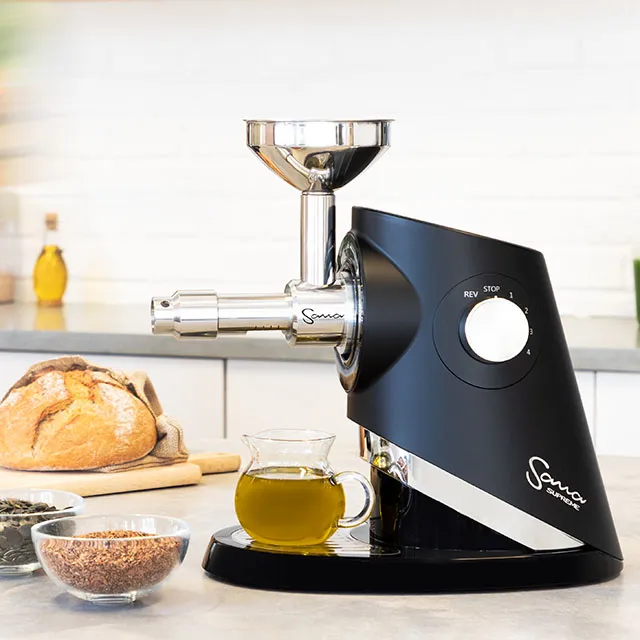
Short answer. To make peanut butter in a Sana juicer, fit the homogenising (blank) screen to a Sana 707, 727 or 929 and feed roasted peanuts in slowly. Sana’s own recipe mixes about 3 tablespoons of oil into a cup of peanuts and runs the butter through a second time for a smoother spread. With little or no oil, the 707 manual suggests at least four passes. Cashews work the same way. The hands-free 878 and 818 aren’t made for nut butter.
On this page
Which Sana juicers make nut butter?
Nut butter needs a screen with no holes in it. Instead of separating juice from pulp, the auger crushes everything together and pushes it out of the end as a paste, a little more with every pass.
| Sana model | Nut butter | How |
|---|---|---|
| Sana 707 | Yes | Homogenising screen, with the butter coming out of the drum cap |
| Sana 727 Supreme | Yes | Homogenising screen |
| Sana 929 Ultimate | Yes | Stainless steel homogenising screen |
| Sana 878 | No | Sorbet and nut milk only |
| Sana 818 | No | A juice-only machine |
If the homogenising screen for your 707 or 727 has gone missing, replacements are sold separately. Not sure which machine suits you? Our guide to which Sana juicer suits you sets them side by side.
How to make peanut butter in a Sana juicer
This is Sana’s method, with the detail from the 707 manual, in our own words.
- Mix. Stir the roasted peanuts and oil together in a bowl so every nut is coated. Sana’s recipe also adds a handful of raisins for a hint of sweetness.
- Set up. Fit the homogenising screen and the drum cap. Put a bowl under the end of the drum, where the butter comes out, and a small container under the juice outlet, because a little oil can run out there.
- Feed slowly. Spoon the nuts into the chute a little at a time. The first pass gives a coarse, crumbly paste.
- Pass again. Tip the paste back into the chute. Sana’s recipe gets a smooth spread in two passes with oil. With little or no oil, the 707 manual suggests at least four passes.
- If it stops flowing. Switch off, take off the drum cap, clear the paste, refit it and carry on.
- Season and jar. Stir in salt or honey to taste, spoon it into a clean jar and refrigerate.
Peanut Butter in a Sana Juicer
Ingredients
Equipment
Method
- Stir the peanuts and oil together in a bowl until every nut is coated. Add the raisins now if using.
- Fit the homogenising screen and drum cap. Put a bowl under the end of the drum and a small container under the juice outlet.
- Switch on and spoon the peanuts into the chute a little at a time. The first pass gives a coarse, crumbly paste.
- Feed the paste back through. Repeat until smooth: allow three or four passes at this amount of oil, fewer if you add more.
- If the paste stops coming out, switch off, take off the drum cap, clear it, refit it and carry on.
- Stir in the salt and honey if using, and a little more oil if you want it softer.
- Spoon into a clean jar, seal and refrigerate. Use within a few weeks.
Notes
Roasted or raw, warm or cold?
Roasted nuts are the easier start. The 707 manual names peanuts, walnuts and cashews as the nuts that work best because they are oilier, and notes that roasted nuts keep longer. Roasting also brings out the flavour. Roasted peanuts are easy to find in South African supermarkets, salted or unsalted. Salted is fine; just leave out any extra salt.
Raw nuts work too. Raw cashews give a paler, milder butter. We prefer to roast them lightly first (the cashew recipe below shows how), because the butter tastes rounder.
Slightly warm is good; hot is not. Many people find nuts turn to butter more easily while they are still a little warm from roasting, because the oil in them is softer. Let them cool until you can hold a handful comfortably before they go in. The 727 manual asks you not to expose the juicer to high temperatures, so never feed nuts straight from the oven.
Oil, salt and sweetness
- Oil. Sana’s recipe uses sunflower or peanut oil, and the 707 manual also mentions walnut oil. A little oil gives a spreadable texture in fewer passes. Add it a tablespoon at a time; you can always stir more in at the end.
- Salt. A small pinch brings out the flavour of unsalted nuts. Stir it in after the last pass so you can taste as you go.
- Sweetness. Stir honey or a little maple syrup into the finished butter rather than putting it through the juicer. Raisins can go through with the nuts, as in Sana’s recipe, and so can soft dates, pips removed.
Cashew butter
Cashews make a mild, creamy butter. They are softer than peanuts and come together easily. Sana’s overview of the 929 Ultimate includes cashew butter alongside carrot and pineapple juice.
Cashew Butter in a Sana Juicer
Ingredients
Equipment
Method
- Heat the oven to 160 °C. Spread the cashews on a baking tray in a single layer.
- Roast for 10 to 12 minutes, stirring halfway, until light golden. Watch them closely at the end, as they colour quickly.
- Leave them to cool until just warm and comfortable to hold. Never feed hot nuts into the juicer.
- Toss the cashews with the oil if using. Fit the homogenising screen and drum cap, with a bowl under the end of the drum and a small container under the juice outlet.
- Spoon the cashews into the chute a little at a time.
- Feed the paste back through until it is as smooth as you like. Allow three or four passes without oil, fewer with it.
- Stir in the salt, and the honey if using.
- Spoon into a clean jar, seal and refrigerate. Use within a few weeks.
Notes
Why not almond butter?
You will find recipes for almond butter in a juicer, but almonds are harder than peanuts and cashews, and they aren’t on the 707 manual’s list of nuts that work best. One home cook reported running almonds through a slow juicer more than ten times without ever getting a creamy butter. We use almonds for almond milk, where they are excellent, and peanuts and cashews for butter. Walnuts are on Sana’s list too, if you want a third option.
Sana’s manuals also list things not to process, including sesame seeds (so no tahini), coffee beans, dried beans, hard spices and dry grains.
Heat, run time and batch size
- Sana 707. The manual limits continuous use to 30 minutes. If it stops during normal use, it needs an hour to cool before you restart it. A batch of nut butter takes far less than 30 minutes, so this only matters if you are making several jars.
- Sana 727 and 929. Both run with no time limit. The 727 manual still suggests working in batches of about 1 kg, then taking the juicer apart and washing it.
- For every model. Feed slowly and don’t overfill the chute. Small batches make smoother butter.
Cleaning oily parts
Nut butter leaves more residue than juice, but it comes off easily if you get to it straight away.
- Scrape the last of the butter out of the drum cap and auger with a spatula. It is worth keeping.
- Wash the parts the way your manual asks. The 707 manual asks for warm, soapy water; the 727 manual asks you not to use dishwashing liquid or hot water, so on the 727 and 929 rinse under warm running water and work the oil off the screen with the cleaning brush, repeating until it runs clear.
- Rinse and dry everything completely before you put it away. Sana’s manuals ask you not to use the dishwasher.
- Wipe the motor base with a damp cloth; never put it in water.
If someone in your house has a nut allergy, clean the juicer thoroughly before you make their juice.
Storing homemade nut butter
Homemade peanut and cashew butter has no preservatives or stabilisers. Keep it in a clean, sealed jar in the fridge and use it within a few weeks. A layer of oil may rise to the top as it stands; that’s normal, so stir it back in. If it smells sharp or tastes bitter, the oil has gone off and it is time to throw it out. Butter from the fridge firms up, so take it out a few minutes before you spread it.
Made with a Sana juicer


Sana 707 Juicer
R9899,00

Sana 727 Supreme Juicer
Price range: R12999,00 through R14999,00

Frequently asked questions
Can I make peanut butter in any Sana juicer?
No. The Sana 707, 727 and 929 make nut butter with their homogenising screens. The hands-free 878 makes sorbet and nut milk but not nut butter, and the 818 makes juice only.
Do I have to add oil?
No, but it helps. Sana’s recipe adds about 3 tablespoons of sunflower or peanut oil to a cup of peanuts and passes it through twice. Without oil, the 707 manual suggests at least four passes for a smooth butter.
How many times should I put the nuts through?
With oil, two passes usually give a smooth spread, as in Sana’s recipe. With little or no oil, the 707 manual suggests at least four. Stop when the texture is how you like it.
Should I use roasted or raw nuts?
Roasted nuts are easier: they taste fuller, and the 707 manual notes that roasted nuts keep longer. Raw cashews work too and give a paler, milder butter. Let freshly roasted nuts cool until just warm before they go into the juicer.
Can I make almond butter in a Sana juicer?
Almonds are harder than peanuts and cashews and aren’t among the nuts the 707 manual says work best; home cooks report that they tend to stay grainy. We recommend peanuts, cashews or walnuts for butter and almonds for almond milk.
How long does homemade nut butter keep?
Keep it in a clean, sealed jar in the fridge and use it within a few weeks. Stir in any oil that separates, and throw it out if it smells sharp or tastes bitter.
Sources
- Peanut butter recipe, Sana Products: homogenising screen, oil, second pass. sanaproducts.com
- Sana 707 user manual (English), Sana Products: nut butter method, nuts that work best, passes, oil, run time, cleaning. sanaproducts.com
- Sana 727 Supreme user manual (English), Sana Products: homogenising screen, batch size, items not to process, cleaning. sanaproducts.com
- Sana 727 Supreme and Sana 929 Ultimate, SanaStore: homogenising screen uses and run time. sanastore.co.za
- Sana 878 user manual, Sana Products: screens and uses. sanaproducts.com
- Homemade peanut butter in a slow juicer, Food in Jars, including a reader’s report on almond butter. foodinjars.com