Blog
Stone fruit and grape juices for early summer: nectarine, plum, apricot and grape

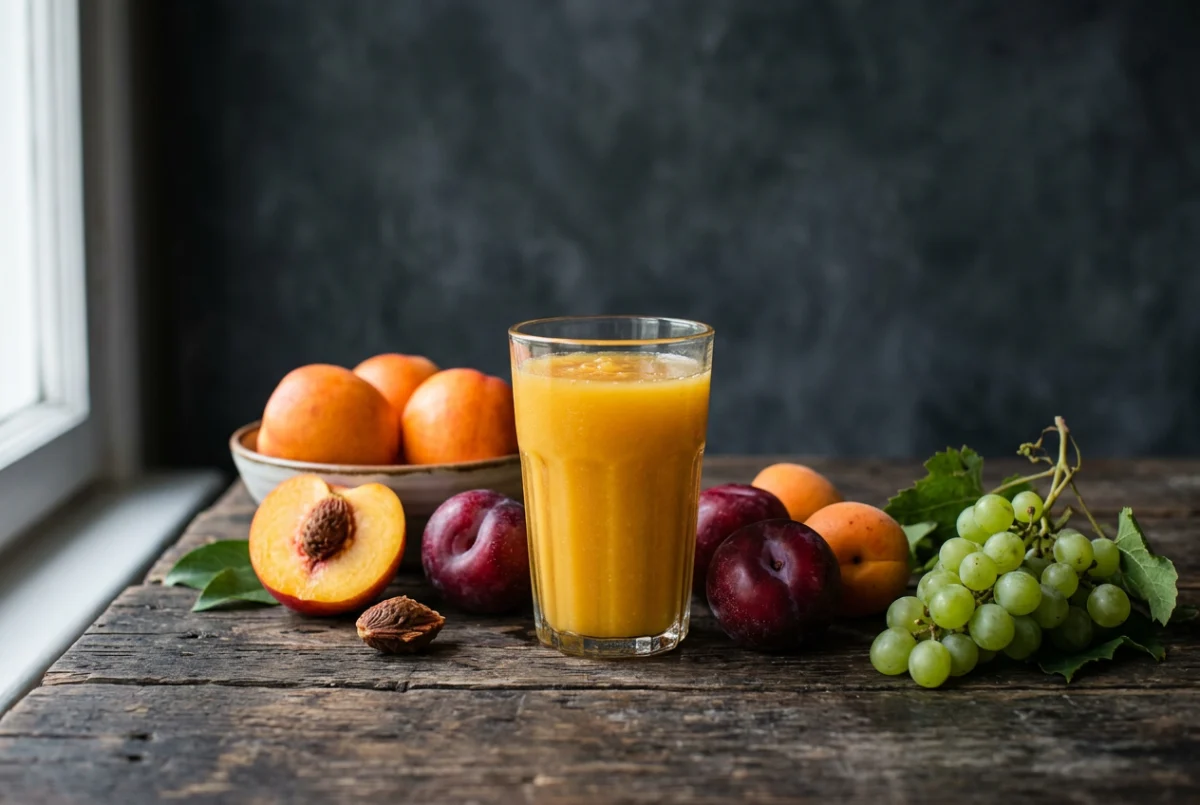
Short answer. Stone fruit juice is at its best when the soft fruit is mixed with something firmer and juicier: nectarine with orange and carrot, plum or apricot with apple, and grapes with cucumber and lemon. Take out every stone before juicing, because pits can damage a juicer. Fit the fine screen when carrot or apple is in the mix and the coarse screen for mostly soft fruit. The hands-free Sana 878 and 818 handle soft fruit well when you load it under firmer pieces, and a horizontal Sana works just as well if you push the soft fruit through with carrot or apple.
On this page
Early summer fruit for juicing
Stone fruit is one of the first signs of summer in South African shops. Industry figures reported by FreshPlaza put the local nectarine and peach season at October to April, with plums following from November.
Stone fruit is soft and sweet, with less free juice than its size suggests. On its own it tends to come out thick, almost like a smoothie, and very sweet. Mixed with a juicier or firmer partner, it gives a bright, fragrant glass that still tastes of summer fruit. Grapes go the other way: they are mostly juice, very sweet and quick to juice, so they need something to stretch them.
Getting the stones out
The 727, 878 and 818 manuals all say the same thing: pits and stones can damage the juicer, so remove them first. It takes a minute.
- Nectarines and peaches. Cut around the fruit along the seam, twist the halves apart and lift out the stone with a teaspoon or the tip of a knife. If the stone clings (in clingstone varieties), cut the flesh off in wedges instead.
- Plums. Same method as nectarines. Red-skinned plums tint the juice pink, which children like.
- Apricots. They usually split cleanly along the seam, and the stone falls out.
- Cherries. A cherry pitter is the only sensible way, so keep cherries for eating unless you have one.
- Grapes. Pull them off the stems, as both the 818 and 878 manuals ask. Seedless grapes are easiest; if yours have pips, halve them and flick the pips out.
The skins of nectarines, plums and apricots are thin, so there is no need to peel them. Wash the fruit well under running water and cut out any bruised or damaged parts. Peaches are fuzzier, so give them a gentle rub under the tap or peel them if the fuzz bothers you.
Which screen to fit
Sana gives each screen a job, and stone fruit sits on the line between them.
| Screen | When to use it for these juices | What you get |
|---|---|---|
| Fine | Recipes with carrot, apple or cucumber in the mix, and grapes | A smoother, thinner juice with the highest yield |
| Coarse | Mostly soft fruit, such as two or three nectarines or apricots with only a little else | A thicker, pulpier juice, closer to a nectar |
The 878 manual describes the fine screen for firm produce and the coarse screen for softer produce, and the 727 manual says the coarse screen suits berries, soft apples, pineapple and other soft fruits. On the 818, the fine strainer comes in the box and the coarse strainer is sold separately.
Which Sana suits soft fruit?
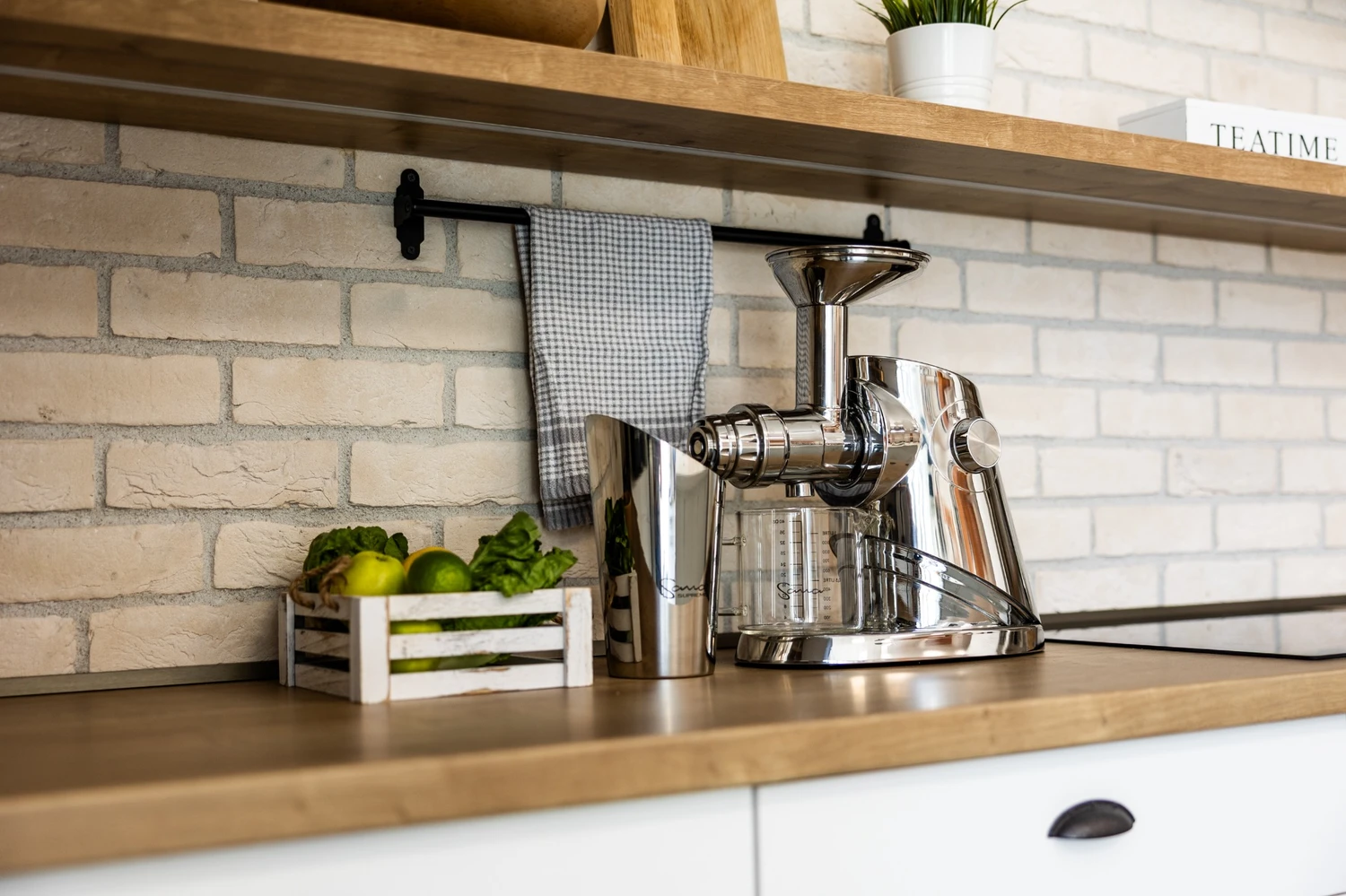
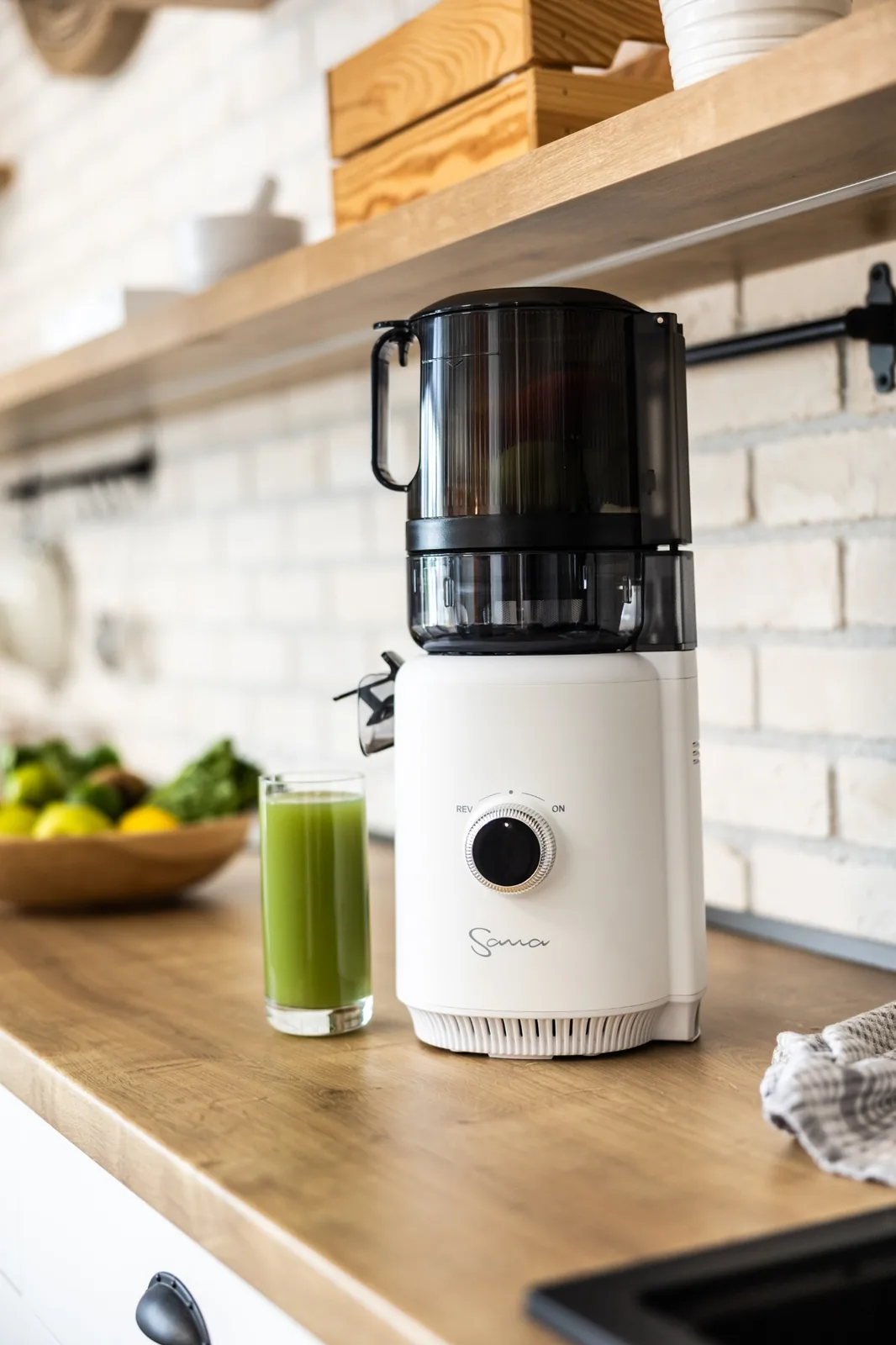
The hands-free Sanas handle more soft fruit. On the Sana 878 and Sana 818, you fill the hopper and the juicer feeds itself. Both manuals give the same loading rule: soft produce at the bottom, firmer produce such as apples and carrots on top, so the firm pieces press the soft fruit through. Their manuals also warn that very soft fruit used on its own can build up in the chamber, which is another reason to mix nectarines and plums with something firmer. Cut the fruit into pieces that fit the hopper and stay below the limit line.
The horizontals are still fine. The Sana 727, 707 and 929 are built for greens and roots, but they make good fruit juice when you alternate a few pieces of soft fruit with a stick of carrot or a wedge of apple. On the 727, use the 90 rpm setting for fruit. Let each handful clear before you add the next, and expect a slightly thicker juice than from greens.
Whichever you use, our family fruit juice post covers preparing other fruit, and our guide to choosing a Sana compares the models in more detail.
Nectarine, orange and carrot
The warmest-coloured juice of early summer. Nectarine gives the fragrance, orange makes it juicy and carrot gives it body while keeping the sugar down. Ripe but still slightly firm nectarines juice best; very soft ones are better eaten.
Nectarine, orange and carrot juice
Ingredients
Equipment
Method
- Chill the fruit and carrots. Halve the nectarines, remove the stones and cut the flesh into wedges. Peel the oranges and pick out the pips. Cut the carrots into sticks.
- Fit the fine screen.
- On the Sana 878 or 818, put the nectarine wedges in the hopper first, then the orange, with the carrot sticks on top. On a horizontal Sana, alternate a few nectarine wedges with a carrot stick and a piece of orange.
- Juice everything and stir well.
- Pour over ice and serve straight away.
Notes
Grape, cucumber and lemon
Pale, cold and very easy to drink. Grapes on their own make an intensely sweet juice, so a whole cucumber stretches them and half a lemon keeps the glass fresh. Green seedless grapes give a pale green juice; red grapes give a soft pink one.
Grape, cucumber and lemon juice
Ingredients
Equipment
Method
- Chill the grapes and cucumber. Pull the grapes off the stems and remove any pips. Cut the cucumber into pieces that fit your juicer and peel the lemon.
- Fit the fine screen.
- On the Sana 878 or 818, put the grapes in first and the cucumber and lemon on top. On a horizontal Sana, feed a handful of grapes, then a piece of cucumber, and repeat.
- Juice everything, stir and taste. Add the other half of the lemon if it is very sweet.
- Pour over ice and serve straight away.
Notes
Plum or apricot with apple
Plums give a sharp, deep pink juice, and apricots a mellow, golden one. Either way, two firm apples carry the soft fruit through the juicer and turn a thick purée into something you can drink. A thin slice of ginger suits the plum version well.
Plum (or apricot) and apple juice
Ingredients
Equipment
Method
- Chill the fruit. Halve the plums or apricots and remove the stones. Core the apples and cut them into wedges.
- Fit the fine screen.
- On the Sana 878 or 818, put the plums or apricots in the hopper first and the apple wedges, ginger and lemon on top. On a horizontal Sana, alternate two pieces of plum with a wedge of apple, and feed the ginger between apple wedges.
- Juice everything and stir well. The juice is thicker than apple juice; stir again before pouring.
- Serve cold, over ice.
Notes
Variations. Swap half the plums for apricots for a peach-coloured juice. Add a handful of strawberries with the plums for colour. Or try peach with watermelon, which needs no apple at all: two peaches with about 500 g of watermelon on the coarse screen gives a light, pink-orange juice.
Keeping the sugar sensible
Stone fruit and grapes are sweet, and juicing removes most of the fibre that whole fruit keeps. The NHS points out that even unsweetened fruit juice is sugary and suggests keeping fruit juice and smoothies to a combined 150 ml a day, with meals rather than between them. Mixing the fruit with carrot, cucumber or lemon, as these recipes do, gives you a bigger glass with less fruit in it. Small glasses, plenty of ice and a top-up of sparkling water help too. If you have diabetes or another health condition, check with your doctor about how juice fits in.
Serving and storing
Serve these juices cold, straight away. Chill the fruit overnight so you don’t need much ice. Stone fruit juice darkens as it stands, and a squeeze of lemon keeps the colour brighter for longer. Our batch juicing guide covers how long fresh juice keeps and how to freeze leftovers, and spare nectarine or plum juice makes good ice lollies. For a party, the coolers in our summer coolers post use the same method in bigger batches.
The pulp from soft fruit is wet and sweet. It can go into muffins and other bakes; our juice pulp recipes have ideas.
Made with a Sana juicer
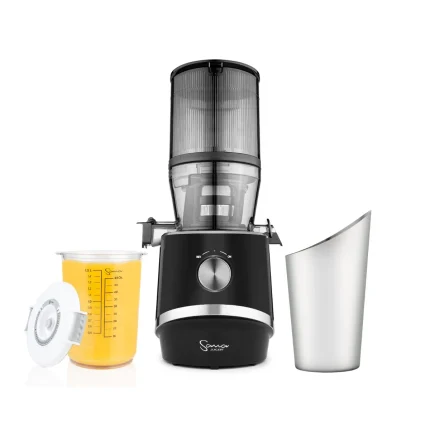
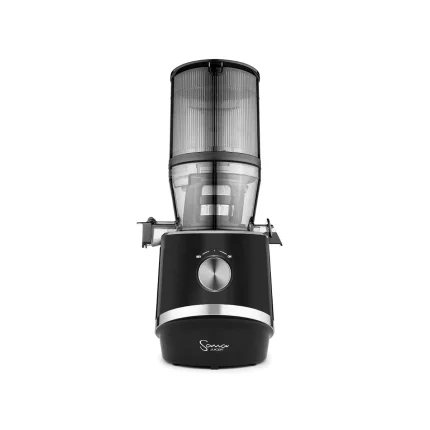
Sana 878 Juicer
Original price was: R11999,00.R9999,00Current price is: R9999,00.

Sana 818 Juicer
Original price was: R6999,00.R5299,00Current price is: R5299,00.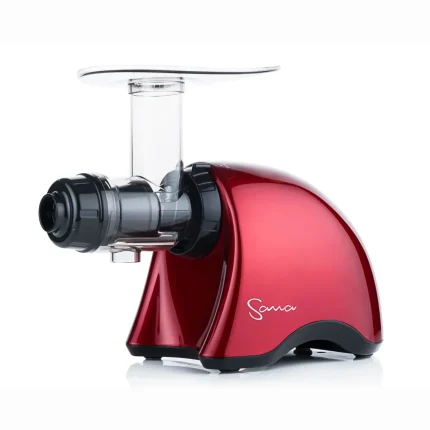
Sana 707 Juicer
Original price was: R9899,00.R7999,00Current price is: R7999,00.Frequently asked questions
Do I need to remove the stones before juicing?
Yes, always. Sana’s manuals warn that pits and stones can damage the juicer. Halve nectarines, peaches, plums and apricots along the seam and lift the stone out, or cut the flesh off in wedges if it clings.
Do I need to peel nectarines and plums?
No. Their skins are thin and juice well. Wash the fruit under running water and cut away any bruised parts. Peach skin is fuzzier, so rub it under the tap or peel it if you prefer.
Which screen should I use for stone fruit?
Use the fine screen when carrot, apple or cucumber is in the mix, which gives a smoother juice. Use the coarse screen if the juice is mostly soft fruit; it gives a thicker, pulpier juice. On the 818, the coarse strainer is sold separately.
Can the Sana 878 juice soft fruit like plums and nectarines?
Yes. Put the soft fruit at the bottom of the hopper and firmer pieces such as apple or carrot on top, as the manual suggests, so the firm pieces press the soft fruit through. Very soft fruit on its own can build up in the chamber, so mix it with something firmer.
Can I juice grapes with seeds?
Remove the pips first, or buy seedless grapes. Pull the grapes off the stems before juicing, as Sana’s manuals ask.
Why is my nectarine juice so thick?
Stone fruit has less free juice than its size suggests, so on its own it comes out close to a purée. Mix it with orange, carrot, apple or cucumber, or fit the fine screen, for a thinner juice.
Sources
- Nectarine production grows as South Africa promotes new season stone fruit, FreshPlaza. freshplaza.com
- Sana 878 user manual, Sana Products: stones, grapes, screens, soft produce and hopper loading. sanaproducts.com
- Sana 818 user manual, Sana Products: stones, grapes, strainers and hopper loading. sanaproducts.com
- Sana 727 Supreme user manual (English), Sana Products: stones and screens. sanaproducts.com
- Sana 727 Supreme product page: speeds. sanastore.co.za
- 5 A Day: what counts?, NHS. nhs.uk