Blog
Sourdough Discard Recipes: Seeded Crackers, Crumpets and a Pan Flatbread

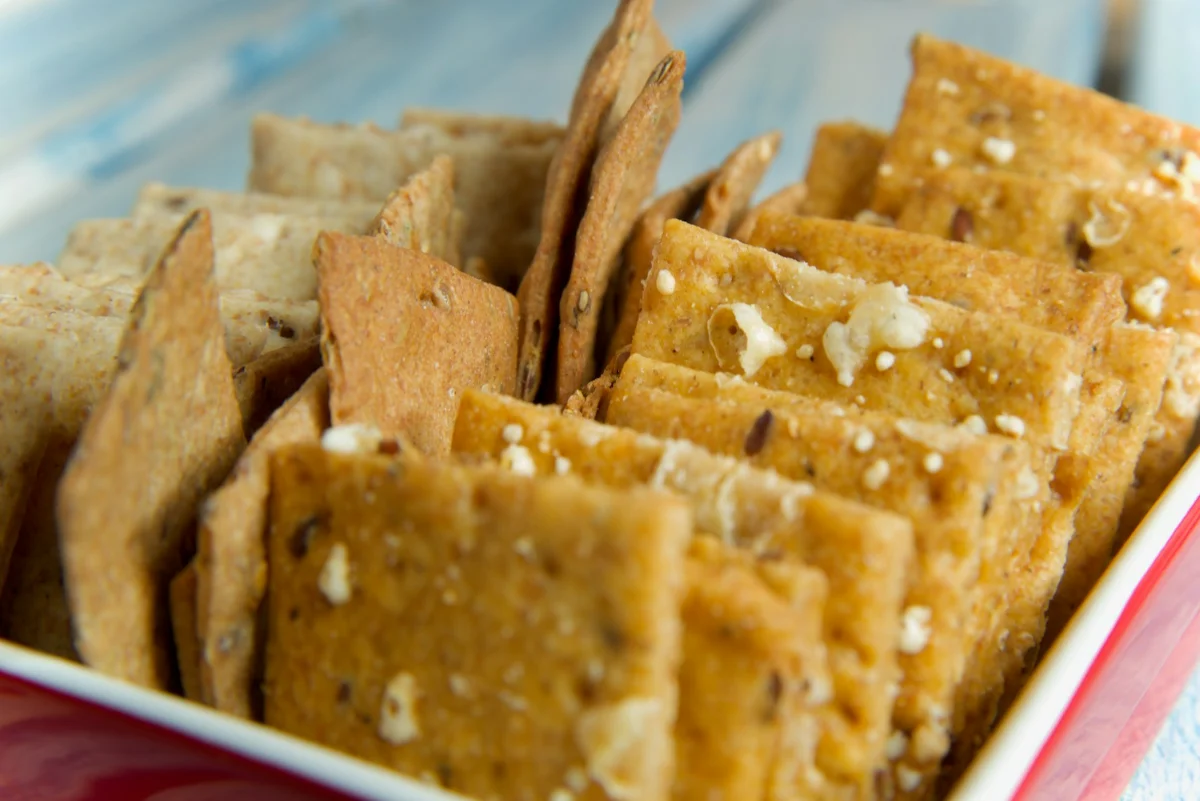
Short answer. Sourdough discard is the starter you take out before you feed the rest. It is flour and water that has already fermented, and the only thing it has lost is lifting power. The three sourdough discard recipes below never ask it to raise anything: seeded crackers baked from a pourable batter, English-style crumpets that use bicarbonate of soda against the discard’s own acidity, and a quick pan flatbread, about forty minutes from mixing to eating, most of it resting time.
If you mill your own flour, discard is worth more to you than it is to most bakers, because the flour in it cost you grain rather than a bag.
On this page
- What is sourdough discard, and is it safe to use?
- How long does sourdough discard keep?
- Does discard need to be fed or active?
- Can I use discard from a fresh-milled starter?
- Recipe 1: seeded wholegrain crackers from a pourable batter
- Recipe 2: sourdough discard crumpets
- Recipe 3: a quick pan flatbread
- Where this sits in the library
- Frequently asked questions
- Mill it on a Sana
What is sourdough discard, and is it safe to use?
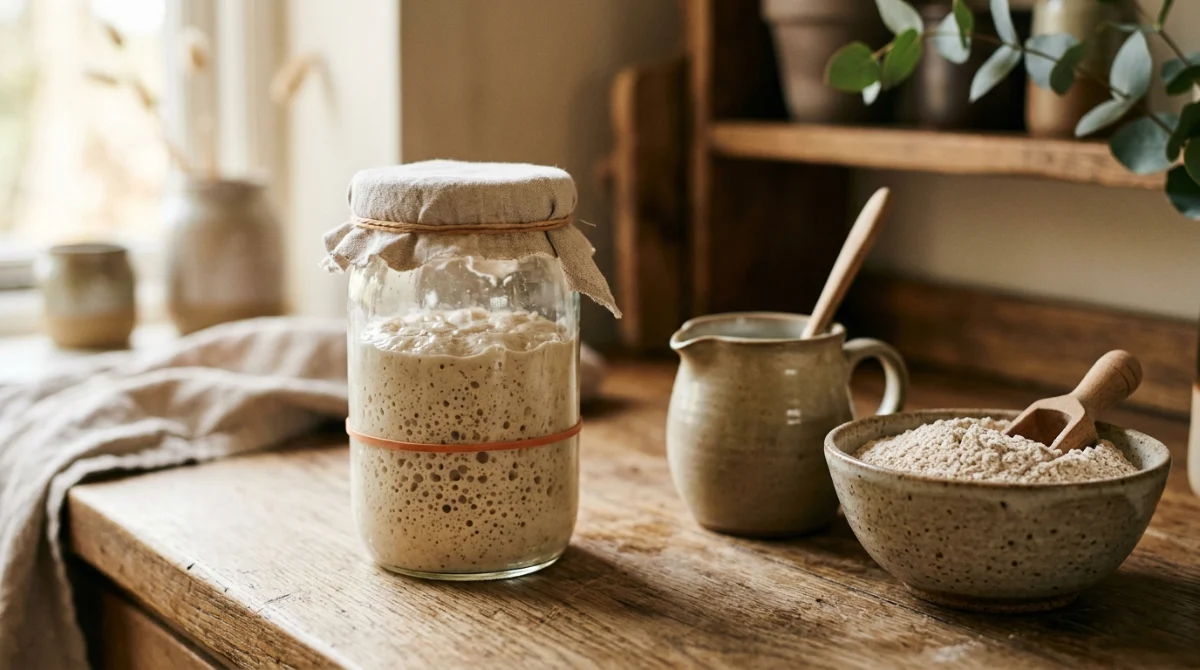
Discard is the portion of starter removed as part of normal feeding. If you keep 50 g of starter and feed it 50 g of flour and 50 g of water, the rest of what was in the jar is discard. It has the same ingredients as the starter. It is simply past its peak, so the yeast population has used up the available food and will not lift a loaf.
Three things are worth knowing before you cook with it.
- A dark liquid on top is fine. Bakers call it hooch. It is alcohol and water separating out of a hungry starter. Pour it off or stir it in; either way it signals nothing worse than that the starter wanted feeding.
- Pink or orange streaks mean throw it out. King Arthur Baking’s guidance is clear on this: streaks of pink or orange indicate likely contamination and the starter or discard should go in the bin, not the batter. The same goes for any fuzzy mould, whatever colour.
- Do not save discard from a starter that is not established yet. In the first week or two, a new starter is still sorting out which organisms live in it. Wait until it is healthy and rising reliably before you start collecting.
All three recipes here are baked or fried, which is the right way to eat discard. Raw flour and raw batter are not safe foods regardless of fermentation, so no tasting the cracker mix.
How long does sourdough discard keep?
In the fridge, in a lidded jar, several weeks. You can keep adding each day’s discard to the same jar. It will get progressively more sour, which the crackers and the flatbread will take happily and the crumpets will take up to a point.
| Keeps | Notes | |
|---|---|---|
| On the counter | Use the same day | Fine if you are baking that afternoon |
| In the fridge, lidded | Several weeks | Stir before using; pour off or stir in any hooch |
| In the freezer | Months | Freeze in 200 g or 250 g portions, the amounts the recipes below use. Thaw overnight in the fridge |
The judgement call is flavour rather than safety. Four-week-old fridge discard is aggressively sour, which is excellent in a cracker and overpowering in a crumpet. If your jar has got away from you, use it in the crackers.
Does discard need to be fed or active?
No, and that is the point of these recipes. Discard is used here for flavour and for the acidity, not for rise. The crackers get their structure from drying out, the crumpets from bicarbonate of soda, and the flatbread from steam in a hot dry pan.
Where it does matter is in actual bread. If a bread recipe asks for unfed starter rather than ripe starter, King Arthur’s guidance is that it works best if the starter has been fed at least once in the past week. Our sourdough starter guide covers getting a starter to the point where it can carry a loaf.
Can I use discard from a fresh-milled starter?
Yes, and it behaves slightly differently in two ways.
Fresh-milled discard is bran-heavy, so it is thirstier. It thickens in the jar over a few days as the bran keeps taking up water, which means a two-week-old jar of wholemeal discard is stiffer than a two-week-old jar of white. Loosen it with a tablespoon of water before you measure.
It also tastes stronger. The bran brings a bitter edge that works well in a cracker with salt and seeds, and that some people find too much in a crumpet. If your household is on the fence, start the crumpets with discard that is a few days old rather than a few weeks.
Recipe 1: seeded wholegrain crackers from a pourable batter
The method that makes these worth bothering with is spreading the batter paper-thin on baking paper and baking the whole sheet in one piece, then breaking it up afterwards. No rolling, no cutting, no re-rolling scraps. Thin is the whole technique: anywhere the batter is thicker than 3 mm comes out chewy instead of crisp.
The seeds go on top of the batter, never through the mill. Oily seeds such as sesame and linseed clog stone mills, so buy them whole and use them as they are.
Seeded wholegrain sourdough discard crackers
Ingredients
Equipment
Method
- Heat the oven. Heat to 170 °C and line a large tray with baking paper right into the corners.
- Whisk. Beat the discard, oil and fine salt until smooth and glossy. It should pour like a thick pancake batter; week-old wholemeal discard usually needs 10 to 20 g of water.
- Spread thin. Pour onto the paper and spread to about 2 mm, right to the edges, with the back of a spoon or an offset spatula.
- Seeds and salt. Scatter the sesame, linseed and flaky salt over and press them in with the flat of your hand.
- Bake. Bake 25 to 30 minutes, until dry, dark at the edges and lifting off the paper in one piece. If the middle is still flexible, give it 5 minutes more at 150 °C.
- Cool and break. Cool on the tray, then snap into shards. Keep in a sealed tin for up to two weeks.
Notes
What a tray gives you: about 17.9 g of fibre in 180 g of crackers, so roughly 9.9 g per 100 g, calculated from USDA FoodData Central values for wholemeal flour, sesame and linseed and assuming a starter at 100% hydration. There is no added sugar in them at all.
Variations: swap the sesame and linseed for caraway and coarse black pepper; or cumin and chilli flakes; or rosemary chopped fine with a little extra oil. Grated hard cheese stirred into the batter works but browns fast, so drop the oven to 160 °C.
Recipe 2: sourdough discard crumpets
These are English-style crumpets, cooked in rings so they set tall and full of holes. Without rings you get a thicker pikelet, closer to a South African flapjack, and they are still good. The holes come from bicarbonate of soda meeting the discard’s acid, so the batter goes into the pan soon after it is mixed.
Hole formation needs time, not heat. The surface should stay wet and bubbling for several minutes and then go matte as the holes set. If the base is browning before the top sets, the pan is too hot.
Sourdough discard crumpets
Ingredients
Equipment
Method
- Warm the discard. Take it out of the fridge 30 minutes ahead; cold batter sets slowly and the holes close up.
- Loosen. Stir in the milk and salt until the batter falls off a spoon in a thick ribbon.
- Add the bicarbonate. Sprinkle it over and stir it in properly. The batter foams and rises a little. Rest 10 minutes while the pan heats and do not stir again.
- Cook low and slow. Grease a heavy pan and the rings and set over a low heat. Two-thirds fill each ring and cook 6 to 8 minutes, until the bubbling surface goes matte and the holes set.
- Flip. Lift off the rings and flip for about 2 minutes, just to colour the top. Eat warm, or cool on a rack and toast later.
Notes
A note on the bicarbonate: 3 g to 300 g of discard is calibrated to a jar that has been in the fridge for a few days. Very old, very sour discard will take 4 g. Fresh discard from a starter fed that morning may need only 2 g, and too much bicarbonate tastes soapy.
Recipe 3: a quick pan flatbread
The one to make when there is no bread in the house. It uses fresh-milled flour alongside the discard, so mill 110 g while you get everything else out; that takes about a minute on either Sana mill.
Do not skip the 20-minute rest. Without it, fresh-milled flatbreads tear. The bran takes up water in that time and the dough rolls out far more willingly afterwards.
Sourdough discard pan flatbread
Ingredients
Equipment
Method
- Mill. Mill 110 g of wheat on a medium setting and let it cool while you get everything else out.
- Mix and knead. Combine everything and knead briefly until soft and slightly tacky but not sticky, adding flour a teaspoon at a time if it clings.
- Rest. Cover and rest 20 minutes so the bran takes up water.
- Roll. Divide into four and roll each to about 2 mm on a lightly floured counter.
- Cook. Cook in a dry pan over a high heat for 1 to 2 minutes a side, no oil, until blistered and spotted. Stack under a cloth to keep them soft.
Notes
Serve with anything you would put on a roti. They go stiff within an hour, so make them when you want them, or reheat them for 20 seconds in a dry pan.
Where this sits in the library
Discard is the by-product of keeping a starter, so if you have not got one yet, start with the sourdough starter guide and come back. For bread rather than snacks, the 70/30 first loaf is the forgiving place to begin and the no sugar rye loaf is the other direction entirely. The one-bowl seed loaf sets out the South African labelling thresholds for fibre, which is where the fibre arithmetic in this article comes from.
If your flour is going off faster than you can use it, we have a piece on storing flour and grain.
Made with a Sana grain mill
Every recipe in our grain mill recipe collection starts with flour milled at home on a Sana stone mill. Both models use 85 mm ceramic-corundum stones in a solid beechwood housing, are made in Austria and carry a 12-year warranty, with spares and support here in South Africa.

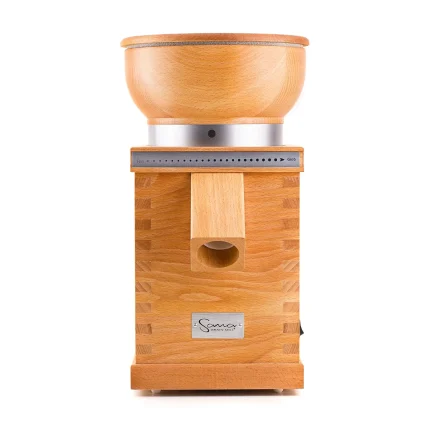
Sana Grain Mill
Original price was: R14800,00.R9999,00Current price is: R9999,00.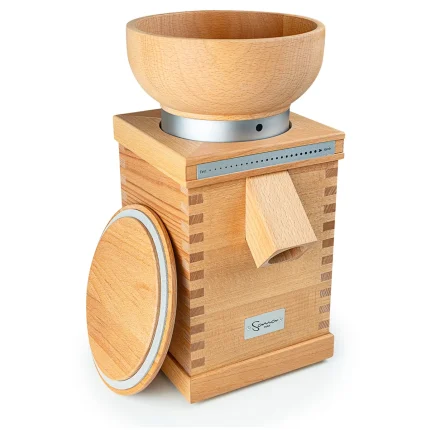

Sana Grain Mill MAX – 600W
Original price was: R18999,00.R14999,00Current price is: R14999,00.Frequently asked questions
What is sourdough discard?
It is the portion of starter you remove before feeding the rest. It has exactly the same ingredients as your starter, flour and water, but it is past its peak, so the yeast has used up the available food and it will not reliably lift a loaf. It still carries all the flavour and acidity of a fermented dough, which is what discard recipes use it for.
How long does sourdough discard keep in the fridge?
Several weeks in a lidded jar, and you can keep adding to the same jar each day. It gets more sour as it goes. In the freezer it keeps for months, and freezing it in 200 g or 250 g portions matches the recipes on this page. The usual limit is flavour rather than safety: four-week-old discard is sharp enough to overpower a crumpet but excellent in a cracker.
When should I throw sourdough discard away?
If you see streaks of pink or orange, or any fuzzy mould of any colour, bin it. A dark liquid on the surface is not a problem; that is hooch, alcohol and water separating out of a hungry starter, and you can stir it in or pour it off. Also avoid saving discard from a starter that is less than a week or two old and not yet rising reliably.
Does sourdough discard need to be active or fed?
Not for crackers, crumpets or flatbread, which use it for flavour and acidity rather than lift. For a bread recipe that calls for unfed starter, it works best if the starter has been fed at least once in the past week.
Can I use fresh-milled wholemeal discard in these recipes?
Yes. It is thirstier than white discard because the bran keeps taking up water in the jar, so loosen it with a tablespoon of water before measuring. It also tastes stronger, which suits the crackers and the flatbread. For crumpets, use discard that is a few days old rather than a few weeks.
Why don’t my sourdough discard crackers go crisp?
Almost always because the batter was spread too thick. Anything over about 3 mm bakes chewy rather than crisp. Spread it to 2 mm, right to the edges of the paper, and if the middle of the sheet is still flexible after 30 minutes give it another 5 minutes at 150 °C. Humidity will soften stored crackers, and 5 minutes at 150 °C brings them back.
Why don’t my discard crumpets have holes?
Three usual causes. The pan was too hot, so the base set and browned before the bubbles could rise through; crumpets need a low heat and six to eight minutes. The batter was too cold, straight from the fridge. Or it sat too long after the bicarbonate of soda went in, so the reaction with the discard’s acid was over before the batter hit the pan. Mix the bicarbonate in, rest ten minutes, and cook.
Is there any added sugar in these recipes?
No. The crackers are discard, olive oil, salt and seeds; the flatbread is discard, flour, water, oil and salt; the crumpets add only milk and bicarbonate of soda.
Can I eat sourdough discard raw?
No. Fermentation does not make raw flour safe, so no tasting the cracker batter or the flatbread dough. All three recipes here are baked or fried through.
Mill it on a Sana
Sana mills are made in Austria. We import them into South Africa directly, so the warranty, the spares and the support all sit here rather than in Europe. EcoHub has been trading since 2012.
- Sana Grain Mill: 360 W, 100 g a minute, 850 g hopper, 85 mm ceramic-corundum stones, beechwood housing, 12-year warranty. R10,999 incl VAT, correct at November 2026.
- Sana Grain Mill MAX: 600 W, 200 g a minute, 1,200 g hopper. R15,999 incl VAT, down from R18,999, correct at November 2026.
Sources
- King Arthur Baking: what is sourdough discard, and what should I do with it? (April 2024)
- USDA FoodData Central: wheat flour, whole-grain (FDC 168893), 10.7 g fibre per 100 g; sesame seeds (FDC 170150), 11.8 g; flaxseed (FDC 169414), 27.3 g. Fibre figures here are calculated from those values, not a laboratory analysis.