Blog
Savoury and spicy juices: tomato, pepper, watercress and more


Short answer. Savoury juice recipes are vegetable-led juices that taste fresh, peppery or spicy rather than sweet. Our favourites are a garden tomato juice (cherry tomatoes, red pepper, celery and basil with a pinch of salt and black pepper), a sharp watercress, green apple, lime and celery juice, and a butternut, carrot, apple and lime juice with cinnamon stirred in. Keep fruit to one apple per two glasses at most, start small with pungent things like horseradish, garlic and chilli, stir salt, pepper and spices into the glass rather than putting them through the juicer, and serve cold over ice. A horizontal slow juicer such as the Sana 727 or Sana 707 handles the celery, leaves and hard roots these recipes use.
On this page
- Why make savoury juices?
- Garden tomato juice (our savoury tomato juice recipe)
- Watercress, green apple, lime and celery
- Butternut, carrot, apple and lime with cinnamon
- Two bolder vegetable juices to try
- Handling chilli, garlic and horseradish
- Seasoning and serving
- Is vegetable juice lower in sugar?
- Which Sana juicer suits savoury juices?
- Frequently asked questions
Why make savoury juices?
Plenty of people like the idea of fresh juice but find most recipes too sweet. Savoury juices go the other way: tomato, pepper, celery, watercress, cabbage and roots make up most of the glass, and fruit is there only to round off the edges.
They also suit the way South Africans entertain in summer. A small, cold glass of tomato juice with a salted rim is a good start to a long lunch or a braai, and it gives guests who aren’t drinking something more interesting than a soft drink.
Garden tomato juice (our savoury tomato juice recipe)
This is fresh tomato juice the way it tastes in late summer: bright, a little sweet from the red pepper, savoury from the celery and fragrant with basil. Cherry tomatoes give the best flavour and colour, and Sana’s 707 manual names them as the best tomatoes for juicing. They don’t need peeling.
Tomato and pepper are soft and juicy, so they suit the coarse screen if you have one. Sana’s manuals describe the coarse screen for softer produce, and the 707 manual lists tomatoes with it. Expect a thicker, slightly pulpy juice, closer to a fresh passata than to bottled tomato juice. Stir it well before pouring.
Garden tomato juice
Ingredients
Equipment
Method
- Chill the tomatoes, pepper and celery before you start.
- Fit the coarse screen if you have one. On the Sana 727, use a low speed.
- Feed a handful of tomatoes, then a strip of pepper, then a piece of celery. Tuck the basil leaves between tomatoes.
- Finish with a piece of celery to push the last of the tomato through.
- Stir the juice well, taste, then add salt and black pepper a little at a time.
- Pour over ice and serve straight away.
Notes
Variations to try.
- With chilli. Add a thin slice of fresh red chilli, seeds removed, between the tomatoes. Taste before adding more.
- With garlic. Half a small clove gives a gazpacho-like edge. Feed it between two tomatoes so they push it through.
- With cucumber. Swap the red pepper for half a cucumber for a lighter, cooler glass.
- Spicy and smoky. Stir a few drops of Worcestershire sauce or hot sauce into the finished jug.
Watercress, green apple, lime and celery
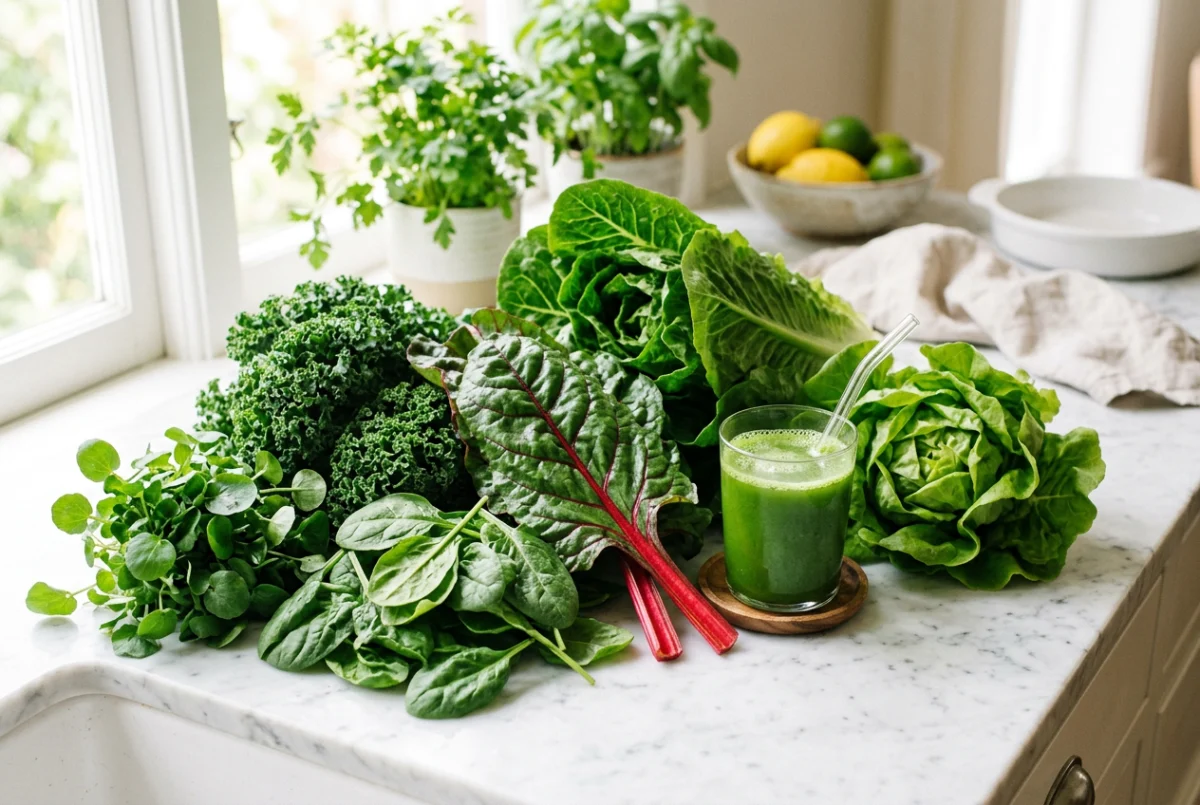
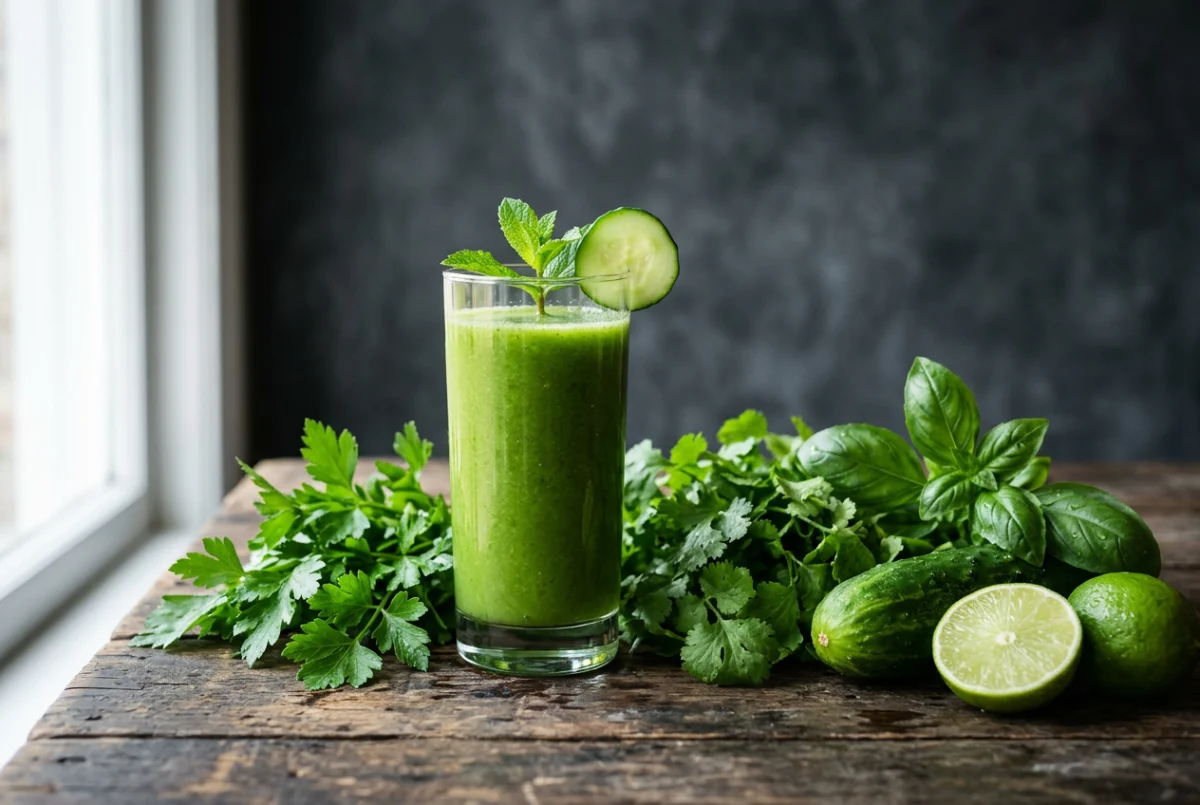
Watercress has a peppery bite that most people associate with salads, not juice, and it works very well in a glass. One green apple softens it, lime sharpens it and celery and cucumber give it body without more sugar. The result is a pale green juice that is clean, a little hot and very refreshing.
Watercress gives only a little juice by weight, like other leafy greens, so roll it into small bundles and push each one through with a piece of apple or celery.
Watercress, green apple, lime and celery juice
Ingredients
Equipment
Method
- Roll the watercress into two or three small, tight bundles.
- Fit the fine screen. On the Sana 727, set the speed to 40 rpm.
- Feed a bundle of watercress, then a wedge of apple or a piece of celery to push it through. Repeat, adding the lime and cucumber between the harder pieces.
- Finish with cucumber to carry the last of the juice out of the drum.
- Stir and serve straight away over ice.
Notes
If you take warfarin, keep your intake of leafy greens such as watercress steady rather than cutting them out, and check with your doctor. Our green juice post explains why, along with kale and spinach.
Butternut, carrot, apple and lime with cinnamon
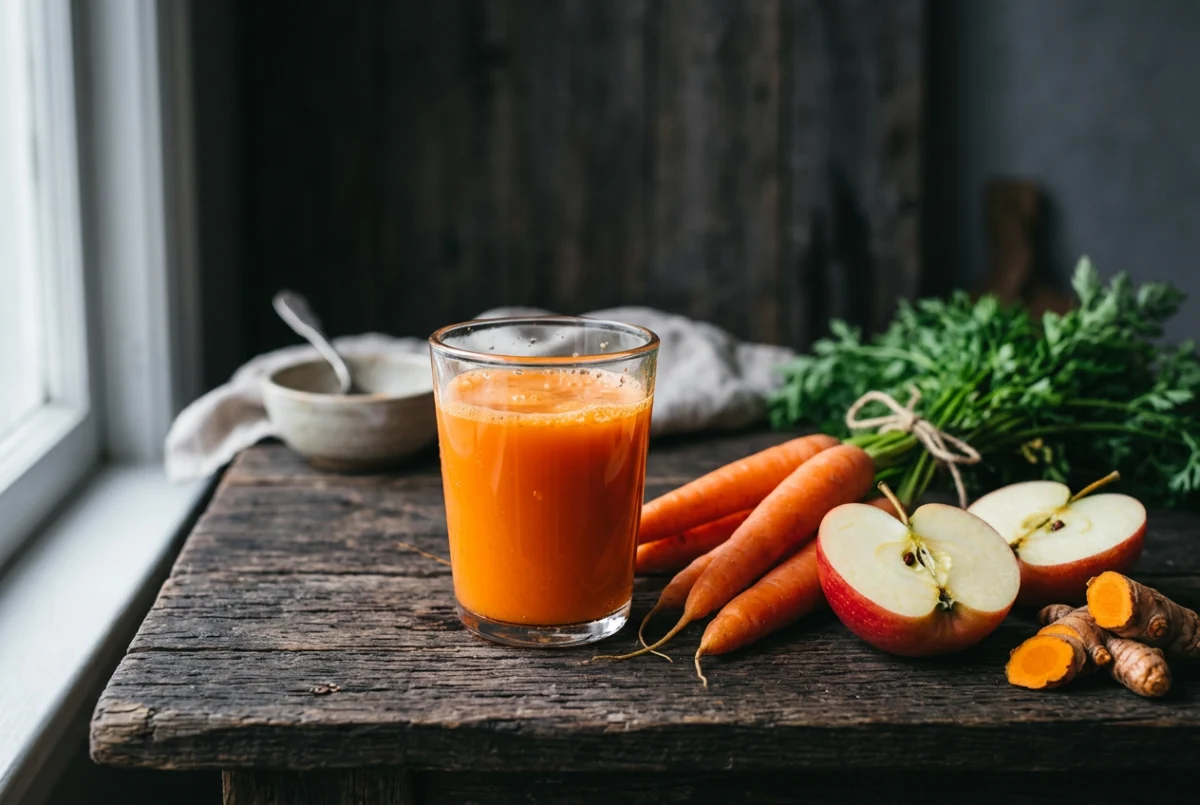
The mildest of the three and the one to try in cooler weather. Raw butternut gives a smooth, golden juice with a gentle sweetness, and carrot carries it. A little lime keeps it fresh, and a pinch of cinnamon stirred in at the end makes it taste warm without any heat.
Cinnamon goes into the glass, not the juicer. Sana’s 727 manual lists spices such as cinnamon and black pepper among the things not to put through the machine, and stirring them in gives you better control over the flavour anyway.
Butternut, carrot, apple and lime juice with cinnamon
Ingredients
Equipment
Method
- Peel the butternut, scoop out the seeds and cut the flesh into sticks of about 2 cm. Cut the carrots into similar sticks.
- Fit the fine screen. On the Sana 727, set the speed to 40 rpm.
- Feed the juicer slowly, alternating butternut, carrot and apple, with the lime in between. Let each handful clear before adding the next.
- Stir the juice, then stir in the cinnamon. It will settle, so stir again just before drinking.
- Serve straight away, over ice if you like.
Notes
Of the three recipes, this one is the sweetest, because carrot and butternut are naturally sweet vegetables. It still contains far less fruit than a typical fruit juice.
Two bolder vegetable juices to try
Once you are used to savoury juice, these two are worth a try. Use the same method as above: fine screen, small pieces, harder produce fed between softer pieces.
- Cabbage, carrot, apple and ginger. Use about 200 g of green cabbage (roughly an eighth of a medium head), cut into wedges, with four carrots, one apple and a 1 cm slice of ginger. Cabbage gives a surprising amount of juice with a sharp, peppery flavour, and carrot and apple balance it. Drink it straight away, as its cabbage flavour gets stronger as it stands.
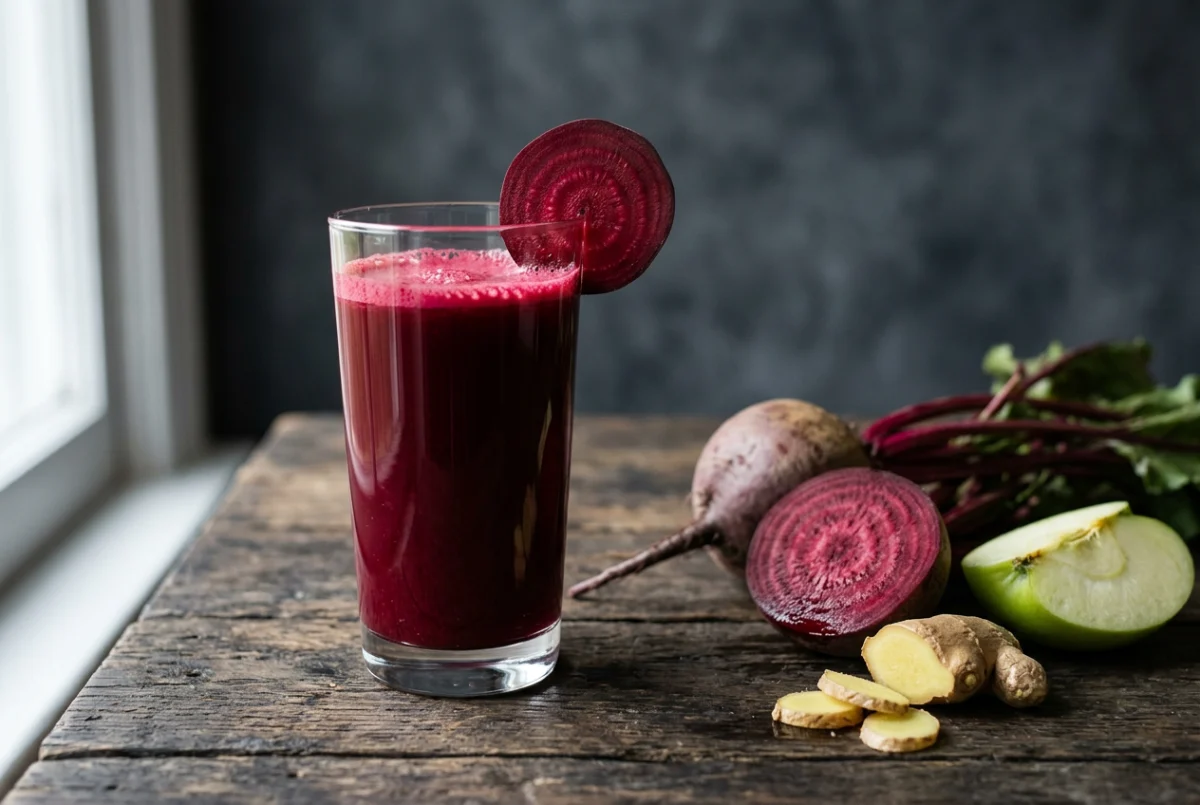
- Beetroot, carrot and apple with horseradish. One medium beetroot, three carrots and one apple, with a sliver of peeled fresh horseradish root, no more than 1 cm to start. Horseradish is very hot and its fumes sting, so open a window and keep your face back while you peel it. For handling beetroot, balancing its earthiness and the pink urine it can cause, see our carrot and beetroot juices.
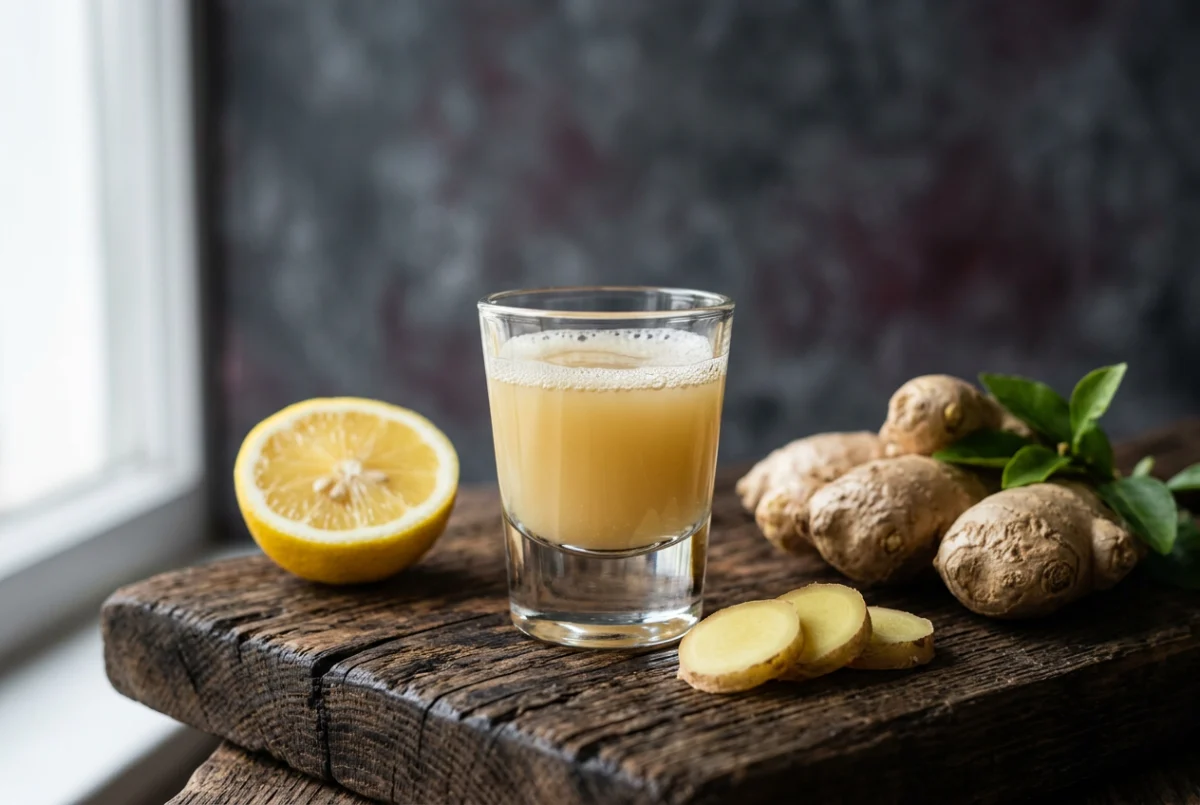
If you like heat, our ginger and turmeric shots are the next step.
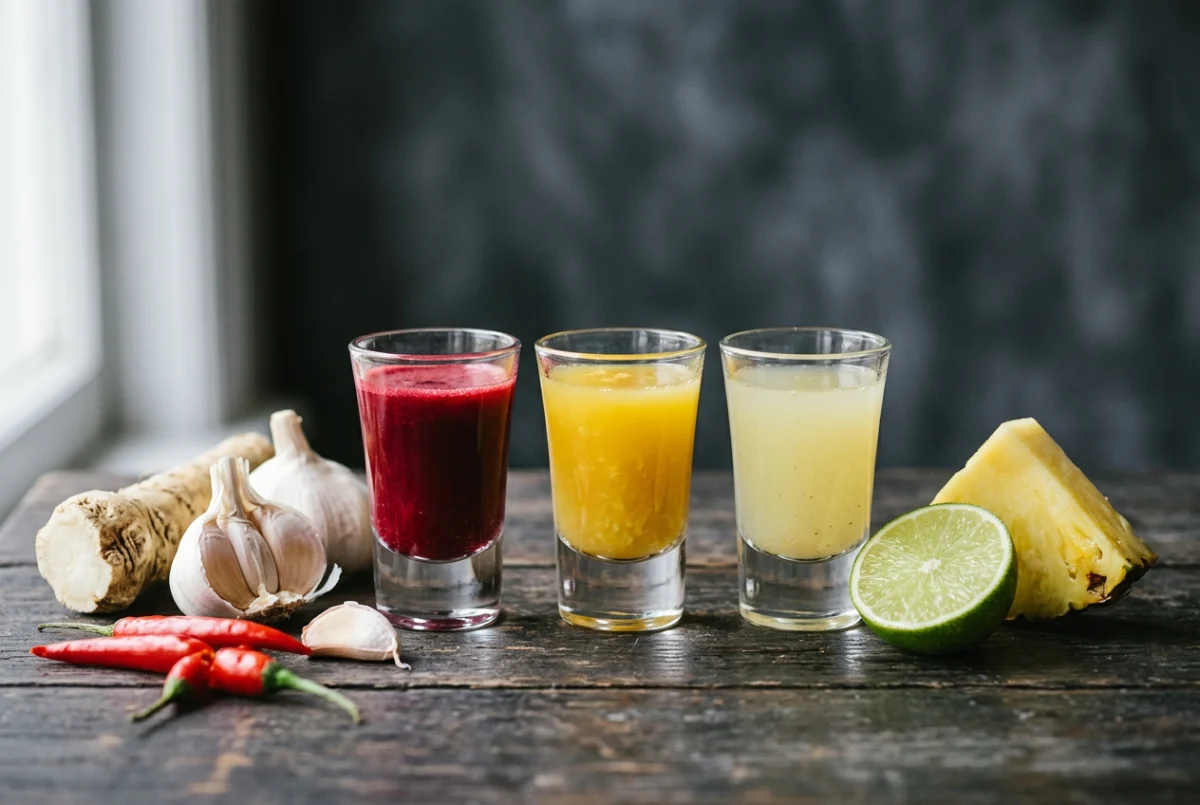
Handling chilli, garlic and horseradish
Pungent ingredients are what make a savoury juice interesting, and they are easy to overdo. Juice concentrates their flavour, so a small piece goes a long way.
- Start small. A thin slice of chilli, half a clove of garlic or a 1 cm piece of horseradish is plenty for two glasses. You can add more next time; you can’t take it out.
- Feed it in the middle. Put pungent pieces between two softer or juicier pieces, so the produce that follows pushes all of it through the screen.
- Wash your hands. After cutting chilli, wash your hands, knife and board with soap before you touch your eyes or face. Thin kitchen gloves help.
Seasoning and serving
Salt and pepper go in the glass. Grind black pepper over the finished juice and add salt a pinch at a time. Taste first: celery naturally contains some sodium, so the tomato juice may need less salt than you expect. If you are on a salt-restricted diet, leave the salt out and check with your doctor about celery-heavy juices.
Serve it cold. Chill the produce before juicing, then pour over ice. A salt and pepper rim on the glass, a short celery stick and a wedge of lime turn a tomato juice into a proper aperitif.
Small glasses. A savoury juice before a meal works best in a small glass of 100 to 150 ml. It is enough to enjoy without filling up before the meal.
For a party. Wash and cut the vegetables in the morning and keep them in the fridge, then juice shortly before guests arrive and keep the jug cold. Home-made juice isn’t pasteurised, so drink it the same day and don’t keep leftovers.
Is vegetable juice lower in sugar?
Usually, yes, but it isn’t sugar-free. These recipes are built on vegetables and use at most one apple per two glasses, so they carry less sugar than a juice made mostly of fruit. Carrot, beetroot, butternut and red pepper are naturally sweet, though, and juicing releases those sugars.
Juicing also removes most of the fibre in whole vegetables, as Mayo Clinic points out. The NHS suggests limiting fruit juice, vegetable juice and smoothies to a combined 150 ml a day, which counts as one of your five a day, and drinking them with meals rather than between them to protect your teeth. A small savoury glass before a meal fits that well. If you have diabetes or another health condition, check with your doctor about how juice fits into your diet.
Which Sana juicer suits savoury juices?
Savoury juices lean on celery, leaves and hard roots, which is exactly what horizontal slow juicers do best. Like every slow juicer, they give more juice per kilo, less foam and less heat than a fast spinning machine.
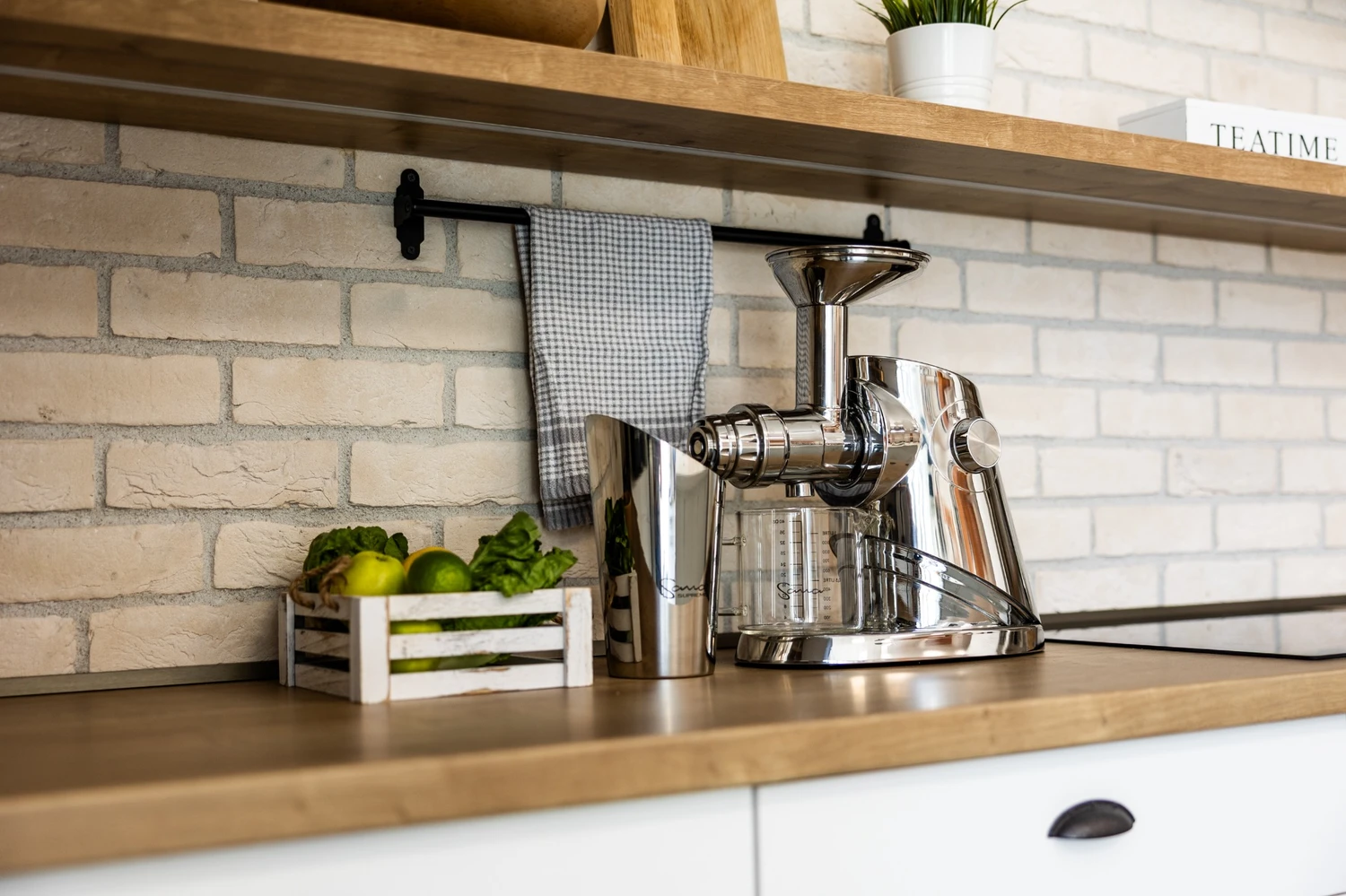
- Sana 727 Supreme. Our flagship. We juice these recipes at its low speed, 40 rpm, which Sana gives for root vegetables and fibrous greens. Its rotating blade at the pulp outlet makes a final cut through the pulp, which helps with stringy celery.
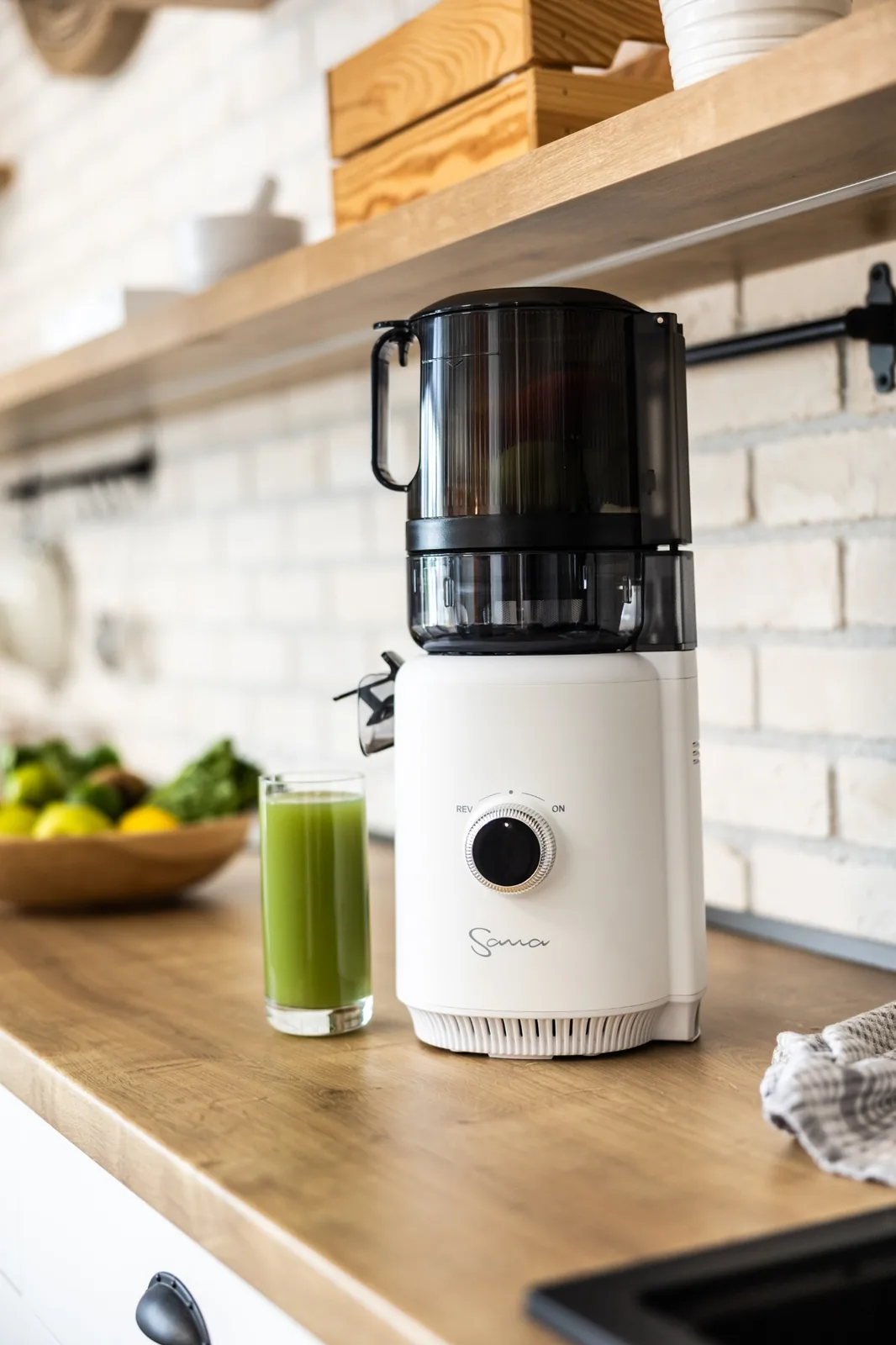
- Sana 707. The workhorse, with a single low speed of 63 to 75 rpm. Its manual lists tomatoes for the coarse screen, so it is well suited to the garden tomato juice.
- Sana 929 Ultimate. The top of the range, with three stainless screens and an adjustable pressure cap.
Made with a Sana juicer
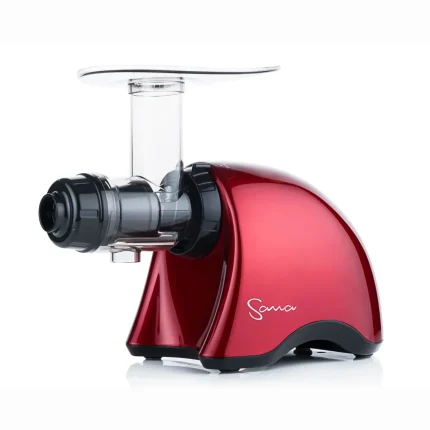
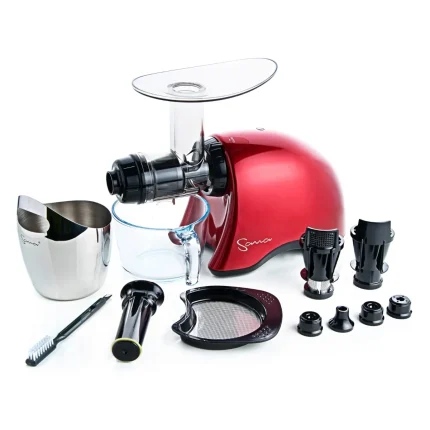
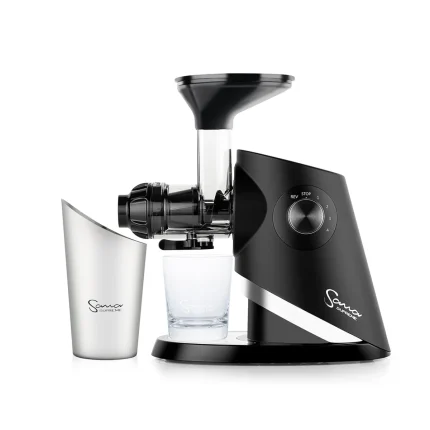
Sana 707 Juicer
Original price was: R9899,00.R7999,00Current price is: R7999,00.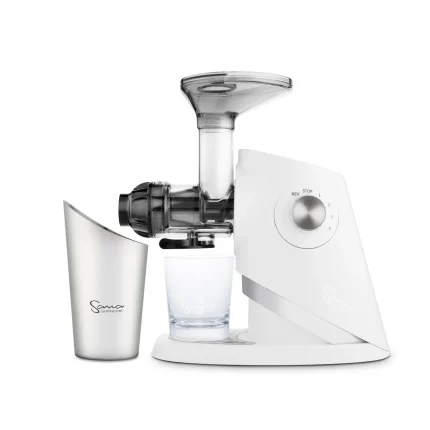
Sana 727 Supreme Juicer
Original price was: R14999,00.R12999,00Current price is: R12999,00.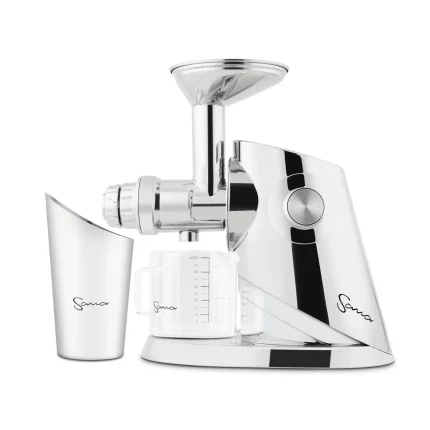
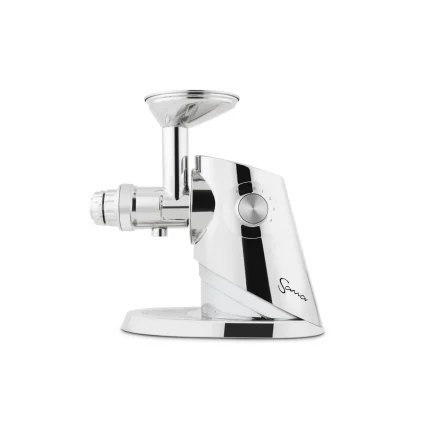
Sana 929 Ultimate
Original price was: R31999,00.R29999,00Current price is: R29999,00.Frequently asked questions
What vegetables make a good savoury juice?
Tomato, red pepper, celery, cucumber, watercress, cabbage, carrot, beetroot and butternut all work well. Use them as the main part of the glass, add one apple or a little lime per two glasses to round off the flavour, and season with salt, black pepper, herbs, ginger or a little chilli.
Do you need to peel tomatoes for juicing?
No. Sana’s 707 manual says tomatoes don’t need peeling, and it names cherry tomatoes as the best for juicing. Wash them and pull off the stems. The juice comes out slightly thick and pulpy, so stir it before pouring.
Can you put salt, pepper or cinnamon through the juicer?
No. Sana’s 727 manual lists spices such as black pepper and cinnamon among the things not to put through the machine. Juice the vegetables first, then stir salt, pepper and ground spices into the jug or glass.
Is vegetable juice lower in sugar than fruit juice?
Generally, yes, when vegetables make up most of the glass and fruit is kept to a minimum, as in these recipes. It isn’t sugar-free, though: carrot, beetroot and butternut are naturally sweet, and juicing loses most of the fibre. The NHS suggests a combined 150 ml of juice and smoothies a day.
How do I stop chilli or horseradish overpowering the juice?
Start with a very small piece, such as a thin slice of chilli or 1 cm of horseradish for two glasses, and feed it between softer pieces so it is pushed through and mixed in. Taste, and add more next time if you want more heat.
Can I make savoury juice ahead for a party?
Prepare the vegetables ahead, but juice them close to serving time. Keep the jug cold and drink the juice the same day, because home-made juice isn’t pasteurised.
Sources
- Sana 707 user manual (English), Sana Products: coarse and fine screens, tomatoes, preparing produce. sanaproducts.com
- Sana 727 Supreme user manual (English), Sana Products: screens, foods not to process. sanaproducts.com
- Sana 727 Supreme juicer, SanaStore: speeds, screens and pulp-outlet blade. sanastore.co.za
- Expert answer on juicing and whole produce, Mayo Clinic. mayoclinic.org
- 5 A Day: what counts, NHS. nhs.uk
- Vitamin K fact sheet for health professionals, NIH Office of Dietary Supplements. ods.od.nih.gov