Blog
Gluten-Free Buckwheat and Sorghum Pancakes With Home-Milled Flour

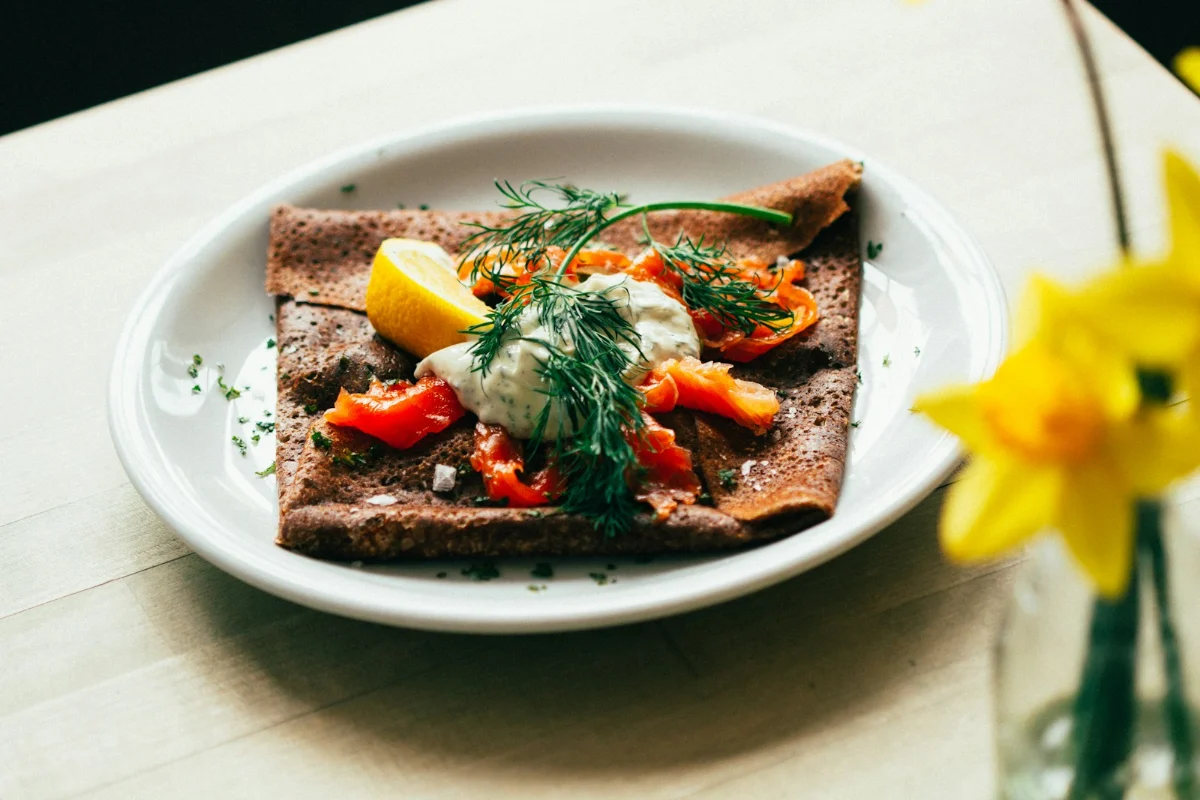
Short answer. Buckwheat pancakes made with home-milled buckwheat and sorghum need no wheat at all: mill hulled buckwheat groats and whole sorghum (mabele) fine, whisk the flour with eggs and milk, rest the batter for 30 minutes and cook in a hot, buttered pan. Below are two versions, thin South African pancakes for rolling up with cinnamon sugar and thick buttermilk flapjacks. Both grains are naturally gluten free, but for anyone with coeliac disease, use grain labelled gluten free and a mill that has never ground wheat, rye or barley.
On this page
- Is buckwheat a kind of wheat?
- Can you mill gluten-free flour in a mill that has ground wheat?
- How do you mill buckwheat and sorghum?
- How do you make thin buckwheat pancakes?
- How do you make thick buckwheat flapjacks?
- Why do gluten-free pancakes tear or turn out heavy?
- What to serve them with
- Mill it on a Sana
- Frequently asked questions
Is buckwheat a kind of wheat?
No. Despite the name, buckwheat isn’t a grass or a cereal. It is the triangular seed of a plant in the Polygonaceae family, the same family as rhubarb, and Britannica calls it a pseudograin. It contains no gluten, and Coeliac UK lists it with the naturally gluten-free grains. Hulled buckwheat groats are pale beige to green; the dark, roasted ones sold as kasha give a much stronger, smokier flour.
Sorghum is a true grass, a cereal like wheat, but it belongs to a different branch of the family and contains no gluten either. In South Africa it is mabele, the grain behind soft and soured porridge and traditional beer, so it is easier to find whole here than in most countries. Our mabele porridge post covers milling it for porridge.
Why use both? Buckwheat brings flavour, an earthy, slightly nutty taste, and a little natural stickiness that helps hold a thin pancake together. Sorghum is mild and pale, and softens the buckwheat so children who find buckwheat on its own too strong will happily eat these. Half and half is our everyday mix.
Can you mill gluten-free flour in a mill that has ground wheat?
For most people, yes. For someone with coeliac disease, no.
Stone mills are not like a glass bowl you can wash. The stones are porous, flour dust settles in the mill chamber and the spout, and a few grams of wheat from the last batch ride along with the next. The Sana manual suggests grinding a cup of rice or wheat on a medium setting to clear oily residue. That freshens the stones, but it can’t be relied on to remove gluten.
The grain itself is the second problem. In a 2010 study, Thompson and colleagues bought 22 naturally gluten-free grains, seeds and flours that were not labelled gluten free and had them tested. Seven of the 22 (32%) contained 20 parts per million of gluten or more, the limit for a gluten-free label in the United States, and one sample averaged 2,925 ppm. Coeliac UK notes that naturally gluten-free flours can be milled where wheat is milled or pick it up in storage, and advises looking for flours labelled gluten free. The American charity Beyond Celiac advises buying sorghum labelled gluten free and avoiding bulk bins.
So, if you are milling for someone with coeliac disease:
- Use a dedicated mill that has only ever ground gluten-free grain.
- Buy grain labelled gluten free where you can find it, or ask the supplier how it was grown and handled.
- Keep the kit separate: bowls, sieves, storage jars and the brush you use to clean the spout.
- Check the extras: we raise the flapjacks with bicarbonate of soda, a single ingredient; if you swap in baking powder, check that the label says gluten free.
If you avoid gluten for any other reason, how strict you need to be is a question for your doctor or a registered dietitian, not a recipe page.
How do you mill buckwheat and sorghum?
Both mill easily on a Sana. Hulled buckwheat groats are soft and come through quickly on a fine setting. Sorghum is harder and slower, so let the mill work at its own pace on the same fine setting. Mill only what you need for the batch, since fresh wholegrain flour is best used within a day or two, and let it cool for 10 minutes before you make the batter. Our guide to storing fresh-milled flour and grain covers keeping the rest.
Whole sorghum and hulled buckwheat aren’t on every supermarket shelf. Our guide to where to buy grains for home milling in South Africa lists suppliers. If you need certified gluten-free grain, ask the supplier before you buy.
How do you make thin buckwheat pancakes?
In South Africa a pancake is the thin, rolled kind, closer to a French crêpe than to an American stack. Gluten is what usually lets a thin pancake bend without tearing, so here the eggs do that job, with help from the buckwheat.
Whisk the flour with the eggs and half the milk first, to a smooth thick paste, then add the rest. Adding all the milk at once leaves lumps you can’t whisk out. Then rest the batter for 30 minutes. Wholegrain flours, and buckwheat especially, keep absorbing liquid, and a rested batter cooks into a pancake that holds together. After resting it should look like pouring cream. If it coats a spoon thickly, whisk in two or three tablespoons of milk.
Heat the pan properly before the first pancake. Pour in a quarter cup of batter and swirl at once, so it spreads thin before it sets. You’ll know it’s ready to turn when the edges go lacy and brown and lift on their own, and the top has gone from shiny to matt. The first pancake is usually a tester. Whisk the batter between pancakes, because sorghum flour settles to the bottom of the jug.
Thin buckwheat and sorghum pancakes
Ingredients
Equipment
Method
- Mill. Mill the buckwheat and sorghum on a fine setting and let the flour cool for 10 minutes.
- Make a paste. Whisk the flour and salt in a bowl. Add the eggs and about half the milk and whisk to a smooth, thick paste.
- Thin it. Whisk in the rest of the milk, then the melted butter. The batter should be thin, like pouring cream.
- Rest. Cover and leave for 30 minutes at room temperature (or overnight in the fridge). If it has thickened enough to coat a spoon heavily, whisk in 2 to 3 tablespoons of milk.
- Heat the pan. Heat the pan over medium-high heat and wipe it with a little butter.
- Cook. Pour in about 60 ml (a quarter cup) of batter and swirl at once to cover the base thinly. Cook for 1 to 1½ minutes, until the edges are lacy and brown and lift on their own and the top looks matt. Loosen with a spatula, flip and cook 30 seconds more.
- Stack. Slide onto a plate and cover with a clean tea towel. Whisk the batter before each pancake, because sorghum settles, and butter the pan every second or third pancake.
Notes
How do you make thick buckwheat flapjacks?
Flapjacks are the small, thick pancakes South Africans make for breakfast and children’s parties. The buttermilk and bicarbonate of soda give the lift: buttermilk is acidic, and the bicarbonate reacts with it to make bubbles. Amasi works in place of buttermilk; thin it with a little milk, since it is thicker.
Stir the wet ingredients into the dry with a few strokes and stop while a few small lumps remain. The batter will be thick and puff slightly as it rests. Cook these on a lower heat than the thin pancakes, so the middle cooks through before the outside gets too dark. Turn when bubbles have risen across the surface and the edges look dry and set.
Buckwheat and sorghum buttermilk flapjacks
Ingredients
Equipment
Method
- Mill. Mill the buckwheat and sorghum on a fine setting and let the flour cool for 10 minutes.
- Mix the dry. Whisk the flour, bicarbonate of soda and salt in a large bowl.
- Mix the wet. In a second bowl whisk the eggs, buttermilk and melted butter.
- Combine. Pour the wet into the dry and stir with a few strokes, stopping while a few small lumps remain.
- Rest. Leave for 10 minutes; the batter thickens and puffs slightly. If it is too thick to spread a little when spooned into the pan, stir in 1 to 2 tablespoons of milk.
- Cook. Heat a lightly buttered pan over medium heat. Spoon in about 45 ml (3 tablespoons) of batter per flapjack and nudge into rounds of about 8 cm. Cook about 2 minutes, until bubbles rise across the surface and the edges look dry and set, then flip and cook 1 to 1½ minutes until the centre springs back.
- Keep warm. Hold the cooked flapjacks in a low oven (about 80 °C) under a tea towel while you cook the rest.
Notes
Why do gluten-free pancakes tear or turn out heavy?
- Thin pancakes tear when you flip them: the batter wasn’t rested, the pan wasn’t hot enough, or you turned them too soon. Wait for the edges to lift by themselves.
- Thin pancakes are thick and floppy: the batter has thickened as it rested. Whisk in a little more milk.
- Flapjacks are raw in the middle: the heat is too high. Turn it down and give them longer.
- Flapjacks are flat and dense: the batter was overmixed, or the buttermilk was swapped for plain milk, which won’t react with the bicarbonate.
- Grey colour or bitter taste: you used roasted buckwheat (kasha). Use hulled raw groats for a milder pancake.
What to serve them with
The South African classic is cinnamon sugar and a squeeze of lemon, rolled up while hot. For something savoury, fold a thin pancake into a square around smoked trout or salmon, cream cheese and dill, or grated cheese and sautéed mushrooms. Flapjacks are good with plain yoghurt and fresh fruit. A spoon of syrup or honey is up to you; the batters have no added sugar.
Mill it on a Sana
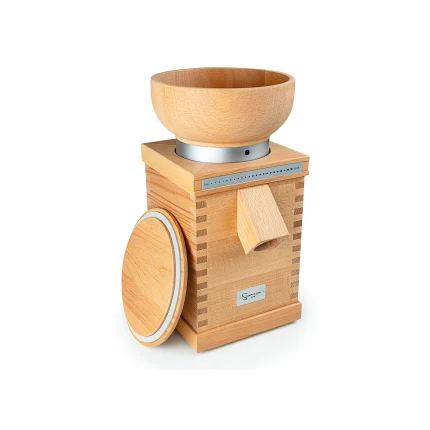
Sana mills are made in Austria. We import them into South Africa directly, so the warranty, the spares and the support all sit here. EcoHub has been trading since 2012. Both models have 85 mm ceramic-corundum stones and a solid beechwood body. If you mill for someone with coeliac disease, the 360 W mill is a sensible size for a dedicated gluten-free mill alongside your everyday one.
- Sana Grain Mill: 360 W, 100 g a minute, 850 g hopper, 12-year warranty. R10,999 incl VAT, correct at November 2026.
- Sana Grain Mill MAX: 600 W, 200 g a minute, 1,200 g hopper, 12-year warranty. R15,999 incl VAT (was R18,999), correct at November 2026.
Made with a Sana grain mill
Every recipe in our grain mill recipe collection starts with flour milled at home on a Sana stone mill. Both models use 85 mm ceramic-corundum stones in a solid beechwood housing, are made in Austria and carry a 12-year warranty, with spares and support here in South Africa.
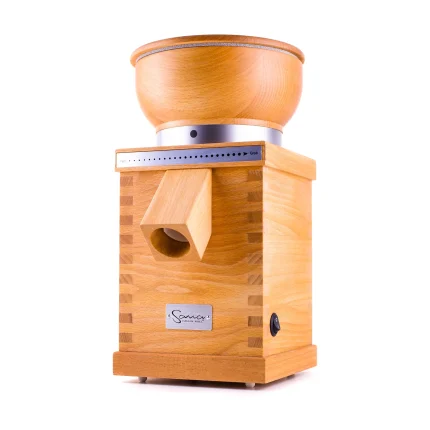
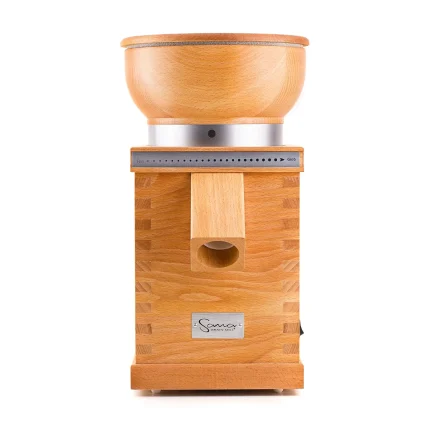
Sana Grain Mill
Original price was: R14800,00.R9999,00Current price is: R9999,00.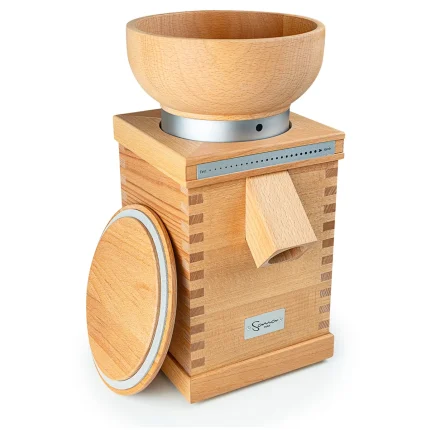
Sana Grain Mill MAX – 600W
Original price was: R18999,00.R14999,00Current price is: R14999,00.Frequently asked questions
Is buckwheat gluten free?
Yes. Buckwheat is the seed of a plant in the Polygonaceae family, not a type of wheat, and it contains no gluten. Coeliac UK lists it as naturally gluten free. Buckwheat grain and flour can pick up wheat in milling and storage, so people with coeliac disease should buy it labelled gluten free.
Can I mill gluten-free flour in a mill I also use for wheat?
Not for anyone with coeliac disease. Wheat flour lingers in the stones and the mill chamber, and running rice through can’t be relied on to remove it. Use a dedicated mill that has only ever ground gluten-free grain.
Why does my buckwheat pancake batter need to rest?
Wholegrain buckwheat and sorghum flour keep absorbing liquid after mixing. Thirty minutes of rest gives a batter that cooks into a pancake that holds together and doesn’t tear when you flip it.
Can I make these pancakes with only buckwheat?
Yes. Use 150 g of buckwheat for the thin pancakes or 200 g for the flapjacks. The flavour is stronger and earthier, and the thin pancakes hold together slightly better.
Is sorghum the same as mabele?
Yes. Mabele is the Sotho and Tswana name for sorghum, the grain used in South Africa for soft and soured porridge. Whole sorghum grain mills well on a fine setting.
Can I make the batter the night before?
Yes. Cover the thin pancake batter and keep it in the fridge overnight, then whisk it and add a little milk if it has thickened. Make flapjack batter fresh, because the bicarbonate starts working as soon as it meets the buttermilk.
Sources
- Coeliac UK, Grains: which are gluten free and which need checking
- Thompson, Lee and Grace (2010), Gluten contamination of grains, seeds, and flours in the United States: a pilot study, Journal of the American Dietetic Association 110:937
- Beyond Celiac, Is sorghum gluten-free?
- Britannica, Buckwheat
- Sana Grain Mill product page (sana-store.com): buckwheat among grains it mills
- Sana Grain Mill MAX instruction manual (sana-store.com)