Blog
Wholewheat Buttermilk Rusks With Fresh-Milled Flour

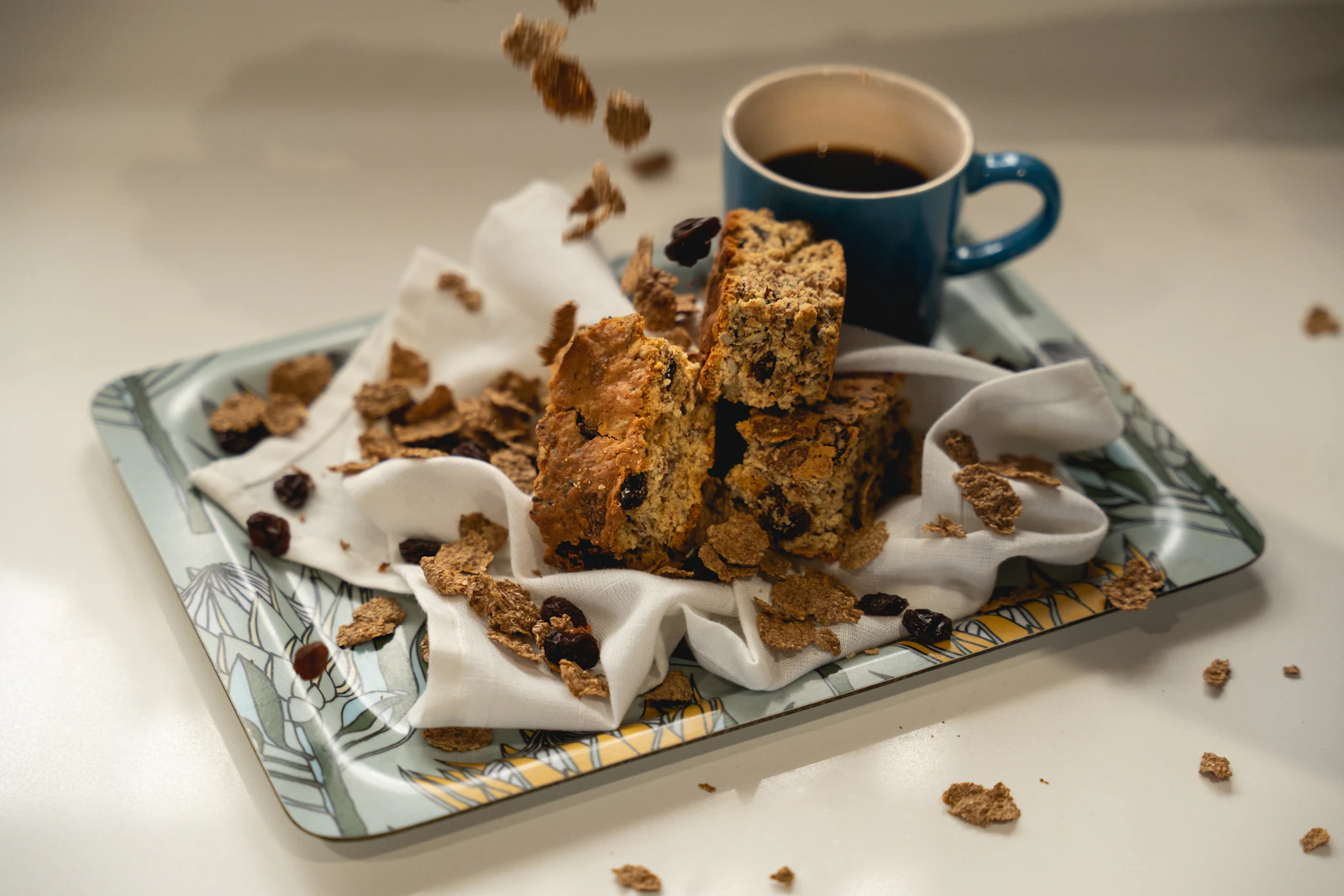
Short answer. Wholewheat buttermilk rusks with fresh-milled flour need three changes from a shop-flour recipe. Add the raising agent yourself, about 10 level teaspoons of baking powder per kilogram, because there is no self-raising version of home-milled flour. Use a little more buttermilk, because whole-grain flour drinks more liquid. And dry them low and slow: 90 to 100 °C with the oven door propped open, for five to six hours or overnight, until a rusk from the middle of the tray snaps cleanly and feels light.
A tin of rusks on the counter is one of the most South African things a kitchen can have. They go into padkos bags and sit next to the kettle at six in the morning, ready for a mug of coffee or rooibos. This recipe uses 1 kg of fresh-milled wholewheat flour, a modest 200 g of sugar and plenty of buttermilk. It makes about 40 chunky rusks and keeps for a month.
On this page
- What makes a buttermilk rusk different from bread?
- Which wheat should you mill for rusks?
- Why does fresh-milled flour need more buttermilk?
- How to mix, bake and cut the slab
- How do you dry rusks in a home oven?
- How do you store homemade rusks?
- What goes wrong with homemade rusks?
- Variations worth making
- Frequently asked questions
- Mill it on a Sana
What makes a buttermilk rusk different from bread?
A buttermilk rusk is a quick bread that has been dried. There is no yeast and no kneading. Baking powder does the rising, buttermilk keeps the crumb tender and adds a little tang, and butter gives the short, crumbly bite that breaks off cleanly in a mug. The baked slab is then cut into fingers and dried at a low temperature for hours until almost no moisture is left. The drying is why a tin of them lasts for weeks.
Most South African rusk recipes start with self-raising flour. Home millers have to add the raising agent themselves. Salty Ginger’s rusk notes give 10 level teaspoons of baking powder per kilogram of plain flour for chunky rusks, and 7 for thinner sliced ones. Fresh-milled wholewheat is heavier than white flour, so use the full chunky-rusk amount: 40 g, or 10 level teaspoons.
Which wheat should you mill for rusks?
Either type works, and they give slightly different rusks.
- Hard wheat, the bread wheat most South African suppliers sell, gives a firmer, crunchier rusk with a nutty flavour.
- Soft wheat has less protein and gives a more tender, crumblier rusk, closer to the shop kind.
- A 50/50 mix is a good middle if you can buy both.
Our guide to where to buy grains in South Africa lists the suppliers. Mill on the finest setting. A kilogram takes about ten minutes on the Sana Grain Mill at 100 g a minute, in two hopper loads, and about five on the MAX. Spread the flour out on a tray and let it cool for ten minutes, because it comes off the stones warm.
Seeds and nuts go in whole. The Sana manual rules out oily seeds and nuts in the stones (sunflower, linseed, sesame, pumpkin and the like), so buy them ready to use and stir them into the dough.
Why does fresh-milled flour need more buttermilk?
Whole-grain flour carries all of its bran, and bran soaks up liquid. Fresh-milled flour absorbs more than shop flour, so a white-flour recipe gives a stiff dough and a dry rusk. Start with 600 g of buttermilk and add up to 100 g more until the dough is soft and sticky, like a thick scone dough. If you could knead it on the counter, it is too dry. The converting recipes guide explains the hydration side in more detail if you want to adapt a family recipe.
How to mix, bake and cut the slab
Mix the dry ingredients thoroughly. Whisk the flour, baking powder and salt together for a full 30 seconds. Baking powder that sits in a clump leaves bitter, soapy spots in the finished rusk.
Mix the wet ingredients separately. Melt the butter and let it cool for a few minutes, then whisk in the sugar, eggs and buttermilk.
Fold, do not beat. Pour the wet into the dry and fold with a spatula until there are no dry pockets. Stop there. Overmixing makes the slab tough. Fold in any raisins, seeds or oats at the end.
Bake as one slab. Spread the dough into a lined 33 × 23 cm roasting pan and level it with a wet spatula. Bake at 180 °C (160 °C fan) for 50 to 60 minutes. Whole-grain doughs colour faster than white ones, so lay a sheet of foil loosely over the top after about 30 minutes if it is already golden. It is done when a skewer in the centre comes out clean, the top springs back when pressed and the edges have pulled away from the pan.
Cool completely before cutting. Leave it in the pan for 15 minutes, turn it out onto a rack and let it cool for at least an hour. Cut it warm and it tears and crumbles. Use a serrated knife with a sawing action. Cut the slab lengthwise into three long strips, then cut each strip across into fingers about 2.5 cm wide. That gives 13 fingers per strip and 39 rusks in all.
Wholewheat Buttermilk Rusks
Ingredients
Equipment
Method
- Mill. Mill 1 kg wheat on the finest setting. Spread the flour on a tray and let it cool for 10 minutes.
- Heat the oven. Heat to 180 °C (160 °C fan) and line a 33 x 23 cm roasting pan with baking paper.
- Mix the dry. Whisk the flour, baking powder and salt together for a full 30 seconds so there are no clumps of baking powder.
- Mix the wet. Whisk the melted butter, sugar, eggs and 600 g buttermilk until the sugar dissolves.
- Fold. Fold the wet into the dry with a spatula until no dry pockets remain. Add up to 100 g more buttermilk until the dough is soft and sticky, like a thick scone dough. Fold in any extras.
- Bake. Spread the dough in the pan, level it with a wet spatula and bake for 50 to 60 minutes, covering loosely with foil after 30 minutes if it is browning fast. It is done when a skewer comes out clean and the edges pull away from the pan.
- Cool and cut. Cool in the pan for 15 minutes, turn out and cool on a rack for at least an hour. Cut lengthwise into 3 strips, then each strip into 13 fingers about 2.5 cm wide.
- Dry. Lay the fingers on oven racks with a finger-width gap. Dry at 90 to 100 °C (80 to 90 °C fan) with the door propped open about 2 cm for 5 to 6 hours, swapping the trays halfway, or overnight at the lowest setting.
- Test and store. Cool a rusk from the middle of the tray for 5 minutes and break it: it should snap cleanly and be dry right through. Cool the batch completely and store in an airtight tin.
Notes
How do you dry rusks in a home oven?
Drying decides if your rusks last a month or go soft in a week. Dry them too hot and they colour and harden on the outside while the centre stays damp. Dry them low and they dry right through.
- Temperature: 90 to 100 °C in a conventional oven, or 80 to 90 °C with the fan on. Never above 110 °C.
- Spacing: lay the fingers on the oven racks, or on cooling racks set on trays, with a finger-width gap between them so air can move.
- Door ajar: prop the oven door open about 2 cm with the handle of a wooden spoon. A closed oven fills with steam.
- Time: five to six hours, swapping the trays top to bottom halfway. Overnight at the lowest setting works too; switch the oven off when they are dry and leave them inside while it cools.
How to tell they are dry. Take a rusk from the middle of the tray, where they dry last, and let it cool for five minutes, because a warm rusk always feels softer than it is. Break it in half. It should snap with a clean crack and be pale and dry all the way through, with no darker, denser band in the centre. It should also feel noticeably lighter in the hand than it did going in. If the middle bends or feels slightly cakey, give the batch another hour.
How do you store homemade rusks?
Let them cool completely before they go into the tin. Any warmth you trap turns into condensation, and condensation softens rusks. Kept in an airtight tin at room temperature, they last about a month. If a batch does soften, dry it again for an hour at 100 °C and it comes back.
Store the grain rather than the flour between bakes; our guide to storing fresh-milled flour and whole grain covers how.
What goes wrong with homemade rusks?
- Flat and dense: the dough was too dry, or the baking powder was old. Baking powder loses strength once the tin has been open for months.
- Crumbling to pieces when cut: the slab was cut warm. Wait the full hour.
- Rock hard, hurting your teeth: dried too hot, or too much flour and too little buttermilk. Fresh-milled rusks should be crisp, not like a roof tile.
- Soft centre after a week in the tin: they were not dry through. Re-dry them for an hour or two.
- Bitter or soapy taste: too much baking powder for the flour, or it was not whisked in evenly.
Variations worth making
- Raisin and seed: fold in 150 g raisins and 100 g sunflower seeds.
- Oat: add 100 g oat flakes and 50 g more buttermilk, because the oats absorb it. Fresh flakes from the Sana 702 oil extractor are lovely here; shop rolled oats work too.
- Aniseed: 2 teaspoons of whole aniseed for the classic South African flavour.
- Spelt: swap the wheat for spelt, weight for weight. Add the buttermilk gradually and stop as soon as the dough is soft and sticky.
If you are after a seeded, high-fibre bake for the lunchbox rather than the coffee mug, the one-bowl seed loaf is the bread to try next.
Made with a Sana grain mill
Every recipe in our grain mill recipe collection starts with flour milled at home on a Sana stone mill. Both models use 85 mm ceramic-corundum stones in a solid beechwood housing, are made in Austria and carry a 12-year warranty, with spares and support here in South Africa.
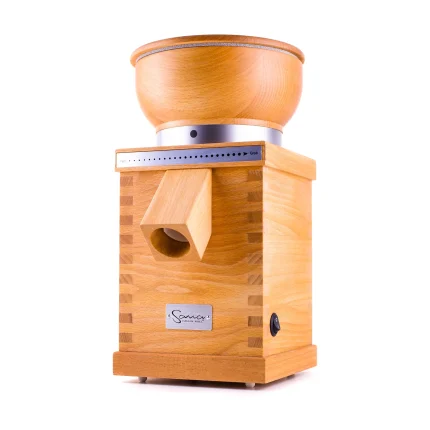
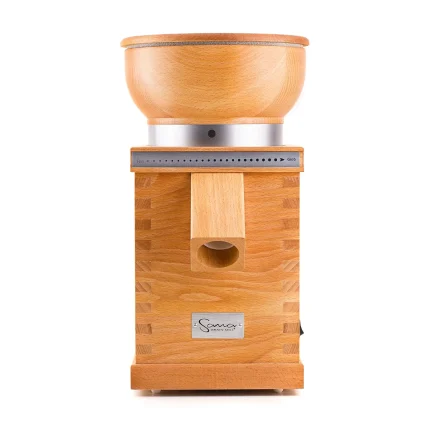
Sana Grain Mill
Original price was: R14800,00.R9999,00Current price is: R9999,00.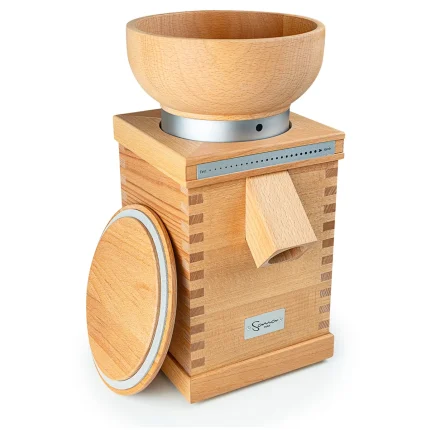
Sana Grain Mill MAX – 600W
Original price was: R18999,00.R14999,00Current price is: R14999,00.Frequently asked questions
How much baking powder replaces self-raising flour for rusks?
Use about 10 level teaspoons (40 g) of baking powder per kilogram of plain or fresh-milled flour for chunky rusks, and about 7 teaspoons for thinner sliced rusks. Whisk it into the flour thoroughly so there are no clumps, which taste bitter and soapy in the finished rusk.
What temperature should I dry rusks at?
Dry rusks at 90 to 100 °C in a conventional oven, or 80 to 90 °C with the fan on, with the door propped open about 2 cm. They take five to six hours, or you can leave them overnight at the lowest setting. Do not go above 110 °C, or the outside hardens before the centre is dry.
How do I know when my rusks are dry enough?
Take a rusk from the middle of the tray, let it cool for five minutes and break it. It should snap cleanly and be pale and dry right through, with no denser band in the centre, and it should feel lighter than before drying. If the centre bends or feels cakey, dry the batch for another hour.
How long do homemade buttermilk rusks last?
About a month in an airtight tin at room temperature, as long as they were dried right through and cooled completely before they went in. If they soften, re-dry them for an hour at 100 °C.
Can I put sunflower seeds or linseed through the grain mill for rusks?
No. Oily seeds and nuts must never go through a stone mill. Buy them ready to use and fold them into the dough whole. Mill only the dry wheat, spelt or other suitable grain.
Mill it on a Sana
Sana mills are made in Austria. We import them into South Africa directly, so the 12-year warranty, the spares and the support all sit here rather than in Europe, and EcoHub has been trading since 2012.
- Sana Grain Mill: 360 W, 100 g/min, 850 g hopper, 85 mm ceramic-corundum stones, solid beechwood housing. Mills this recipe’s kilogram in about ten minutes. R10,999.
- Sana Grain Mill MAX: 600 W, 200 g/min, 1,200 g hopper. The kilogram in about five minutes, in one fill. R15,999, down from R18,999.
Prices incl VAT, correct at November 2026. More recipes in breads and sourdough.
Sources
- Salty Ginger: buttermilk rusks: baking powder per kilogram of plain flour for chunky and sliced rusks; drying no hotter than 110 °C; storage up to a month.
- Drizzle and Dip: buttermilk bran rusks: drying at 90 to 100 °C for four to five hours, covering the slab partway through baking, keeping for at least a month.
- The Big Tasty Bite: buttermilk rusks: drying at 90 °C with the door propped open for about six hours or overnight.
- Food.com: South African buttermilk rusks: drying overnight in a cool oven with the door wedged open.
- Sana grain mill manual and product pages: suitable grains, no oily seeds or nuts in the stones, output and hopper figures.