Blog
Getting started with your new Sana juicer: the first week

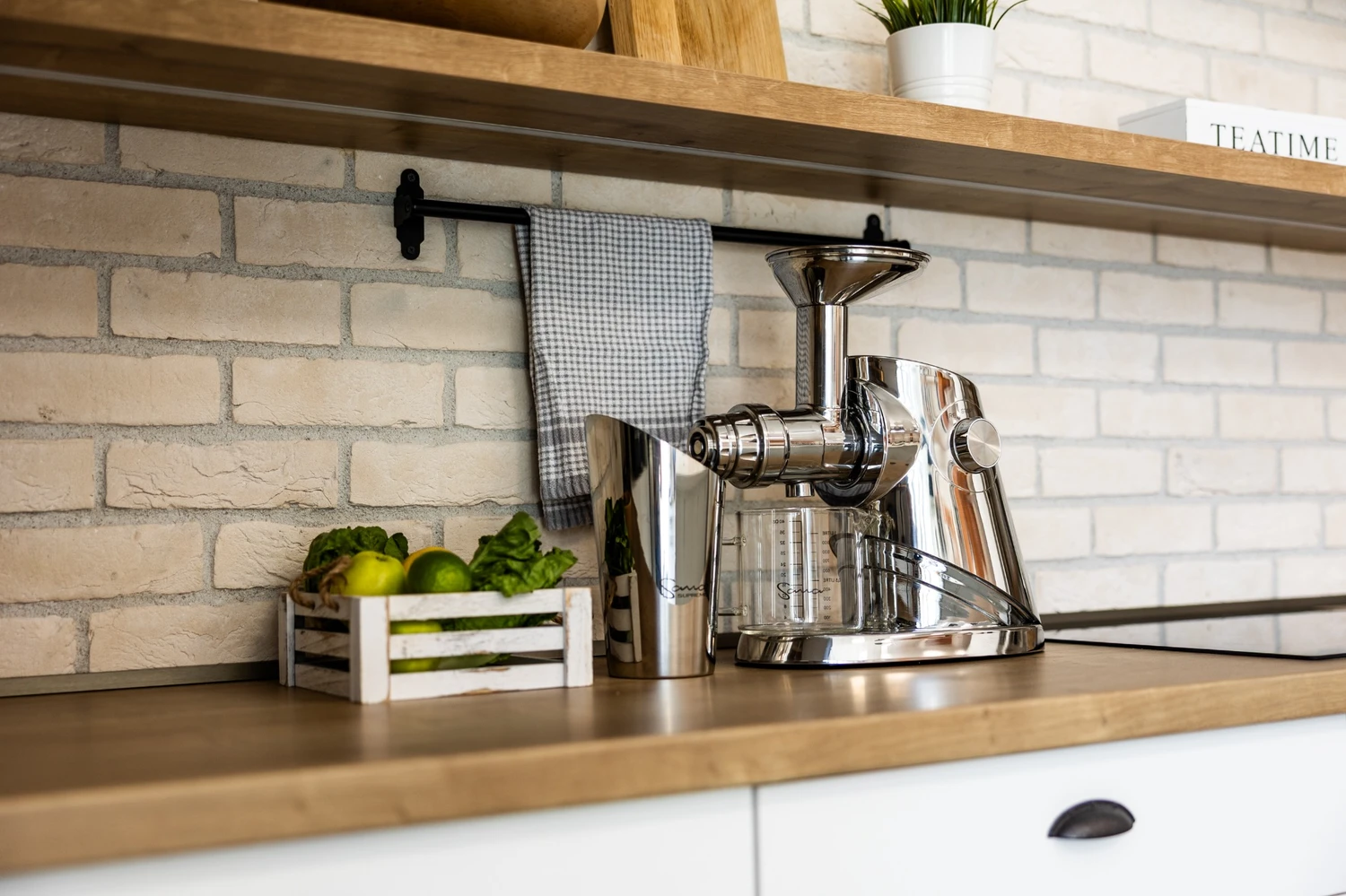
Short answer. Getting the best from a new Sana juicer comes down to four habits: assemble it the way your manual shows, fit the right screen for what you are juicing, cut produce to size and feed it steadily, and rinse the parts as soon as you finish. Spend the first week on forgiving juices such as carrot and orange, then move on to celery and greens. After a few glasses, a morning juice takes minutes.
On this page
Before your first juice
Read the manual in the box once, right through; it covers the details that differ from model to model. Then:
- Wash the parts that touch food. Use the cleaning method your manual gives. The 707 manual allows warm, soapy water; the 727 manual asks for running water and the brush, with no dishwashing liquid or hot water.
- Find a flat, level spot, ideally near the sink. The 727 manual links a level surface to quieter running.
- Expect a new-machine smell. The 727, 878 and 818 manuals all say a new juicer can smell for the first few uses and that it fades.
Putting your Sana together
Most first-day problems come from one part sitting slightly wrong. Here is the order from each manual; if the booklet in your box differs, follow the booklet.
- Sana 707. Place the drum on the motor base and turn the locking clip clockwise. Put the auger into the drum, then fit the screen, then turn the drum cap anticlockwise until it clicks firmly into place.
- Sana 727 Supreme. Fit the drum into the main body and turn it anticlockwise until it engages. Add the auger and screen with the groove on the screen facing upwards, then turn the drum cap anticlockwise to close it. Keep the juice cap open while you juice.
- Sana 929 Ultimate. The same horizontal layout as the 727 in solid stainless steel, with an adjustable pressure cap. Check your manual for the exact steps.
- Sana 878. Slide the screen fully into the rotating brush, line up the tabs in the juicing chamber and push the auger all the way in. Fit the lid, then turn the hopper until its mark meets the lock symbol. It won’t lock if a part is out of place. Make sure the pulp outlet gasket is in and the outlet is closed before you set the chamber on the motor.
- Sana 818. Fit the strainer and spinning brush, check the gaskets, close the pulp outlet cover, add the auger, then lock the hopper and click its cover shut.
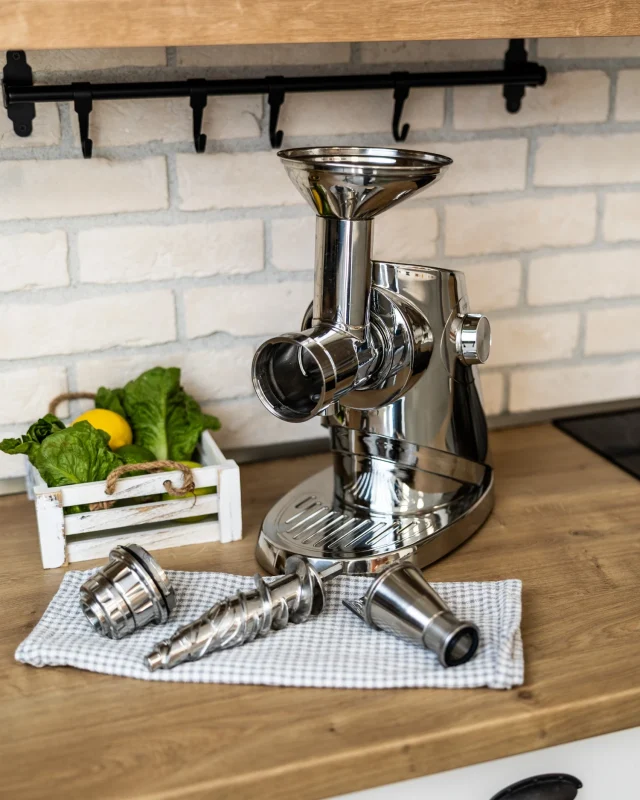
Sana’s own film shows the 727 going together.
Which screen does what?
Start with the fine screen for almost everything, and change only when the produce calls for it.
| Screen | What it is for | Which Sanas |
|---|---|---|
| Fine | Firm produce: carrots, beetroot, firm apples, celery, leafy greens, ginger. The most juice and the least pulp in the glass | All five models (the standard strainer on the 818) |
| Coarse | Soft, juicy fruit: oranges, pears, pineapple, berries, soft apples, tomatoes. The bigger holes resist clogging | 707, 727, 929 and 878; sold separately for the 818 |
| Homogenising (blank) | No holes, so nothing is separated: nut butters, sorbet, baby food and the paste stage of nut milk; pasta with the nozzles on the 707 | 707, 727 and 929 |
| Sorbet | Slightly thawed frozen fruit into soft-serve. The rotating brush isn’t used | 878 |
The 727 and 929 also have four speeds, 40, 65, 90 and 120 rpm. SanaStore recommends the slowest for green and vegetable juice and the faster speeds for soft fruit; the speed chart in your manual gives the rest. The 929’s pressure cap goes lower for soft, juicy produce and higher for fibrous roots and greens.
How to prepare produce for a Sana
- Wash everything and scrub roots such as carrots, beetroot and ginger under running water.
- Cut fibrous produce short. Celery and other stringy stalks go in at 3 to 4 cm. The 878 manual explains why: long celery fibres can wrap around the auger and block the pulp outlet. No Sana manual allows whole stalks.
- Peel thick or bitter skins. Citrus, pineapple, melon and pomegranate lose their peel. Apples, pears and cucumber can keep theirs.
- Take out pips, stones and cores. Remove stones from mangoes, peaches, plums and cherries, and core apples, because the manuals ask for apple seeds to come out.
- Slice ginger thinly. The 727 manual asks for thin slices; the 878 and 818 manuals suggest peeling fibrous roots like ginger and cutting them small.
- Use fresh, firm produce. Wilted or long-stored produce gives less juice. The 727 manual suggests soaking tired produce in fresh water for ten minutes first.
On the hands-free Sana 878, the 2-litre hopper takes cut produce, not whole fruit. Cut larger fruit to fit, core the apples, peel the oranges and cut celery to about 3 cm. Put soft and leafy things at the bottom with firmer produce on top, and never fill above the limit line. The 818 works the same way with its 1,600 ml hopper.
How to feed a Sana juicer
On a horizontal (the 707, 727 and 929), switch on first, then feed one piece or a small handful at a time and let it clear before adding the next. Use only the pusher. The 727 manual notes that overfeeding gives pulpier juice and can jam the auger. Alternating leafy pieces with something firm, such as a carrot stick, helps carry them through.
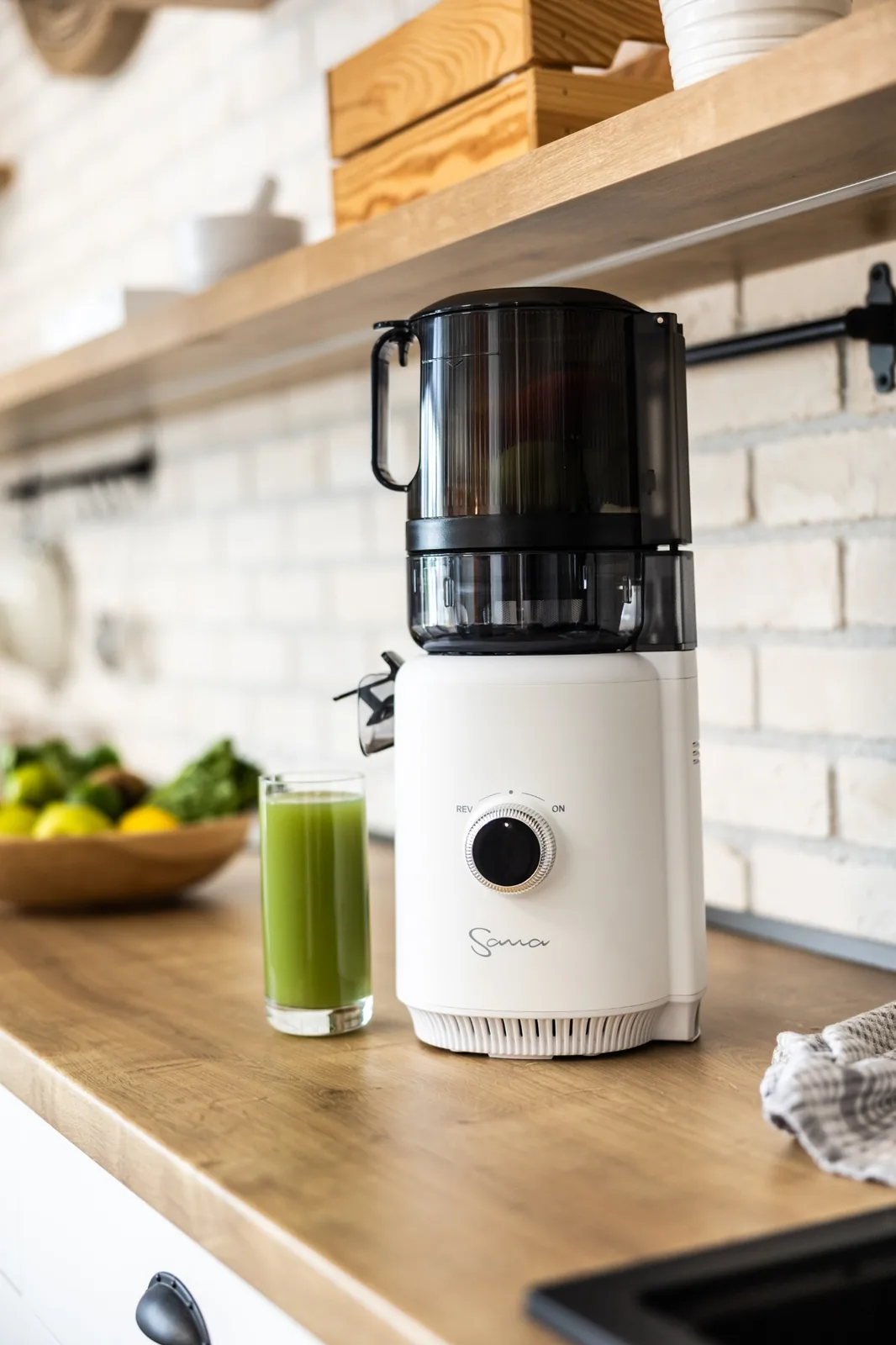
On the 878 and 818, load the hopper, close the lid, open the juice cap and turn the dial; top up through the opening in the lid.
A few rules apply to every model:
- Don’t run it empty. The 727 manual says never to run the juicer without produce, and the 878 manual says to add ingredients within a few seconds of starting.
- Finish properly. Let the juicer run on for a few seconds after the last piece, or for about a minute on the 878, so the last of the juice comes out.
- Know the reverse. If the auger stops, the 727 and 929 reverse on their own to clear the jam. On the 707, set the switch to neutral, wait, then use REV. On the 878 and 818, hold the dial on REV for three to five seconds, two or three times if needed.
- Respect the run time. The 707, 878 and 818 run for up to 30 minutes at a time, then need a rest. The 727 and 929 have no run-time limit, but the 727 manual suggests washing the parts after about 1 kg of produce for big batches, as do the 878 and 818 manuals.
Five easy juices for your first week
- Carrot, orange and ginger. Sweet, bright and forgiving, with carrots that feed easily on the fine screen. It is one of our two foundation juices.
- Apple, carrot and orange. A family favourite and a good first run for the 878 or 818. It is in our fruit juices for the whole family.
- Celery, ginger and lemon. The foundation green juice is the moment to practise cutting celery short and feeding slowly.
- Plain celery juice. Once that goes well, try celery juice on its own. On the 707, fit the celery insert that comes in the box.
- Strawberry and banana sorbet. Swap to the homogenising screen, or the sorbet screen on the 878, and make sorbet from frozen fruit. The 818 isn’t made for frozen fruit, so skip this one on that model.
Next, the 707, 727 and 929 make almond milk and nut butters.
What to expect from the pulp
From carrots, apples and beetroot on the fine screen, the pulp should come out fairly dry and crumbly. Celery and greens give a stringy, fibrous pulp. Soft fruit gives a wetter, pulpier result, which is normal and one reason the coarse screen exists.
Wet pulp from firm produce usually means feeding too fast, a screen that needs a rinse, or tired produce.
Don’t put the pulp back through the juicer. The 727, 878 and 818 manuals advise against juicing pulp a second time. Use it instead: our juice pulp recipes turn it into crackers, fritters and stock, and anything left over goes on the compost.
Cleaning up and storing juice
Rinse the parts straight after juicing, before the pulp dries on the screen. In our kitchen a horizontal Sana takes about a minute. Our guide to cleaning a Sana juicer covers each model, including which ones allow soap.
Fresh juice tastes best straight away. The 727 manual allows up to 24 hours in the fridge; for longer, read our batch juicing guide.
The Sana juicers in this guide
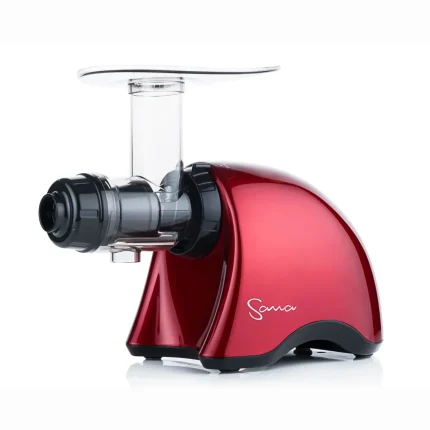
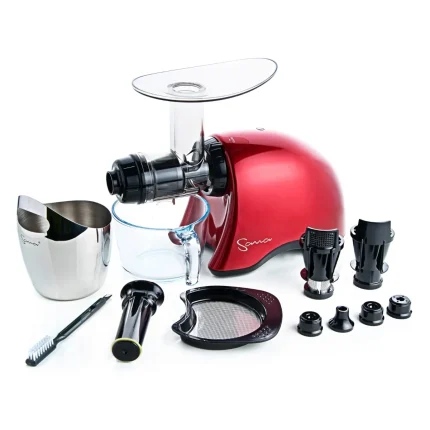
Sana 707 Juicer
Original price was: R9899,00.R7999,00Current price is: R7999,00.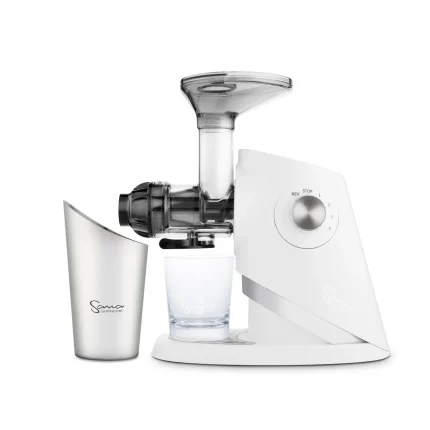
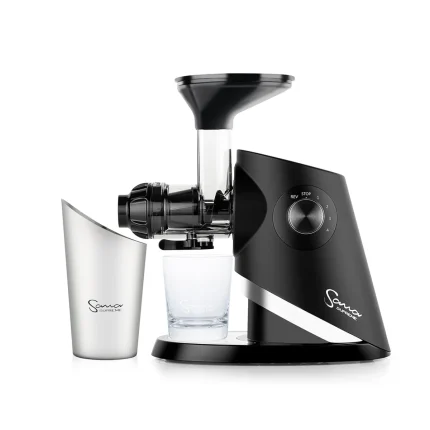
Sana 727 Supreme Juicer
Original price was: R14999,00.R12999,00Current price is: R12999,00.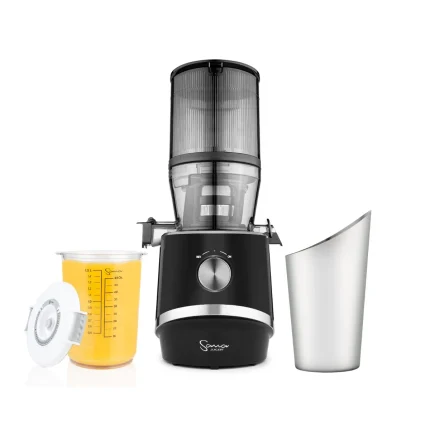
Sana 878 Juicer
Original price was: R11999,00.R9999,00Current price is: R9999,00.Frequently asked questions
Which screen should I use first?
The fine screen. It suits carrots, beetroot, firm apples, celery, greens and ginger, and gives the most juice. Switch to the coarse screen for soft fruit such as oranges, pears, pineapple and berries, and to the homogenising or sorbet screen for frozen fruit and nut butters.
Do I need to cut produce before juicing?
Yes. Cut celery and other stringy stalks to 3 to 4 cm so the fibres don’t wrap around the auger, cut hard roots to fit, peel citrus and pineapple, remove stones and core apples. The 878 and 818 hoppers take cut produce, not whole fruit.
How long can I run my Sana juicer?
The 707, 878 and 818 run for up to 30 minutes at a time and then need to rest. The 727 and 929 have no run-time limit, though the 727 manual suggests washing the parts after about 1 kg of produce on big batches.
Why does my new juicer smell?
The 727, 878 and 818 manuals say a new juicer can have a smell for the first few uses and that it fades. If you notice a burning smell, heat or smoke, stop and contact your retailer.
What should I do if my juicer jams?
Stop feeding and use the reverse. The 727 and 929 reverse automatically. On the 707, set the switch to neutral, wait for the auger to stop, then use REV. On the 878 and 818, hold the dial on REV for three to five seconds, up to three times. Then feed more slowly, in smaller pieces.
Can I juice the pulp again for more juice?
No. The 727, 878 and 818 manuals advise against juicing pulp a second time. Use it in cooking or compost it instead.
Sources
- Sana 707 user manual (English), Sana Products: assembly, strainers, preparing produce, reverse and run time. sanaproducts.com
- Sana 727 Supreme user manual (English), Sana Products: assembly, screens, speeds, preparing and feeding produce, auto-reverse, storage. sanaproducts.com
- Sana 878 user manual, Sana Products: assembly, screens, hopper loading, celery, reverse and cleaning after 1 kg. sanaproducts.com
- Sana 818 user manual, Sana Products: assembly, strainers, preparing produce and run time. sanaproducts.com
- Sana 929 Ultimate and Sana 878 product pages, SanaStore: screens, speeds, pressure cap, hopper and box contents. sanastore.co.za · sanastore.co.za