Blog
Juicing and your health: who should check with a doctor first


Short answer. For most healthy adults, a glass of fresh, vegetable-led juice is simply part of a varied diet. Juicing and your health get along well when you wash the produce, drink the juice fresh and keep eating whole fruit and vegetables too. A few people should check with a doctor before juicing every day: anyone on warfarin, anyone with kidney stones or kidney disease, people with diabetes, anyone whose medicine interacts with grapefruit, and pregnant women or anyone juicing for young children, older relatives or someone with a weakened immune system. Usually the advice isn’t to stop, but to keep things consistent or change the recipe.
On this page
- Who should check with a doctor before juicing?
- Warfarin and leafy greens: keep vitamin K consistent
- Kidney stones and kidney disease: oxalate and potassium
- Pregnancy, young children and anyone more vulnerable: unpasteurised juice
- Diabetes and the sugar in juice
- Grapefruit and medication
- Ginger, turmeric and beetroot shots
- Raw kale and the thyroid
- Frequently asked questions
Who should check with a doctor before juicing?
| If you… | Why | What to do |
|---|---|---|
| Take warfarin | Leafy greens are rich in vitamin K, which affects how warfarin works | Keep your greens steady day to day; tell your doctor before starting a daily green juice |
| Have had kidney stones or have kidney disease | Spinach and beetroot are high in oxalate; juices are high in potassium | Favour kale, cucumber and carrot; ask your doctor or dietitian |
| Are pregnant, or juice for young children, older adults or anyone with a weakened immune system | Home-made juice isn’t pasteurised | Wash everything well, drink it fresh, check with your doctor or midwife |
| Have diabetes | Juice keeps the fruit’s sugar but loses most of its fibre | Keep it vegetable-led, small and with a meal |
| Take a statin, some blood-pressure medicines or other regular medication | Grapefruit can change how some medicines work | Ask your pharmacist; use orange if unsure |
| Take blood thinners or have gallstones | Strong ginger may not suit you | Go easy on ginger shots and ask your doctor |
| Have liver disease or take turmeric supplements | Rare liver injury has been linked to turmeric, mostly to supplements | Check before daily turmeric shots |
| Take blood-pressure medication | Short studies found beetroot juice nudged blood pressure down a little | Mention a daily beetroot juice to your doctor |
| Have a thyroid condition | Kale belongs to the cabbage family | Normal amounts are considered low risk; ask about very large amounts |
When you do ask, be specific. “A 250 ml green juice most mornings, mainly kale, celery and cucumber” tells your doctor or pharmacist far more than “I juice”.
Warfarin and leafy greens: keep vitamin K consistent
Vitamin K helps blood to clot, and warfarin works against it. The US National Institutes of Health says people on warfarin need a consistent vitamin K intake, because sudden changes can make the medicine work more or less strongly. The NIH lists about 145 mcg of vitamin K in a cup of raw spinach and about 113 mcg in a cup of raw kale, and a green juice can easily hold several cups’ worth.
The usual advice is to keep greens steady, not to avoid them:
- Talk to your doctor before starting a daily green juice, so your INR checks can take it into account.
- Once you’ve started, keep the amount and the greens similar from day to day.
- Don’t stop suddenly either. Going from a daily kale juice to none is as big a change as the reverse.
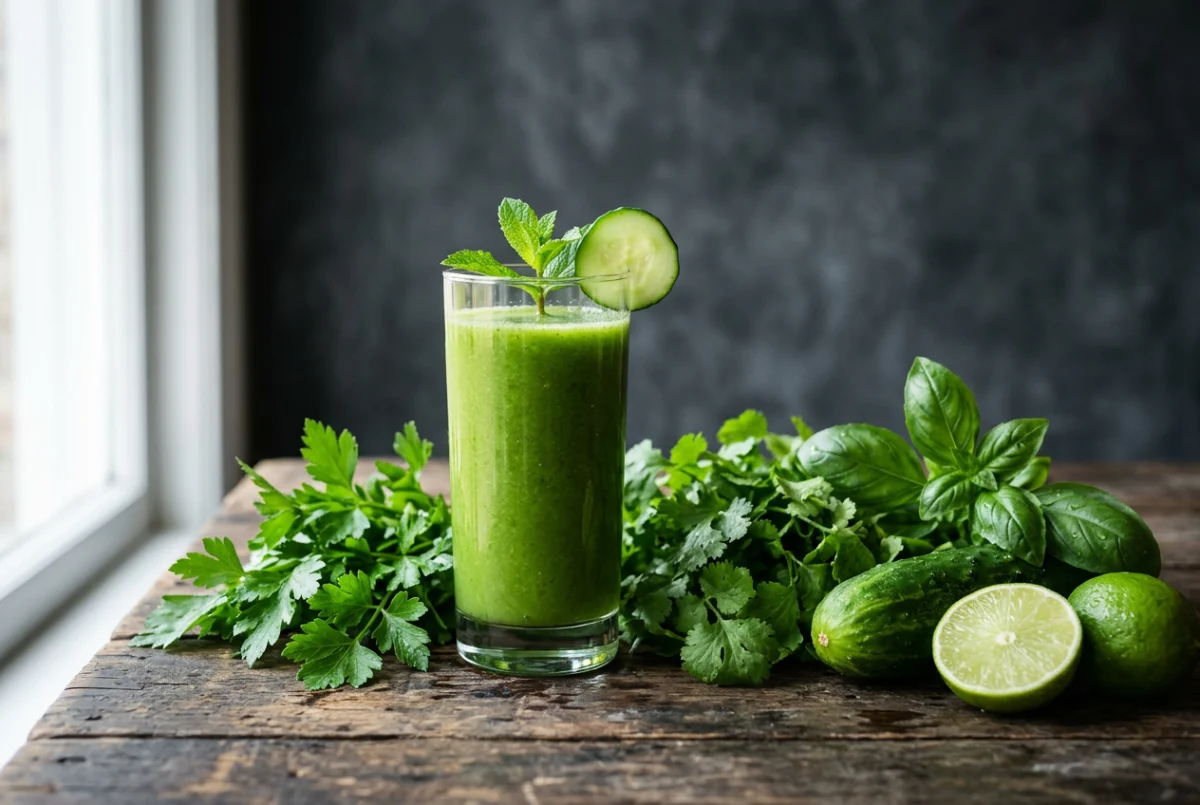
Our green juice recipe uses measured amounts of kale, celery and cucumber, which makes consistency easier.
Kidney stones and kidney disease: oxalate and potassium
Oxalate. Oxalate can combine with calcium and form crystals in the kidneys. Alberta Health Services lists spinach and beetroot among high-oxalate foods, and kale, carrots and cucumber among low-oxalate ones.
Juicing concentrates a lot of produce into one glass. A 2013 paper reviewing 65 Mayo Clinic patients with oxalate crystals in the kidney described one whose kidney failure was attributed to heavy drinking of oxalate-rich juices. A 2022 case report describes a 68-year-old man whose kidneys had been working adequately until he began a daily juice diet high in spinach, giving an estimated 1,500 mg of oxalate a day, about ten times a typical diet. The authors also point to dehydration. Six months later he had severe kidney damage, and a year on he still needed dialysis.
These are rare cases involving large daily amounts, but they are why kale is our everyday green.
Potassium. Kidney Care UK lists fruit juice, vegetable juice and smoothies among the higher-potassium drinks for people told to limit potassium, and says not to restrict potassium unless you’ve been advised to.
If you have had kidney stones, have kidney disease or have been told to watch your potassium, ask your doctor or a dietitian before you juice regularly.
Pregnancy, young children and anyone more vulnerable: unpasteurised juice
Most juice in cartons is pasteurised. Juice from your own juicer isn’t. The US Food and Drug Administration says untreated juice can carry bacteria from the produce, and that children, older adults, pregnant women and people with weakened immune systems are at greater risk of serious illness if it does. It gives transplant patients and people with cancer or diabetes as examples.
These groups can still enjoy fresh juice; the basics just matter more:
- Wash your hands, then rinse all produce under running water. Scrub firm produce such as carrots, cucumbers and melons with a clean brush, even if you’ll peel it. The FDA advises against soap or detergent on produce.
- Cut away bruised parts and throw out anything that looks rotten.
- Clean the juicer straight after use, and drink the juice fresh rather than stored.
If you are pregnant, ask your doctor or midwife about juice in general and strong ginger or turmeric shots in particular.
Diabetes and the sugar in juice
The NHS says even unsweetened fruit juice is sugary and suggests no more than 150 ml of fruit juice and smoothies a day in total, with a meal to go easier on the teeth.
A large US study in the BMJ in 2013 followed about 187,000 health professionals. Those who ate more whole fruit, particularly blueberries, grapes and apples, had a lower risk of type 2 diabetes, while those who drank more fruit juice had a higher risk. It was observational, so it shows a link rather than proof of cause.
If you have diabetes, keep juice vegetable-led (cucumber, celery, kale and lemon, with a little apple or carrot), keep the glass small and have it with food, and check with your doctor or dietitian how it fits your plan. Our savoury juice recipes are a good start.
Grapefruit and medication
A glass of fresh grapefruit juice is several fruits’ worth. The FDA explains that grapefruit juice blocks an enzyme in the gut that normally breaks down many medicines, so more of the drug reaches the blood and side effects become more likely. With a few, such as the antihistamine fexofenadine, it works the other way and less gets in.
The FDA’s examples include some statins (simvastatin, atorvastatin), the blood-pressure medicine nifedipine, some anti-rejection drugs and the heart-rhythm drug amiodarone. Not every medicine in those groups is affected, and the effect varies between people. Seville oranges, pomelos and tangelos may have the same effect. Ordinary oranges aren’t on the FDA’s list, although it notes that orange and apple juice may also reduce how well fexofenadine works.
If you take regular medication, ask your pharmacist whether it interacts with grapefruit and how much, if any, you can have. For a party jug like our summer coolers, an all-orange version is the simpler choice.
Ginger, turmeric and beetroot shots
Ginger. The US National Center for Complementary and Integrative Health lists heartburn, stomach discomfort and diarrhoea as possible side effects. Memorial Sloan Kettering’s herb guide warns that ginger supplements may increase bleeding risk with blood thinners and should be avoided with gallstones. A shot isn’t a supplement, but it is a concentrated amount, so if either applies to you, check before a daily ginger shot.
Turmeric. The NCCIH notes reports of liver damage in some people taking turmeric products, mostly high-strength supplements made to be better absorbed, and says turmeric supplements in pregnancy may be unsafe. Juice isn’t that dose, but it isn’t risk-free either. If you have liver disease, already take turmeric supplements or are pregnant, ask first.
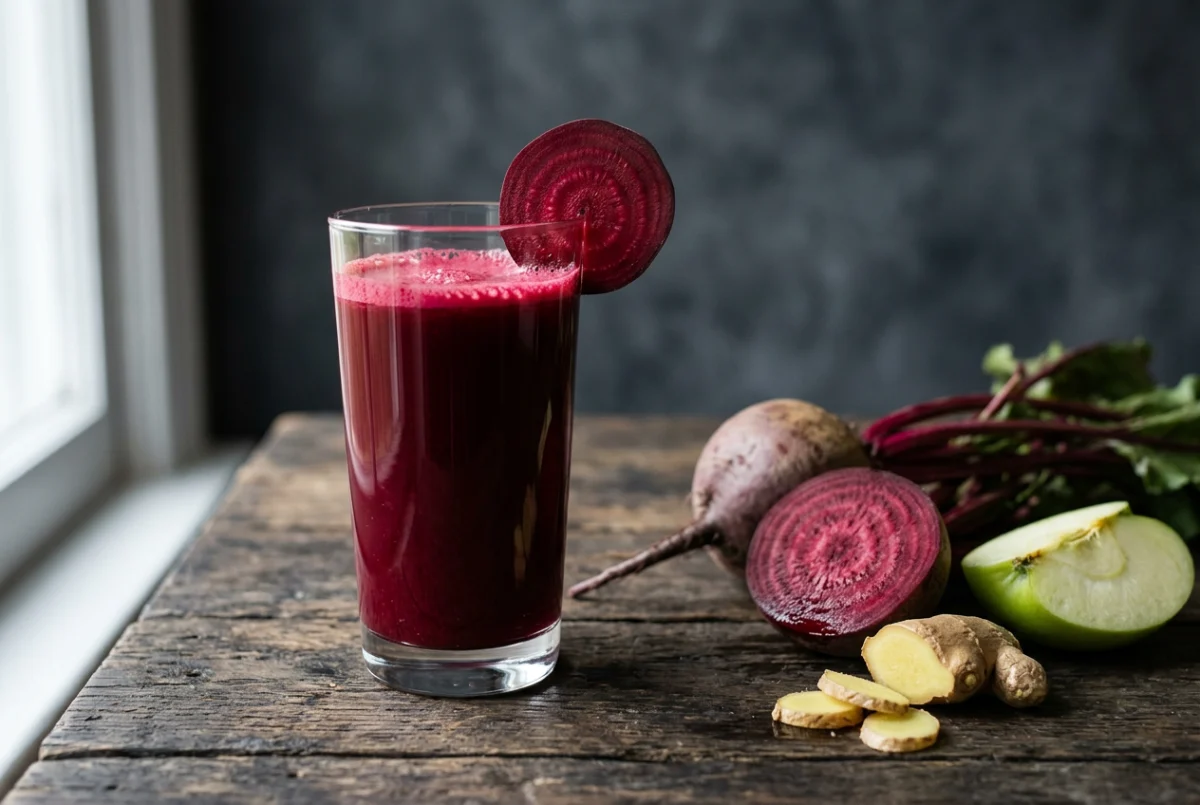
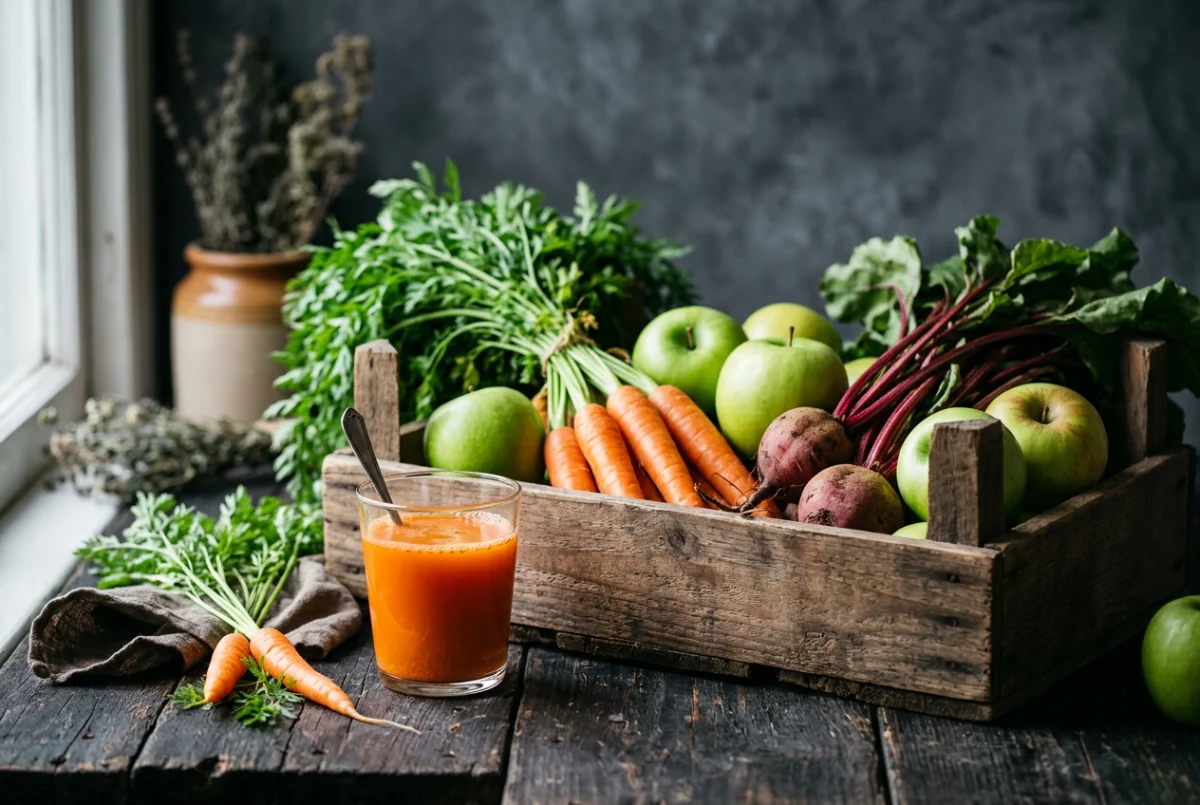
Beetroot. Beetroot is rich in dietary nitrate. A 2013 review by Siervo and colleagues pooled short trials and found a small average fall in systolic blood pressure of about 4.4 mmHg. The studies were small and short, and beetroot juice is no replacement for medication. If you take blood-pressure medication, mention a daily beetroot juice to your doctor. More in our carrot and beetroot post.
Raw kale and the thyroid
Brassicas such as kale contain compounds that can reduce the thyroid’s uptake of iodine in large amounts. A 2016 review in Nutrition Reviews by Felker, Bunch and Leung found that common kale contains less than 10 µmol of goitrin per 100 g serving and can be considered of minimal risk, while collards, Brussels sprouts and some Russian kale contain more. Very large daily amounts of raw brassica juice weren’t studied. Kale as one ingredient among several is fine for most people; with a thyroid condition, ask your doctor.
Frequently asked questions
Is juicing safe if I take medication?
Usually you can keep juicing, but a few combinations matter: leafy greens with warfarin, grapefruit with a long list of medicines, and strong ginger with blood thinners. Ask your pharmacist, and tell them what is in your juice and how much you drink.
Can I drink green juice if I take warfarin?
Often yes, if your vitamin K intake stays consistent: the US National Institutes of Health says sudden changes can make warfarin work more or less strongly. Talk to your doctor before you start, and keep the amount steady.
Is fresh juice safe during pregnancy?
Home-made juice isn’t pasteurised, and the US FDA lists pregnant women among those at greater risk if untreated juice carries bacteria. Wash produce well, clean the juicer and drink the juice fresh. Check with your doctor or midwife, especially before strong ginger or turmeric shots.
Can I drink fresh juice if I have diabetes?
Ask your doctor or dietitian first. Juice keeps the fruit’s sugar but loses most of its fibre, and the NHS suggests no more than 150 ml of fruit juice a day, with a meal. Vegetable-led juices with a little apple or carrot are the better fit.
Does spinach juice cause kidney stones?
Spinach is high in oxalate, and a small number of case reports describe serious kidney damage in people drinking large amounts of spinach-rich juice every day. Kale, cucumber and carrot are low in oxalate. If you have had kidney stones or have kidney disease, ask your doctor before juicing regularly.
Does raw kale juice affect the thyroid?
A 2016 review found common kale low in goitrin and of minimal risk at normal serving sizes. Very large daily amounts of raw brassica juice haven’t been well studied, so if you have a thyroid condition, check with your doctor.
Sources
- Vitamin K fact sheet for health professionals, NIH Office of Dietary Supplements: warfarin and consistent intake, vitamin K in spinach and kale. ods.od.nih.gov
- Oxalate nephropathy after juicing, case report and review of 65 Mayo Clinic patients (2013), PubMed. pubmed.ncbi.nlm.nih.gov
- Acute oxalate nephropathy caused by excessive vegetable juicing and concomitant volume depletion, Case Reports in Nephrology (2022). doaj.org
- Limit foods high in oxalates, Alberta Health Services (2025). albertahealthservices.ca
- Potassium and kidney disease, Kidney Care UK. kidney.org.uk
- What you need to know about juice safety, US Food and Drug Administration. fda.gov
- 5 A Day: what counts?, NHS. nhs.uk
- Muraki and colleagues, fruit consumption and risk of type 2 diabetes, BMJ (2013). bmj.com
- Grapefruit juice and some drugs don’t mix, US Food and Drug Administration. fda.gov
- Ginger, National Center for Complementary and Integrative Health. nccih.nih.gov
- Ginger herb information, Memorial Sloan Kettering Cancer Center. mskcc.org
- Turmeric, National Center for Complementary and Integrative Health. nccih.nih.gov
- Siervo and colleagues, review of nitrate and beetroot juice trials and blood pressure, Journal of Nutrition (2013). eprints.ncl.ac.uk
- Felker, Bunch and Leung, thiocyanate and goitrin in brassica vegetables and thyroid risk, Nutrition Reviews (2016). escholarship.org